After bitcoin’s best month in a year, analysts weigh in on factors for it to break $80,000 in May
May has an over 7% average historical return, but whether bitcoin can replicate this result and finally break the $80,000 level hinges on several factors.
Bitcoin closed April up 11.87%, its best monthly return in 12 months, but below the historical monthly average of 12.98%, CoinGlass data shows.
On the first day of May, Bitcoin was up 2.7%, breaking the $78,000 mark, with the market cautiously optimistic, in a “wait and see” mode.
May has a 7.68% average historical return, but whether bitcoin can replicate this result and reclaim the $80,000 level hinges on several factors, including the trajectory of the war in Iran and ETF flows.
Rajiv Sawhney, head of international portfolio management at Wave Digital Assets, told Sherwood News that while a failure to hold $75,000 by the end of the week may mean we see retracement lower into next week, overall consolidation is likely to occur in May for now.
Sawhney said the next major catalyst is the new Fed chair, Kevin Warsh, who will set the agenda for the next FOMC meeting in June.
“Markets have repriced out any rate hikes for the year, but a rate cut is being pushed all the way back until the end of the year. If that accelerates earlier, that may bode well for risk assets,” Sawhney said.
Nic Roberts-Huntley, CEO and cofounder of Blueprint Finance, echoed the sentiment, saying that for bitcoin, however, the Warsh transition is less about a single rate decision and more about whether a Warsh-led Fed provides the long-term, clearer skies that risk assets need to break through the $80,000 ceiling.
Meanwhile, bitcoin ETFs registered $1.97 billion in inflows in April, their best month since October, according to SoSoValue, reflecting renewed institutional support. Yet, as some analysts have flagged, while flows have been a strong price support since the war began, a sustained reversal could also quickly drag bitcoin’s price lower.
Max Kahn, CEO of Digital Wealth Partners, told Sherwood that as we move into May, the key question for bitcoin is less about whether it crosses a specific price level and more about whether the current drivers of strength remain intact.
The biggest catalysts to watch, Kahn said, are continued ETF inflows, broader liquidity conditions, and the market’s evolving expectations around interest rates.
Several experts agree that crossing the psychological $80,000 level could be the boost needed for a rally, buoying both institutional and retail interest, the latter of which has been tepid in the past months.
Caroline Mauron, cofounder of Orbit Markets, said that while there is significant resistance at the $80,000 level, the trend has been positive, with crypto largely brushing aside the latest geopolitical shocks.
“A decisive break through $80K could be the trigger for a new wave of retail interest,” Mauron said.
Any kind of progress on the CLARITY Act could also act as a catalyst. This “would likely seal the deal and deliver a strong bitcoin performance through May,” Ishmael Asad, a Bitwise research analyst, told Sherwood.
Asad has a rosier view of bitcoin’s trajectory, saying it is “no longer range-bound. It’s on the move.”
And though $80,000 is the major psychological level, he said there’s more than an estimated $300 million of leveraged short positioning around $78,000.
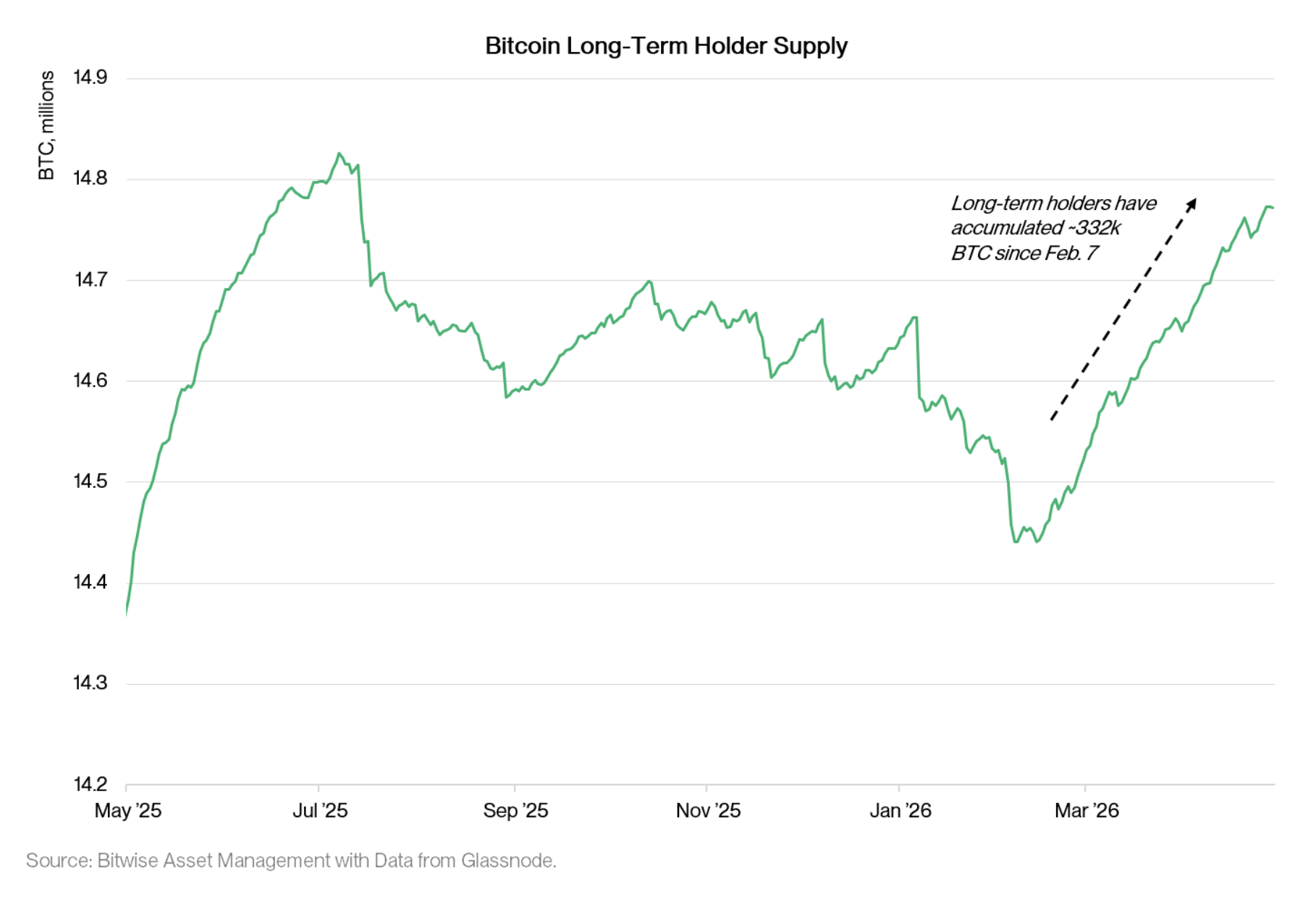
“Should we retest it, liquidations could propel bitcoin higher and into the next zone,” he said.
In terms of levels to watch in May, Pratik Kala, portfolio manager and head of research at Apollo Crypto, told Sherwood that crossing $80,000 with strong volumes “will give us visibility to reach $88K as the next target.”
Further underscoring the cautious sentiment and that bitcoin is not out of the woods yet, CryptoQuant analyst Julio Moreno said in a report that the current demand structure mirrors the pattern seen at the onset of the 2022 bear market, “when perpetual futures demand surged in isolation while spot demand contracted simultaneously.”
This discrepancy, he said, suggests that price appreciation “is driven by leverage rather than fresh coin accumulation.”
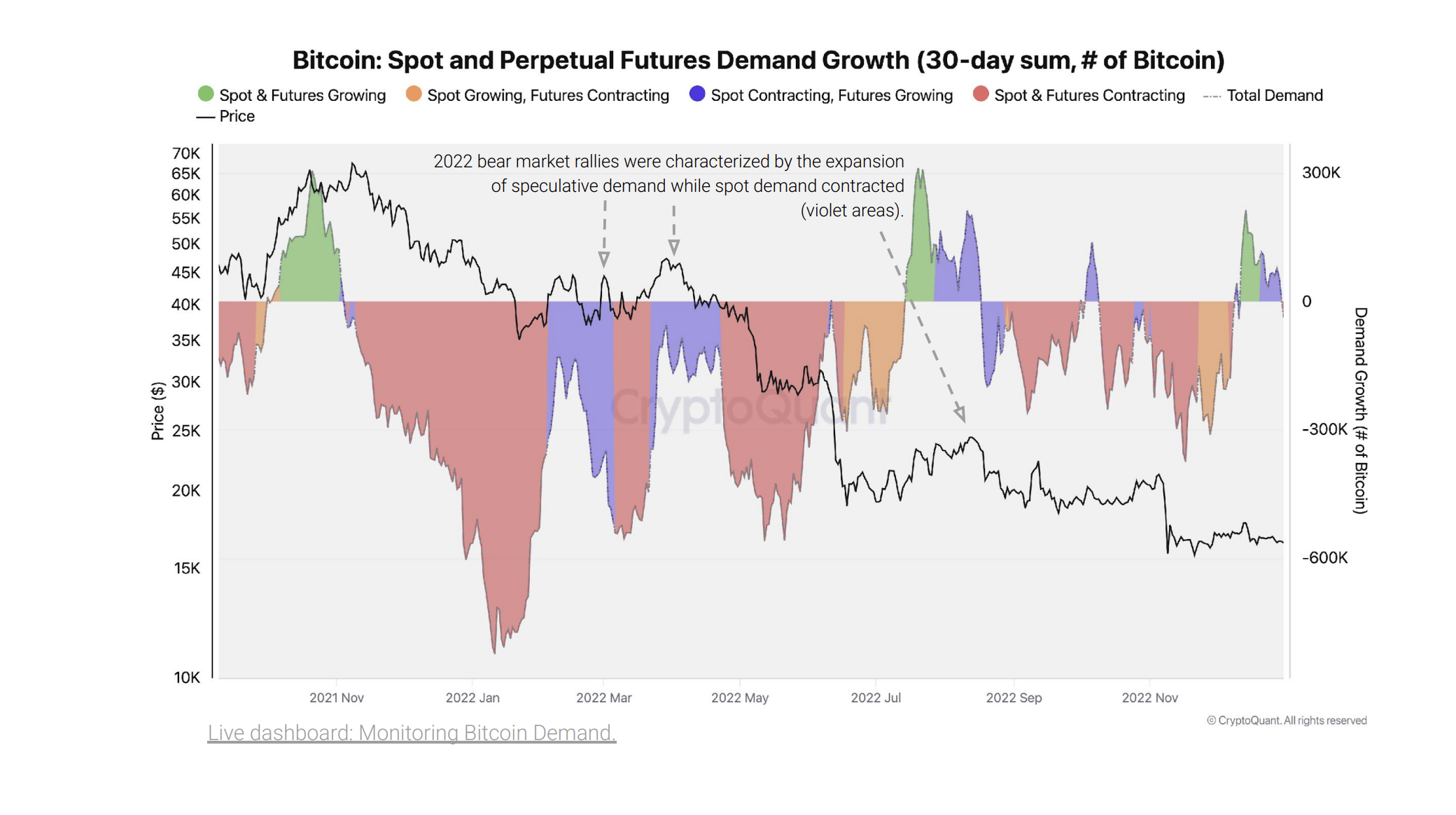
Moreno said that this configuration “preceded a sustained multi-month price decline. History suggests this setup carries meaningful downside risk as bitcoin remains in a bear market regime.”
Finally, another factor to note for May is that bitcoin is currently emerging from one of the most oversold conditions in its history.
Connor McLaughlin, head of enterprise at Digital Ascension Group, told Sherwood that similar instances include the 2014 bear market bottom, the 2018 capitulation, and the 2022 collapse following the FTX event, each of which marked a significant long-term inflection point.
In the most recent move, he said, the Relative Strength Index reached similarly extreme levels, aligning with those prior periods of substantial market stress.
“Historically, such conditions have been followed by meaningful rebounds and sustained positive momentum,” he said, adding that while the timing of a full recovery may vary, the magnitude of the current oversold reading suggests that downside risk is likely diminishing.
Now, however, the focus shifts from the speed of the rebound to confirming that a durable bottom has been established, which would restore investor confidence, and the gradual rebuilding of position dynamics that have historically supported the path toward new cycle highs, he said.