

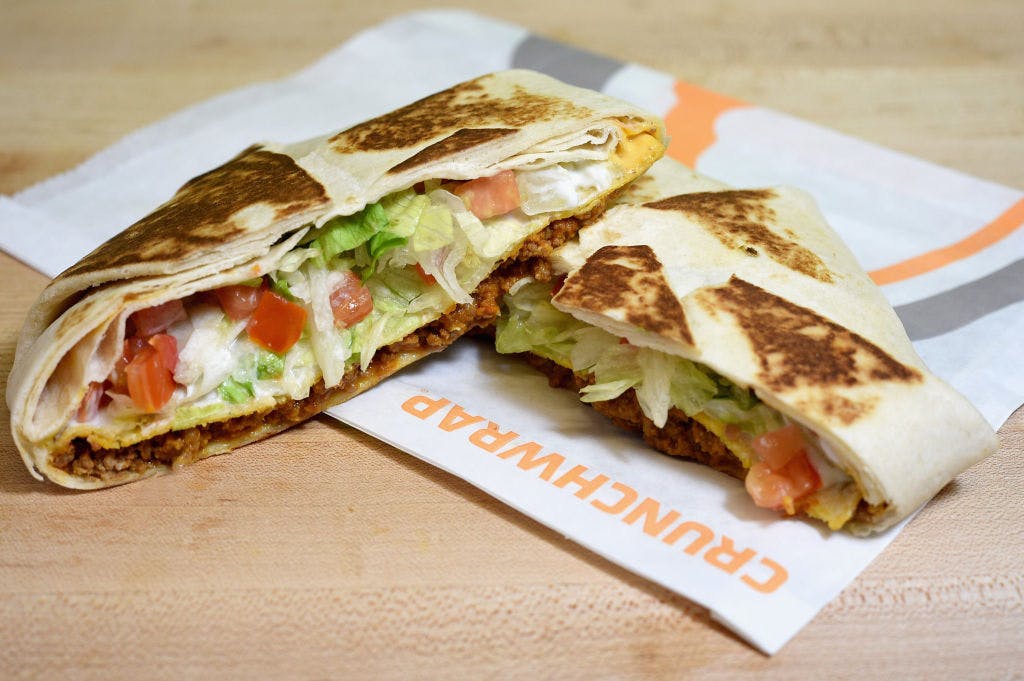
At 20, the Taco Bell Crunchwrap has never been more powerful
Taco Bell sells more than 100 million Crunchwraps every year.
According to Google’s AI Overview, which (as is well documented) is never wrong, a 20th anniversary can be associated with either platinum or china. Platinum symbolizes strength and china symbolizes tradition, which seem at odds because platinum is modern and china is fragile. Still, if there’s one entity that can unite these contradictory elements in a toasted tortilla, it’s the Crunchwrap, Taco Bell’s durable yet delicate prize, which descended upon the consumer snackscape on June 22, 2005.
That particular June 22 was a Wednesday. “We Belong Together” by Mariah Carey was the No. 1 song in America and the Republican-controlled Senate had just passed an amendment to the 2005 Energy Policy Act, which provided funds for investments in renewable energy, by a now unimaginable vote of 66 to 29. That night, the Houston Astros beat the Colorado Rockies 6-2 after seven strong innings of one-run ball from their 43-year-old ace, Roger Clemens.
In other words, these were times of minor miracles. And the fact that the Crunchwrap reached consumers at all was another one. The Crunchwrap concept had languished in development for a decade as corporate recipe developers at Yum! Brands’ Taco Bell labored to turn a folded tortilla into a structural masterpiece that could be reproduced tens of thousands of times a day around the country. The final result was near perfection; another gem from another 43-year-old ace in another major league. It became the fastest-selling menu item in the chain’s history, moving 51 million units in its first six weeks.
Ahead of the 20th anniversary of the Crunchwrap’s launch, several major publications — no doubt spurred by some savvy PR outreach from Irvine — assessed the particular genius of the Crunchwrap. But rather than celebrate its innovative combination of soft tortilla and crunchy tostada or marvel at its elusive and highly useful portability, many framed the Crunchwrap’s importance in terms of its influence beyond its steady presence on Taco Bell’s ever-changing menu boards.
In The New York Times, one writer outlined how the Crunchwrap (a “fast-food gimmick”) became “an unlikely muse for chefs”:
“Twenty years later, it is as much a novelty food as a playful framework for chefs. They reinterpret its nostalgic layers — ground beef, nacho cheese, a tostada shell, lettuce, tomato and sour cream enrobed by a 12-inch flour tortilla — with ingredients that are deeply personal.”
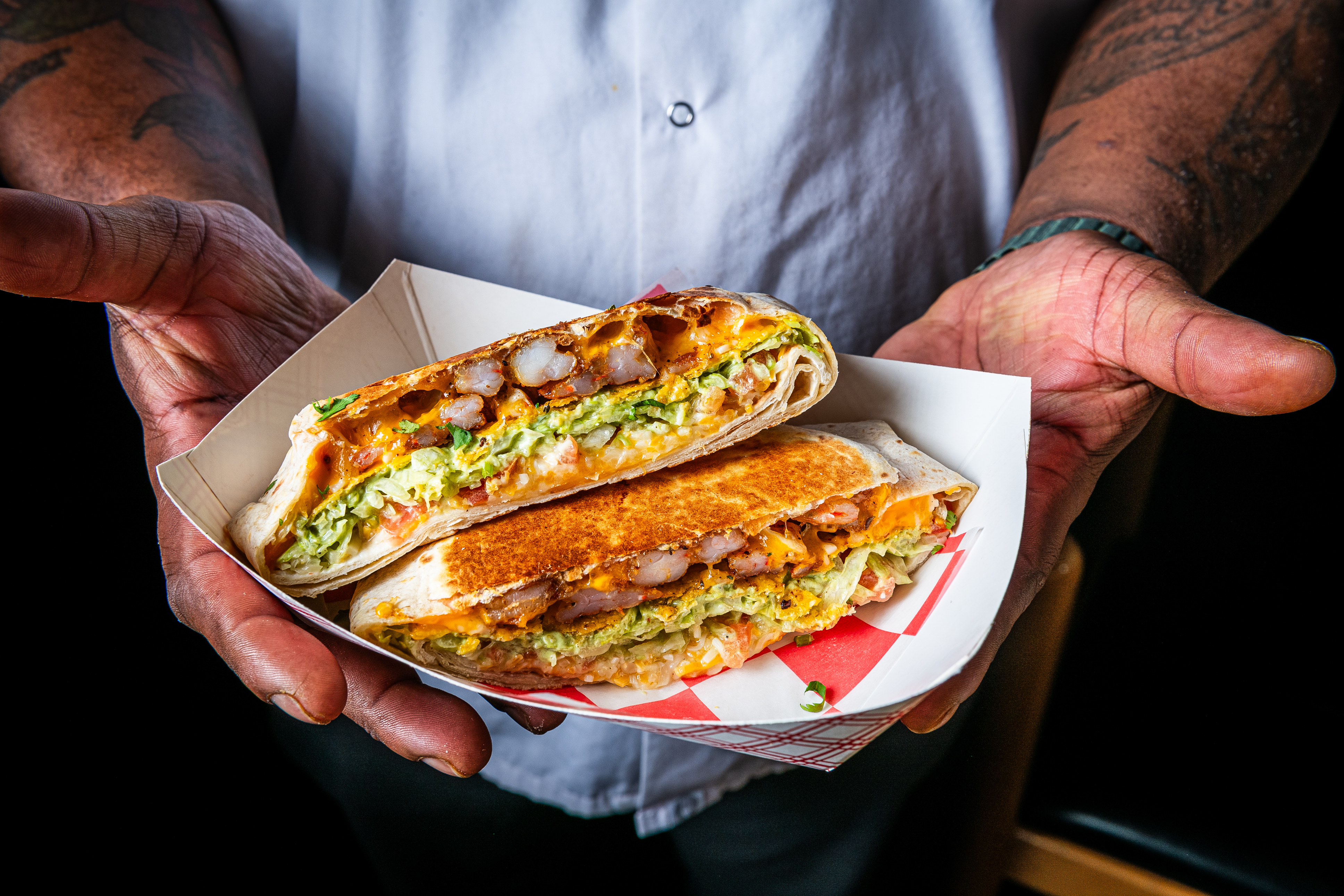
The piece goes on to describe how chefs from different culinary traditions have made their own riffs on the Crunchwrap, from bulgogi and carnitas to shawarma and Thai basil chicken.
The Times piece, even as it drew distinctions between the praiseworthy personal (chef-made) Crunchwraps and the mass-produced corporate original, was respectful about the work that went into creating a wildly influential food item. Still, the story, just by its framing, does the classic a disservice.
Many years ago, I had drinks with Chef Scott Uehlein, who left the gilded kitchen at the exclusive wellness retreat Canyon Ranch to become the head of menu at fast-food chain Sonic. What struck me most about his career journey was listening to him describe what it meant to create dishes that would reach more diners in an hour at Sonic than they would in a year at CanRan. At the time, Sonic had just released “blended burgers,” which mixed ground beef with mushrooms to cut down on both the calories and fat as well as the environmental impact of all-beef burgers. He was proud to have a direct line to the mainstream and the influence to shape it as much as the market would allow.
When publications start delving into the terrain of elevated food, which is meant to delineate the basic from the enlightened, something deeply irritating happens. In this world, those with money, access, and taste know better than to suffer the appetites of the unsophisticated. New York Magazine’s Grubstreet, for example, begins its Crunchwrap anniversary coverage with an anecdote involving a chef sitting at a Taco Bell in Lower Manhattan, skeptically pondering a Crunchwrap:
“After he opened his Mission-style burrito chain’s first brick-and-mortar store in the Rockaways in 2020 and began offering specials to survive winter lulls, dozens of customers peppered his Instagram account with requests to make a Crunchwrap dupe. ‘I really didn’t want to do a Taco Bell thing,’ he says. ‘I’m trying to make this food that’s very precious to me and who I am.’ …a self-described people pleaser, [he] managed to ignore and delete the pleading messages for eight months before finally caving. ‘I was like, You know what, fuck it — give the people what they want.’”
Reader, you’ll never guess what happened next. His riff on the benighted mass-market concept that he finally deigned to emulate was a huge hit.
The Grubstreet piece — saddled with the absurd subhead, “How the tortilla-wrapped griddled tostada became bigger than the chain that invented it” — goes on to track down a chef who made a Crunchwrap dupe despite never bothering to try the original. “...people see it on a menu and they’re like, ‘Wow, this is, like, so much better than Taco Bell,’” another chef with a Crunchwrap knockoff crows.
There’s a bigger lesson here. As everyone from small-fry chefs and home cooks to professional chefs and major outlets follow the lead of big brands by concocting vegan Crunchwraps or better Big Macs, there are still people for whom the genuine articles have meaning — be that as an indulgence, a tradition, a last resort, or quick and affordable means to an end. All of these options have their merits. Even with a proliferation of dupes, Taco Bell sells 100 million Crunchwraps every year and McDonald’s sells 550 million Big Macs annually in the US alone. Meanwhile, the most streamed song of the summer is a power ballad called “Ordinary.” Popular taste can be funny that way.
Adam Chandler is a journalist based in New York and the author of “Drive-Thru Dreams” and “99% Perspiration.”