


Could YouTube really be the answer to the Oscars viewership problem?
And should the platform even want to be?
MrBeast shouting his way through a 30-second opening monologue; a reaction video on the reaction to his introduction; legends of the silver screen making their way onstage to be presented with a statue by one of “the Nelk Boys”; a hastily edited mystery box giveaway section where the In Memoriam once ran. Could this be the Oscars on YouTube? We may find out in a few years.
And the award for Best Offer goes to…
Though the organization behind the Oscars, The Academy of Motion Pictures Arts and Sciences, has been browsing for a new broadcasting outlet for the ceremony since March, a fresh contender recently emerged. According to Bloomberg reporting in mid-August, YouTube has thrown its hat in the ring alongside Netflix and others to become the home of the Oscars from 2029 onward. Moving the ceremony online would mark a big shift for the prestigious awards show, which has been broadcast on Disney-owned ABC since 1976.
Considering that YouTube has now been the biggest thing on American TVs for six months straight, the deal might not be as crazy as it first may sound. Indeed, even after a cursory glance at recent Oscars viewership figures, the Academy’s attempt to offer its crown jewel to new suitors, especially ones with as much buzz and cultural heft as YouTube, starts to make sense.
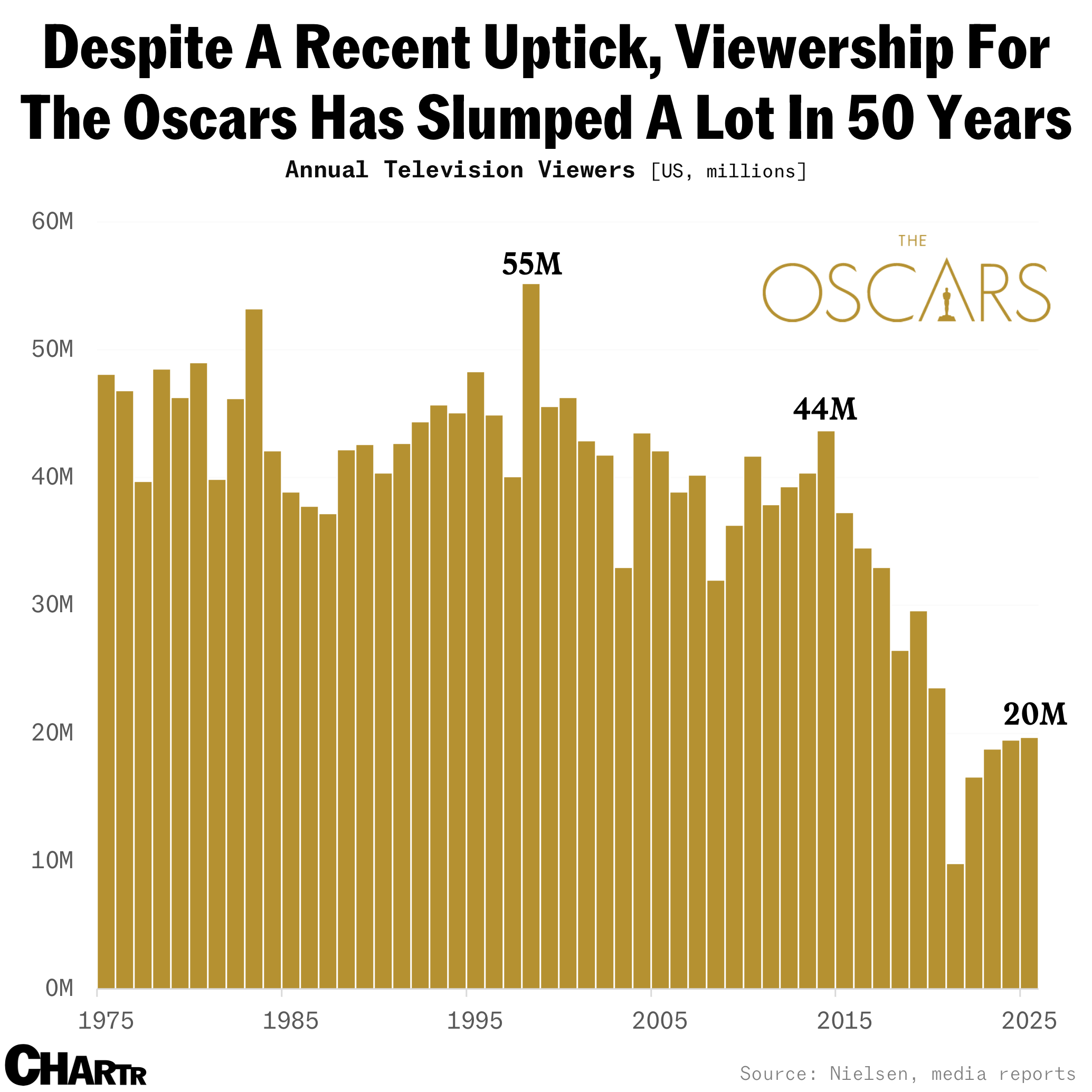
This year’s ceremony — which saw indie darling “Anora” take home Best Picture, while esteemed actor and known artist Adrien Brody picked up his second Best Actor gong with a lengthy acceptance speech — attracted 19.69 million viewers across ABC and Hulu, the first year (for better or worse) it was shown on a streaming service. While that tally was up 12% from the year before and represented the highest point since 2020, you don’t have to trawl too far back to see just how much America’s Oscars appetite has dwindled.
The Departed
On the back of slumping viewership in 2018, the Academy decided to experiment with the award show’s format the year after by slashing the run time, going hostless, and cutting longer comedy skits. The changes paid off, and viewership rose to 29.6 million. In 2014, for further comparison, a whopping 43.7 million viewers tuned in for a particularly action-packed evening, in a throwback to the sort of numbers that the broadcast commanded in the ’90s.
Of course, only some of this decline can be laid at the feet of the ceremony and its organizers. In truth, Americans just don’t watch TV in the same way we used to, with mega formats and mainstays like sitcoms and late-night talk shows struggling to attract the audiences they once did on linear television as we all look to smaller screens and the online world to feed our need for entertaining content.
Interestingly though, the 2014 show, where host Ellen Degeneres took one of the most retweeted photos of all time and accepted a pizza delivery order mid-ceremony, was also when YouTube search interest in the Oscars peaked. The climbdown since that point suggests that Alphabet’s video-sharing giant will have work to do to rally its native audience around the ceremony if it can secure the rights post-2028.
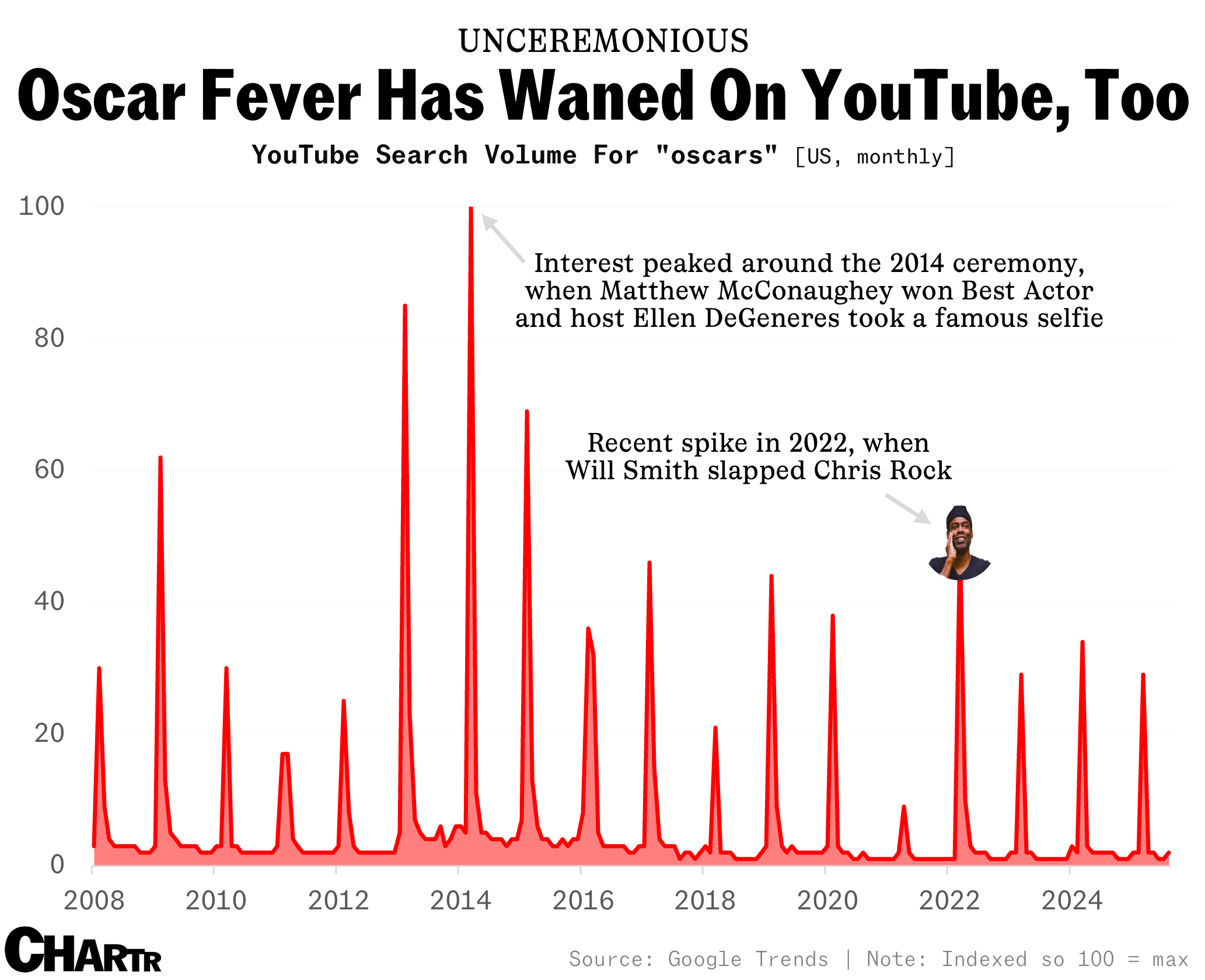
As you might imagine, searches for “oscars” typically spike during the late February, early March window each year around the shows themselves, with YouTube users looking to relive the most entertaining or controversial moments of the night. While those peaks can still be seen — most notably three years ago, after Will Smith slapped Chris Rock — people aren’t rushing to the video-sharing platform post-Oscars with as much fervor as they once did, suggesting Oscars fatigue has hit the internet as well as the TV airwaves.
I spent hundreds of millions on live sport (it was terrifying)
As the lines between TV, streaming, and social media continue to blur, YouTube execs are clearly feeling buoyed by the ongoing success of their Sunday Ticket broadcast deal with the NFL. Having first signed the rights partnership in 2023, the platform and the football league have continued to expand the coverage agreement as YouTube looks to eat into traditional television’s programming, as well as its audience.
Putting aside the positive results from that particular tie-in, however, does a new deal to bring Hollywood’s biggest awards show into the fold, in whatever form that agreement ends up taking, actually make sense for YouTube in the current landscape? Even on the official home of Oscars content on YouTube, hype around the show looks like it’s been subsiding.
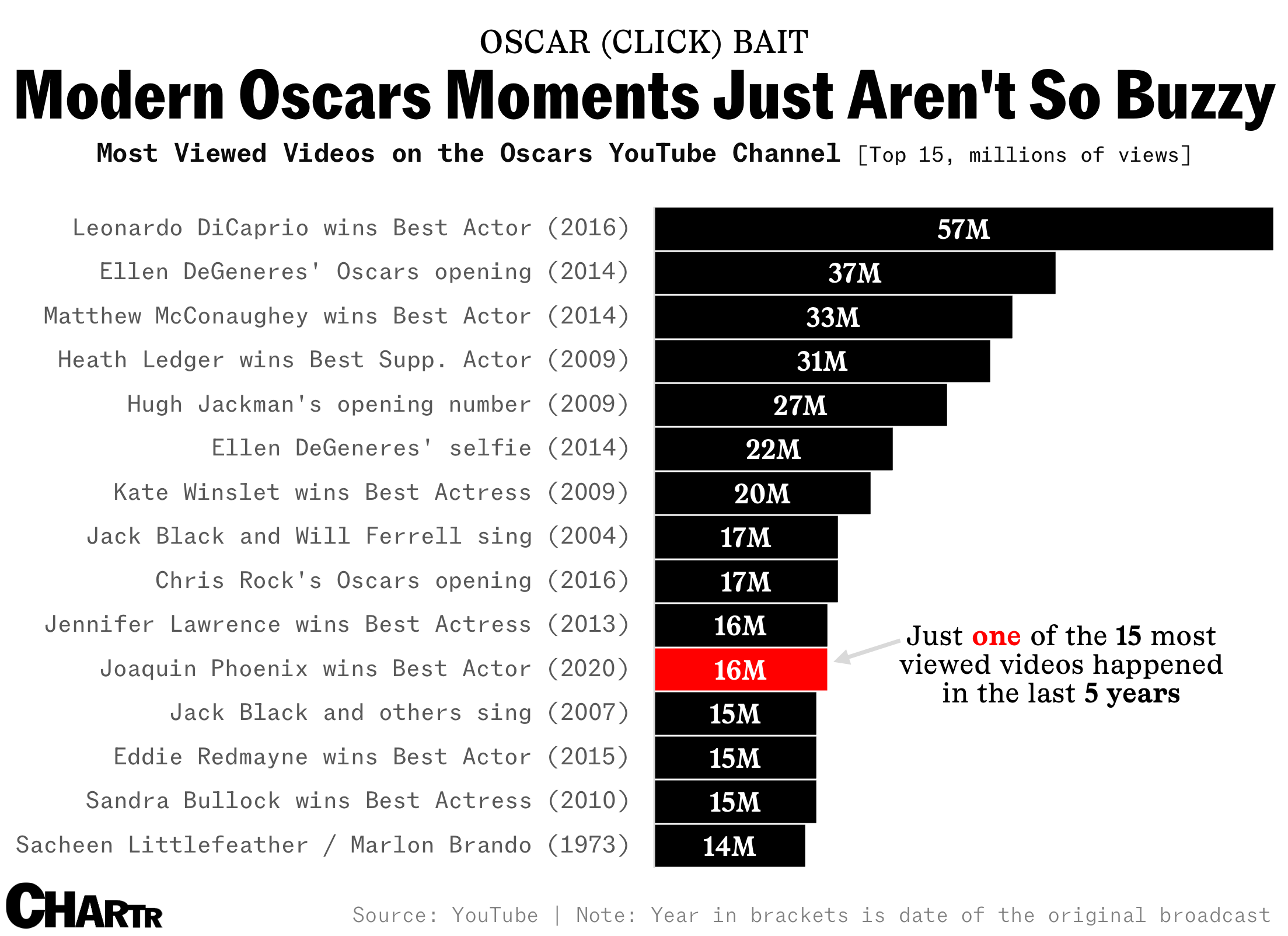
Around 10 to 15 years ago, the YouTube channel “@Oscars” was posting clips that would rack up tens of millions of views almost every year, from comedic passages like the opening monologues of Chris Rock or Ellen to earnest acceptance speeches by the likes of Leonardo DiCaprio, Matthew McConaughey, and Sandra Bullock. In recent years, though, the channel’s seen a dearth of viral moments — the Smith/Rock incident doesn’t feature on the channel, but racked up hundreds of millions of views on other outlets — with Joaquin Phoenix’s acceptance speech for his role in “Joker” the only video in the last five years to break the top 15 most viewed clips on the channel.