


Harvard is cutting tuition fees for a lot of students as federal funding questions loom
86% of Americans could benefit from the college’s revised financial aid program.
In the past, many prospective students who were academically gifted enough to be accepted into Harvard University were faced with one final stumper after all the entrance exams, essays, and interviews: how would they afford the ever-rising cost of attending the college itself?
But, after the institution announced it will be expanding its financial aid program on Monday, that’s a hurdle that fewer students will have to worry about.
The crimson cost
Under the new system, students whose families earn less than $200,000 a year won’t have to fork up tuition fees starting this fall. Previously, the free tuition threshold stood at $85,000. What’s more, Harvardians who come from households earning under $100,000 will be relieved of all billed expenses on top of their tuition, including housing, food, travel, and health insurance.
The university is hoping that scrapping fees will open up the hallowed halls’ doors to a broader spectrum of students (especially in light of the Supreme Court’s 2023 ruling, which effectively reversed affirmative action admissions in colleges) as the cost of higher education continues to rise.
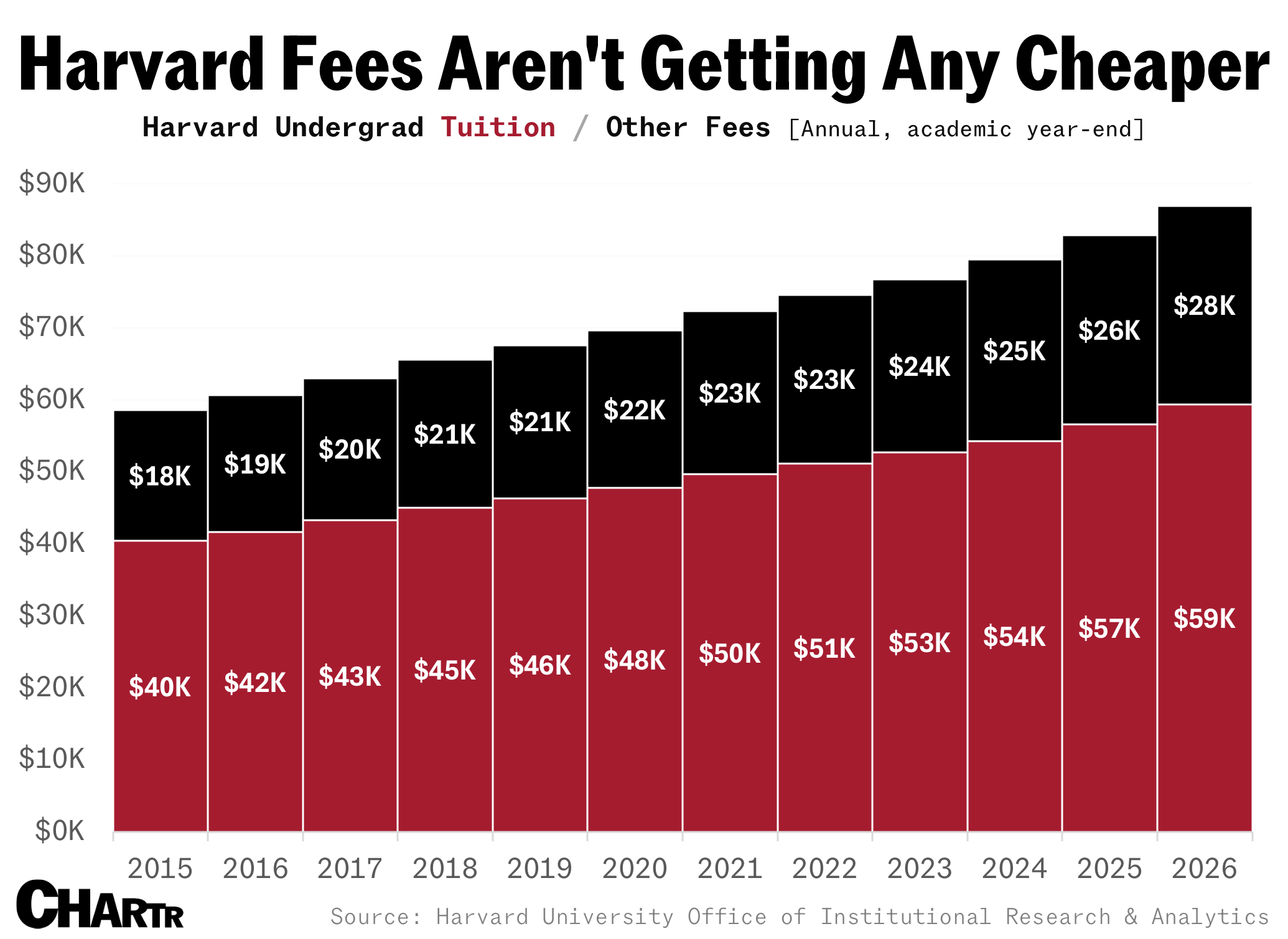
Harvard joins a growing list of top American colleges offering breaks for lower-income students, including the University of Pennsylvania and MIT, both of which announced plans to abolish tuition fees for sub-$200,000 households last November. Harvard undergrads starting in September who qualify under the new terms will avoid as much as $86,926 in billed fees for the 25/26 year, per figures from the college.
Since Harvard launched its Financial Aid Initiative program back in 2004, the college has reportedly awarded more than $3.6 billion to eligible students over 20-plus years. And, even as the oldest operating university in America just announced a hiring freeze amid increasing federal pressure on higher education institutions and uncertainty about state funding going forward, Harvard’s massive endowment fund certainly provides a hefty financial backstop for fulfilling federal grants.
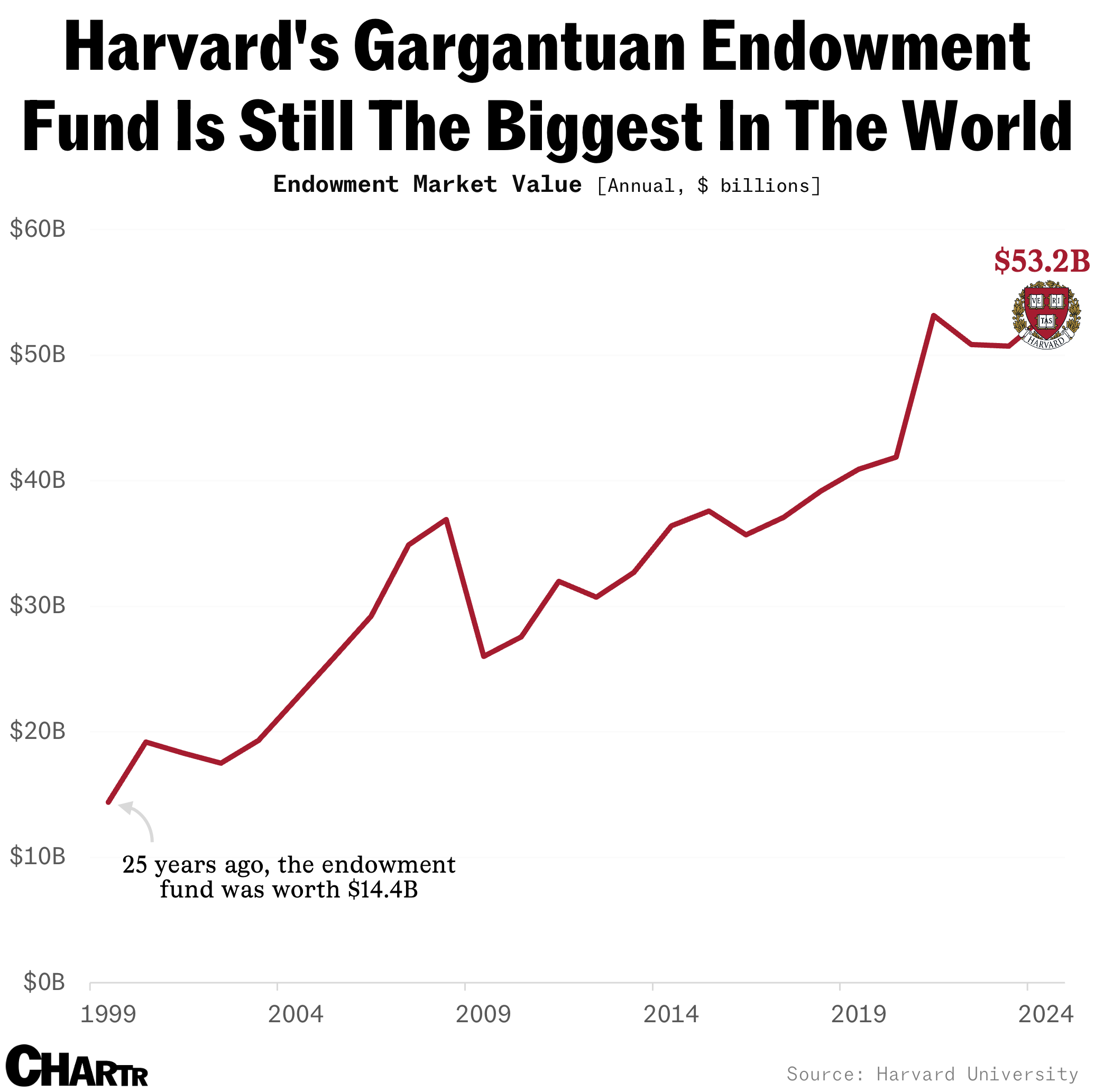
Last year, the value of Harvard’s endowment fund reached a record $53.2 billion, as the investors that manage the fund posted an impressive 9.6% return for the year. In its latest annual report, the university said that distribution of funds from the endowment, as well as a further $525 million in donations from alumni and other benefactors, allowed it to award $250 million in financial aid to undergrads, up 6% from 2022-23.
Grant slam
Despite its growing endowment fund, the threat of grants being pulled by the government are still weighing heavy on Harvard. Last week, the Trump administration ramped up efforts to establish operation changes at the university, outlining a list of demands — including a comprehensive mask ban, ending DEI programs, and altering the curriculum to “end ideological capture” — that might ensure a “continued financial relationship.”
With grants frozen as a task force reviews almost $9 billion worth of federal grants, Harvard tapped Wall Street on Monday for a $750 million loan as it assesses its resources, relying on borrowing to preserve its liquidity.
A bigger pool
When it first launched the program 21 years ago, Harvard covered all billed costs for students who came from households earning less than $40,000 a year. That threshold has jumped twice in the intervening years (up to $60,000 in 2006, then $85,000 in 2023), and now the new $100,000 and $200,000 boundaries mean that more prospective undergrads will be able to benefit from at least some of their Harvard fees being waived when they begin studying.
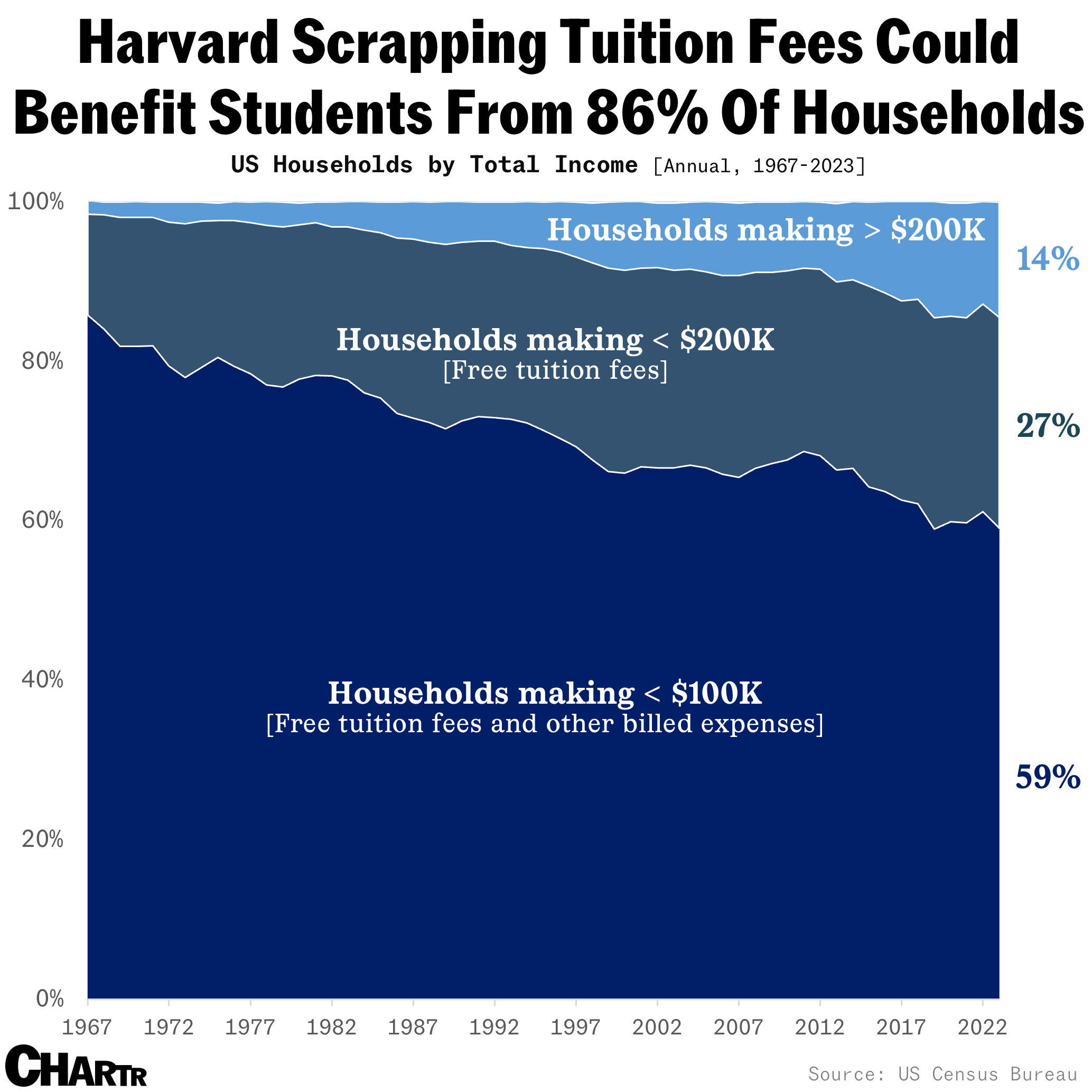
Per the latest household income figures from the Census Bureau, students from almost 60% of US households could get all of their billed expenses covered if they get into Harvard in the 2025-26 academic year, while only 14% of households wouldn’t qualify for free tuition fees, owing to them bringing in more than $200,000 each year.
Even as competition for a Harvard education has grown tighter in recent years, the university itself is clearly keen to ensure that it gets a diverse range of applicants for those limited places… and not just those who are willing to spend $200,000 on consultants to boost their chances of getting in.