
Culture
$890B

Since the pandemic, picky high earners have been at the epicenter of a new cost headache for retailers: “buy now, return later.”

That’s the message from the Bank of America Institute, which reports that US retailers stared down a massive $890 billion tab from returns last year, according to the National Retail Federation. Return rates have more than doubled since 2019 among large retailers, with the associated costs rising even more:
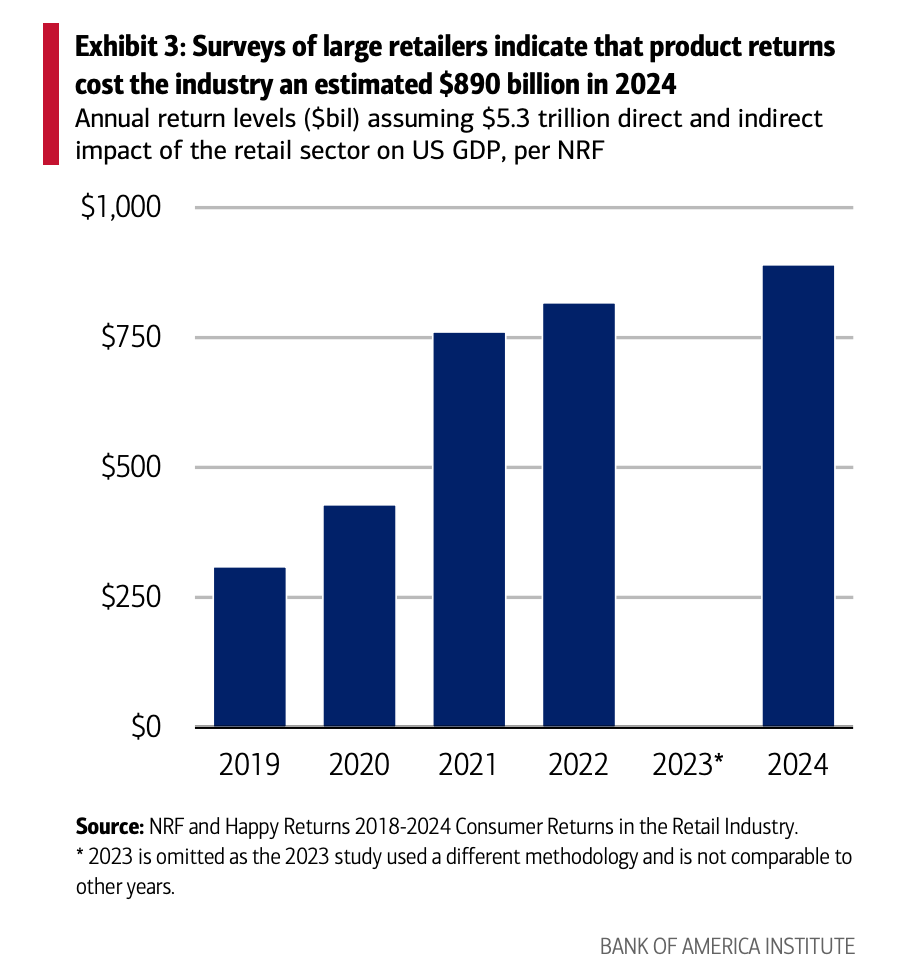
Retailer returns data
Source: Bank of America Institute

More tidbits from BofA:

  • Department stores are taking the hardest hit, with a return rate in the high teens versus 4.5% for all US retailers.

  • Gen Z has the lowest return rate — unless it’s for electronics.

  • Higher-income shoppers are returning items at nearly twice the rate of lower-income households.

One explanation “may be that higher-income households are less cash-constrained and so are more likely to buy items speculatively when they are searching for a particular purchase, in the knowledge they can return it later if they decide it’s not right for them,” wrote Bank of America Institute economists led by David Michael Tinsley.

For shoppers, free returns have become the trade-off for hitting “buy,” but for retailers already squeezed by tariffs and soft demand, “buy now, return later” is proving to be an expensive habit to support.

More Culture

See all Culture
Family in front of TV

Hollywood may have its best year at the box office since 2019, but streaming audiences are still obsessed with old content

Viewers are opting for catalog content over new shows and movies across (pretty much) every major streamer.

Tom Jones6/29/26
culture
Tom Jones

The BBC has become the world’s top news website... by collapsing a little less than its competition

Press Gazette just published its annual look at the biggest news sites in the world across all languages; for the most part, it doesn’t make for particularly pretty reading.

The journalism industry publication’s latest update, which is based on estimates provided by Similarweb for May, found that 37 of the world’s 50 most visited news sites saw their reach shrink. Press Gazette highlighted that American outlets have been hit particularly hard by declining Google traffic compared to European counterparts, owing to the platform’s AI features rolling out earlier in the US.

Even the BBC, having climbed the rankings from last year to top the 2026 chart — reportedly in part thanks to Similarweb’s decision to combine the “.co.uk” and “.com” versions of the URL, given that the sites redirect to each other depending on the user’s location — showed a 1.9% decline from last year.

Latest Stories

Sherwood Media, LLC and Chartr Limited produce fresh and unique perspectives on topical financial news and are fully owned subsidiaries of Robinhood Markets, Inc., and any views expressed here do not necessarily reflect the views of any other Robinhood affiliate, including Robinhood Markets, Inc., Robinhood Financial LLC, Robinhood Securities, LLC, Robinhood Crypto, LLC, Robinhood Money, LLC, Robinhood U.K. Ltd, Robinhood Derivatives, LLC, Robinhood Gold, LLC, Robinhood Asset Management, LLC, Robinhood Credit, Inc., Robinhood Ventures DE, LLC and, where applicable, its managed investment vehicles.