
Culture
Sequels part 2: How sequelitis changed movie titles

Sequels part 2: How sequelitis changed movie titles

Sequels part 2: into the unknown

Indeed, though we’ve charted about “sequelitis” a lot in the past, filmmakers' appetite for risk only appears to be diminishing. Recent analysis from EntTelligence, for example, revealed that just 5 of the 60 highest grossing films since 2016 (not including 2020) can be classified as “true original” titles, as opposed to sequels, IP reboots or rehashes.

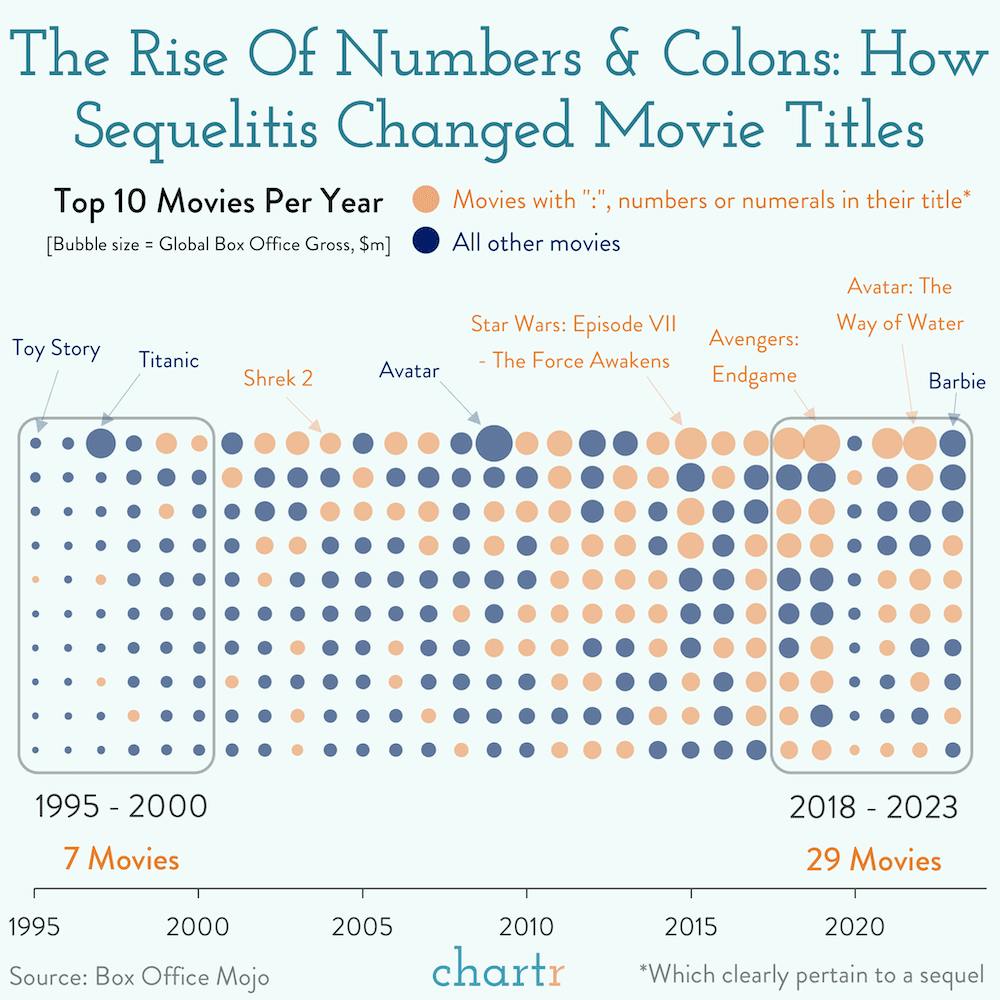
While complaining about sequels is nothing new, the proliferation of second, third, fourth, and fifth parts has had a profound effect on the titles of the biggest movies on our screens.

Digits and dots

Looking at the 10 biggest movies of each year from 1995 to 2000, just 7 movie titles contained numbers or colons that denoted a sequel, such as The Lost World: Jurassic Park from ‘97 or Toy Story 2 from ‘99. Since then, however, a world building surge has meant that movie makers (and marketing departments) have needed to change up title formats, slipping in subtitles preceded by colons, or nudging numbers into whichever Fast and Furious installment they’re onto now. Indeed, nearly half of the top grossing films of the last 5 years contained either a colon or numerical figure that indicated sequel status.

We may not even have seen “peak sequel”. In 2023 book You Are What You Watch, Walt Hickey posits an interesting distinction: sequels and movies that rely on old IP aren’t born from crazed searches for profit, but rather on the studios’ need for a reliable means of “not losing money” — tried and tested remakes appeal to “risk-aversion motivation”, offering a rare reprieve for the industry as eyes shift elsewhere.

More Culture

See all Culture
Family in front of TV

Hollywood may have its best year at the box office since 2019, but streaming audiences are still obsessed with old content

Viewers are opting for catalog content over new shows and movies across (pretty much) every major streamer.

Tom Jones6/29/26
culture
Tom Jones

The BBC has become the world’s top news website... by collapsing a little less than its competition

Press Gazette just published its annual look at the biggest news sites in the world across all languages; for the most part, it doesn’t make for particularly pretty reading.

The journalism industry publication’s latest update, which is based on estimates provided by Similarweb for May, found that 37 of the world’s 50 most visited news sites saw their reach shrink. Press Gazette highlighted that American outlets have been hit particularly hard by declining Google traffic compared to European counterparts, owing to the platform’s AI features rolling out earlier in the US.

Even the BBC, having climbed the rankings from last year to top the 2026 chart — reportedly in part thanks to Similarweb’s decision to combine the “.co.uk” and “.com” versions of the URL, given that the sites redirect to each other depending on the user’s location — showed a 1.9% decline from last year.

Latest Stories

Sherwood Media, LLC and Chartr Limited produce fresh and unique perspectives on topical financial news and are fully owned subsidiaries of Robinhood Markets, Inc., and any views expressed here do not necessarily reflect the views of any other Robinhood affiliate, including Robinhood Markets, Inc., Robinhood Financial LLC, Robinhood Securities, LLC, Robinhood Crypto, LLC, Robinhood Money, LLC, Robinhood U.K. Ltd, Robinhood Derivatives, LLC, Robinhood Gold, LLC, Robinhood Asset Management, LLC, Robinhood Credit, Inc., Robinhood Ventures DE, LLC and, where applicable, its managed investment vehicles.