

Garbage Day
I’m working late
Because there’s too much data
What was the song of the summer? Nobody knows
Measuring a song's popularity has never been more complicated
One of the most pressing questions in the world of pop culture right now is: how exactly do we measure popularity? We’ve never had more metrics at our disposal to find an answer, yet it’s harder than ever to actually do so. Nowhere is this more apparent than the world of music.
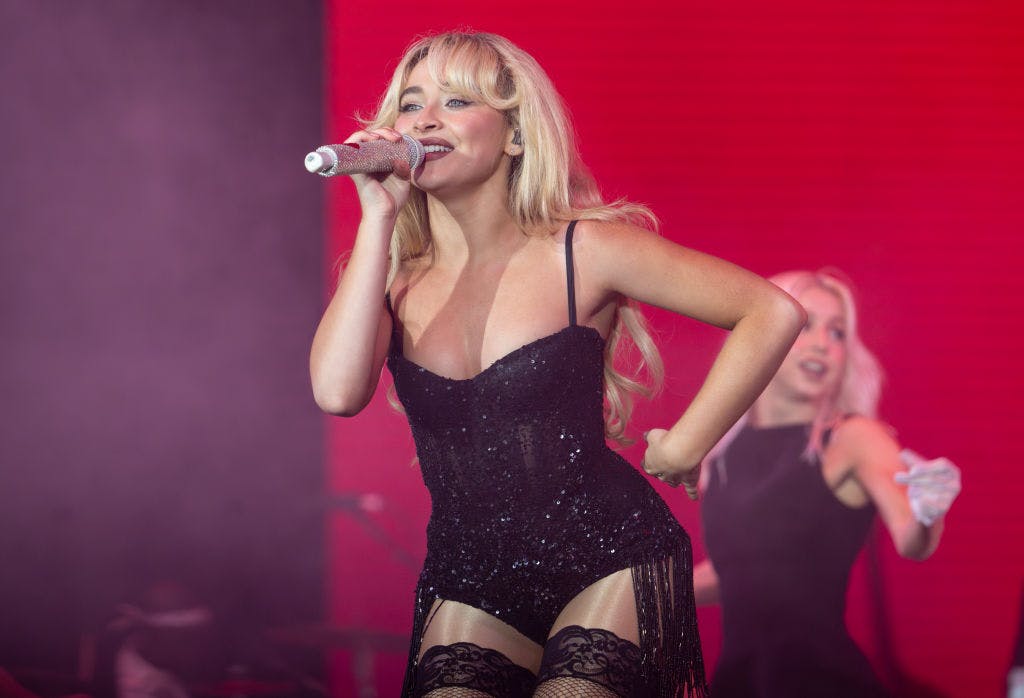
It’s clear this summer was a generational moment for pop music. Charli XCX’s Brat Summer phenomenon was big enough to propel Vice President Kamala Harris’ presidential campaign. Sabrina Carpenter parlayed her opening act for Taylor Swift’s Eras tour into massive chart success with her album “Short n’ Sweet.” And Chappell Roan blew up in ways few artists have since Nirvana with “The Rise and Fall of a Midwest Princess,” commanding impossibly large audiences at festivals all summer. This is all to say nothing of Kendrick Lamar’s epic weekslong cascade of Drake diss tracks.
Before streaming, you could pull up records’ sales data and easily figure out which pop girlie (or guy) had the biggest summer, but things are much more complicated now. There are Billboard charts, Spotify charts, social platforms like Instagram and TikTok, and, somewhere in there, a few people are even still buying albums. What’s interesting, though, is how these leaderboards do — and do not — line up.
Let’s start with the easiest thing to analyze: Spotify streams. Garbage Day started tracking the most-played songs per month on the streaming giant this July, so while there isn’t a huge amount of historic data, it’s still clear that Sabrina Carpenter is the queen of streaming right now. In July, her songs “Please Please Please” and “Espresso” were the top tracks on the platform, and in August they’d only dropped to No. 3 and 4 thanks to new singles from Billie Eilish and Jimin of BTS.
Meanwhile, Chappell Roan’s “Good Luck, Babe!” cracked Spotify’s Top 10 in July, peaking at No. 6 in August. She currently has four other songs in the Top 100. But while Roan is on the rise, Charli XCX is on the downswing. Now that “360” has left the Top 100, only her Billie Eilish collab “Guess” has held steady on weekly Spotify streams. Lamar is in a similar position, with “Not Like Us” staying in the Top 100 since its release while his other Drake diss tracks and appearances have left the charts.
Billboard, on the other hand, the music industry’s gold standard for tracking music sales and popularity, tells a wildly different story. Their data, which combines radio airplay, streaming figures, and both physical and digital sales, shows that Post Malone and Shaboozey had the biggest songs of the summer. Malone’s “I Had Some Help” was No. 1 for six weeks, and he’s had three other songs enter Billboard’s Top 100 since August. He lost the top spot only when Shaboozey’s “A Bar Song (Tipsy)” made it to the charts in July, after being released in April.
As far as Billboard is concerned, Shaboozey was the artist to really dominate. “A Bar Song (Tipsy)” was No. 1 for 11 straight weeks this summer. On Spotify, though, the song peaked at No. 6.
Things get fuzzier when you start to compare these charts to social platforms. In August, Sabrina Carpenter became the first pop star to dominate TikTok since Garbage Day started tracking the platform last year. A video from her account was the app’s second-biggest in August, something that celebrities virtually never accomplish on the platform, which tends to be too global and young-skewing to form a consensus audience.
Carpenter has also regularly been one of the fastest-growing Instagram accounts this summer, with over 1.3 million new followers in August. In June, at the peak of his feud with Drake, it was Lamar who saw the most traction on the app. But Eilish put them all to shame in May, when she partnered with Instagram to add all her followers to her Close Friends story to promote her new album, “Hit Me Hard and Soft,” netting her 9 million followers in just three days. Despite that clever publicity stunt, Eilish failed to unseat Taylor Swift’s “Tortured Poets Department” on the Billboard charts. Clearly, there’s a relationship between what people are streaming and who they’re following on social media, but it’s not one-to-one.
Part of the reason Billboard surfaces different data than streaming platforms like Spotify or social apps like TikTok and Instagram is because of scope. Billboard specifically tracks what’s doing well in the US across multiple media streams, while the others track what’s doing well globally, as filtered through their own algorithms. This would explain why Spotify identified Colombian artist Karol G’s “Si Antes Te Hubiera Conocido” as one of the biggest songs of the summer. (The fact that she did a “Fortnite” concert this August probably didn’t hurt).
But there’s also an important difference in how users listen to music on Spotify versus how your average music listener encounters songs out in the wild. Even just looking at what songs are popular on the platform month to month, the bulk of Spotify users tend to listen to music that’s different from what’s played on the radio or in public spaces like nightclubs — a point that YouTuber Anthony Fantano made in a recent video about the surprising success of Shaboozey’s "A Bar Song (Tipsy)."
It also means that on Spotify, older songs regularly jockey for position with the hottest new tracks. As of last week, the No. 21 most-streamed song on Spotify was “Sweater Weather” by The Neighborhood — a natural choice for the start of fall, but not something you’d expect to beat “Hot To Go” and “Not Like Us.” Other songs in the Top 100 include A-ha’s “Take On Me,” Coldplay’s “Yellow,” and The Weeknd’s “Blinding Lights,” which remains the single most-streamed song on Spotify with over 4.4 billion streams. Last week, Spotify announced that 18 of The Weeknd’s songs have amassed 1 billion streams each, more than any other artist on the platform. When there’s an infinite pool of songs to track, the data looks way different from a legacy outlet like Billboard.
All this data leaves us with three vastly different competing visions of what mass appeal looks like. The important thing to remember is that all these platforms are part of the same prism: behind all the metrics are industries that want to be the arbiters of culture. Spotify says it knows — and has monopolized — our hidden tastes and most intimate listening data. Billboard says no, the music industry, as an industry, is still relevant. And whichever platform you’re watching short-form video content on thinks their endless feeds are the true key to cultural relevance.
The truth is that it’s likely a confusing combination of all three. Sabrina Carpenter is very popular. Shaboozey wrote the party song of the summer. Everyone knows what “Brat” green looks like. But there’s no magic formula or brilliant gimmick to make something popular. Just ask Billie Eilish.
Garbage Day is an award-winning newsletter that focuses on web culture and technology, covering a mix of memes, trends, and internet drama. We also run a program called Garbage Intelligence, a monthly report tracking the rise and fall of creators and accounts across every major platform on the web. We’ll be sharing some of our findings here on Sherwood. You can subscribe to Garbage Day here.