

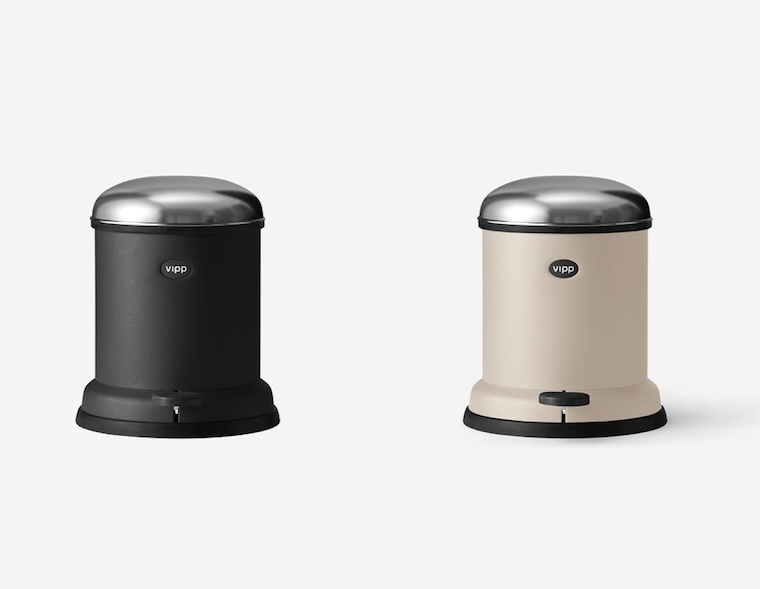
Can you justify a $335 trashcan? Yes.
Here’s how.
When was the last time you went shopping for a trash can? For me, it was pretty recently, and I decided to splurge on a best-in-class can for my bathroom in New York City: the Vipp Pedal Bin 4L.
Think about it: We use trash cans daily but rarely consider them from a function and design perspective. It’s too easy to hit your local Target and pick whichever one is the least offensive. Maybe you’ve taken it a step further and traveled down a dark road known as “smart trash cans” — bins equipped with sensors and cameras that open lids and compact trash in a classic instance of using technology where it is not needed. If you can’t open a trash can with your foot or hand, you have bigger problems to deal with; yet, as of last year, the smart-trash-can market was valued at $341.5M.
The brand Simple Human is the cornerstone of the “luxury market” for trash cans, offering unadorned chrome bins that come in various sizes; some feature “smart” bells and whistles. Simple Human’s products are definitely more stylish than your run-of-the-mill low-cost offerings, but fall into the dreaded “basic plus” category — a phrase I use to describe things that are technically of above-average quality but have become associated with the ALO-wearing Stanley-mug-toting set. You know the type: upwardly mobile, proficient at TikTok, physically fit, and boring. This is a group I cannot afford to be lumped in with, aesthetically or emotionally, even when it comes to waste disposal.
Luckily for us, in 1939, Holger Nielsen, a metalworker from Denmark, designed the perfect trash receptacle for his wife’s hair salon. He called it the Vipp — “vippe” means “to tilt” in Danish. Folks started begging to buy them, but for many years Nielsen chose to keep them limited to workspaces like police stations and hospitals. Eventually, demand was so strong he began making more, and the can became an iconic piece of form and function, earning itself a permanent place in MoMA’s design collection. Nielsen died in 1992, but Vipp remains a family business, run by his daughter. The company’s wares have expanded to (very expensive) lighting, furniture, and kitchens.
The stainless-steel bin I bought boasts a signature sound dampener, so the lid shuts quietly; it also raises and lowers at a perfect speed. The lid is also airtight, so smells don’t leak out, and the bottom is made from rubber, so it doesn’t scratch the floor. The sensation on the foot pedal is deeply pleasing, like closing the door on a Porsche 911. The bin comes in several sizes, all featuring its signature domed lid, but only in a few simple colors, because no one needs a trash can with a pop of color.
Now, the hard part. A one-gallon bin cost me $335, but I can guarantee I will have this little guy forever. A trash can that’s also a piece of art: your bathroom deserves it, and so do you.
Welcome to Black's Gold, a column from Chris Black about the finer things in life. Chris is a writer for New York Magazine's The Strategist, a columnist for GQ, and host of the pop culture podcast 'How Long Gone.'