
Markets
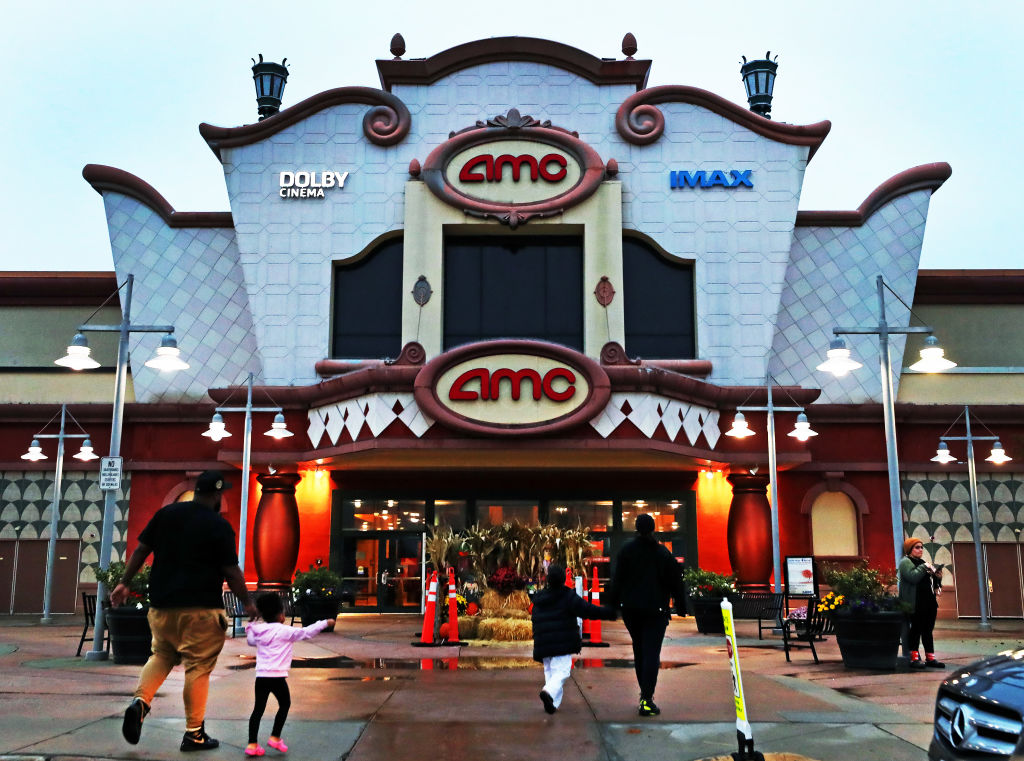
AMC Methuen 20
(Photo by Jim Davis/The Boston Globe via Getty Images)

AMC could have cashed in more on its meme stock status

The movie theater chain’s stock has risen from $3 to above $13.

Luke Kawa

One of the most interesting things to watch during meme stock manias is when frenzied buying activity morphs from a video game on a screen completely untethered from reality into something that actually has a real-world impact.

Hertz is probably the best example of this. The company filed for Chapter 11 bankruptcy in May 2020, but the sheer power of retail buying was able provide a lifeline for the company to come out the other side.

This is an example of legendary investor George Soros’s general theory of reflexivity, where market participants’ buying and selling decisions based on their perceptions — even if flawed — are able to shape and define reality.

Along these lines, it seems like movie theater chain AMC Entertainment just missed out on the ability to secure some even-cheaper funding after its stock surged from just below $3 at the end of this week to above $13 in pre-market trading on Tuesday.

This morning, AMC published a Form 8-K showing that it had completed an “at-the market” equity offering launched on March 28, 2024 on May 13. Translation: it was raising money by selling 72.5 million new shares of the company into the market. The average price it sold shares at was $3.45.

Since the start of the week through 8:30am ET, the volume-weighted average price for shares of AMC has been $5.38.

Granted, from the time this offering was launched on March 28 until the start of this week, the volume-weighed average price was just $3.13.

So management was still able to benefit a little bit from the nascent return of meme stock mania, but certainly not as much as it could have.

Especially considering (again, as of 8:30 am ET), AMC shares have nearly the same volume in the past barely-over-one-trading day than the previous 31 trading days combined!


More Markets

See all Markets
markets

Traders are pricing in a big swing in AI chip market share to Broadcom from Nvidia

The story within the AI trade lately has been: Google’s a winner, and OpenAI is a... well, to be kind, non-winner.

Companies closely tied to the former, like Broadcom, which codesigns the TPUs that Gemini 3 was trained on, have benefited from their relationship with the hyperscaling search giant. Conversely, Nvidia, which sells to both Google and OpenAI but is besieged with worries about how custom chips might impact its AI market share (and profitability), has been selling off.

“NVDA stock is now trading at its widest ever ~40% discount to AVGO’s current 42x forward PE versus historical -10%/+7% discount/premium over the past 1/2 yrs, respectively,” Bank of America analyst Vivek Arya wrote. “In other words, consensus has already implicitly shifted at least 10+ points of (2H26E/27E) AI market share towards AVGO, conceptually.”

The abrupt shift in valuation amid this divergent price action is reversing course on Monday: Nvidia’s up about 1.5% as of 10:55 a.m. ET, while Broadcom is off 2.6%.

Air taxi companies are in the red as Goldman initiates coverage on Archer, Joby, and Beta

Goldman Sachs initiated coverage of the major US air taxi companies on Monday, including Joby Aviation, Archer Aviation, and Beta Technologies. All three are trading down as the bank’s first notes hit investor inboxes.

Though Joby “appears to be in pole position” on certification, analyst Anthony Valentini gave the stock a “sell” rating and a $10 price target — 30% below the value of Joby’s stock at Friday’s close. Valentini wrote that it’s unclear where competitors stand in the process.

Goldman gave Archer a “neutral” rating and an $11 price target, highlighting the company’s ability to cut spending. Beta Technologies, which went public last month, received a “buy” rating and a $47 price target.

markets

Crypto-adjacent stocks drop to start the week

Crypto-adjacent shares slid in early trading along with unprofitable tech company shares, as animal spirits ebbed to start the US trading week.

Goldman Sachs’ basket of bitcoin-sensitive stocks — heavily weighted toward Coinbase and treasury companies like MARA Holdings and Strategy — was down more than 3% early, reflecting another tumble in bitcoin overnight, though bitcoin prices stabilized a bit in early US trading. Robinhood Markets — shares of which have at times taken cues from the price of crypto, which is traded on the brokerage app — was also down.

(Robinhood Markets Inc. is the parent company of Sherwood Media, an independently operated media company.)

It would take a talented druid and a flock’s worth of bird entrails to the divine precisely what’s driving the downdraft. But S&P’s recent assessment of the vulnerability of Tether’s stablecoin, USDT — the world’s largest of these supposedly safer forms of crypto — to the bitcoin sell-off might be playing a role.

Latest Stories

Sherwood Media, LLC produces fresh and unique perspectives on topical financial news and is a fully owned subsidiary of Robinhood Markets, Inc., and any views expressed here do not necessarily reflect the views of any other Robinhood affiliate, including Robinhood Markets, Inc., Robinhood Financial LLC, Robinhood Securities, LLC, Robinhood Crypto, LLC, or Robinhood Money, LLC.