
Markets
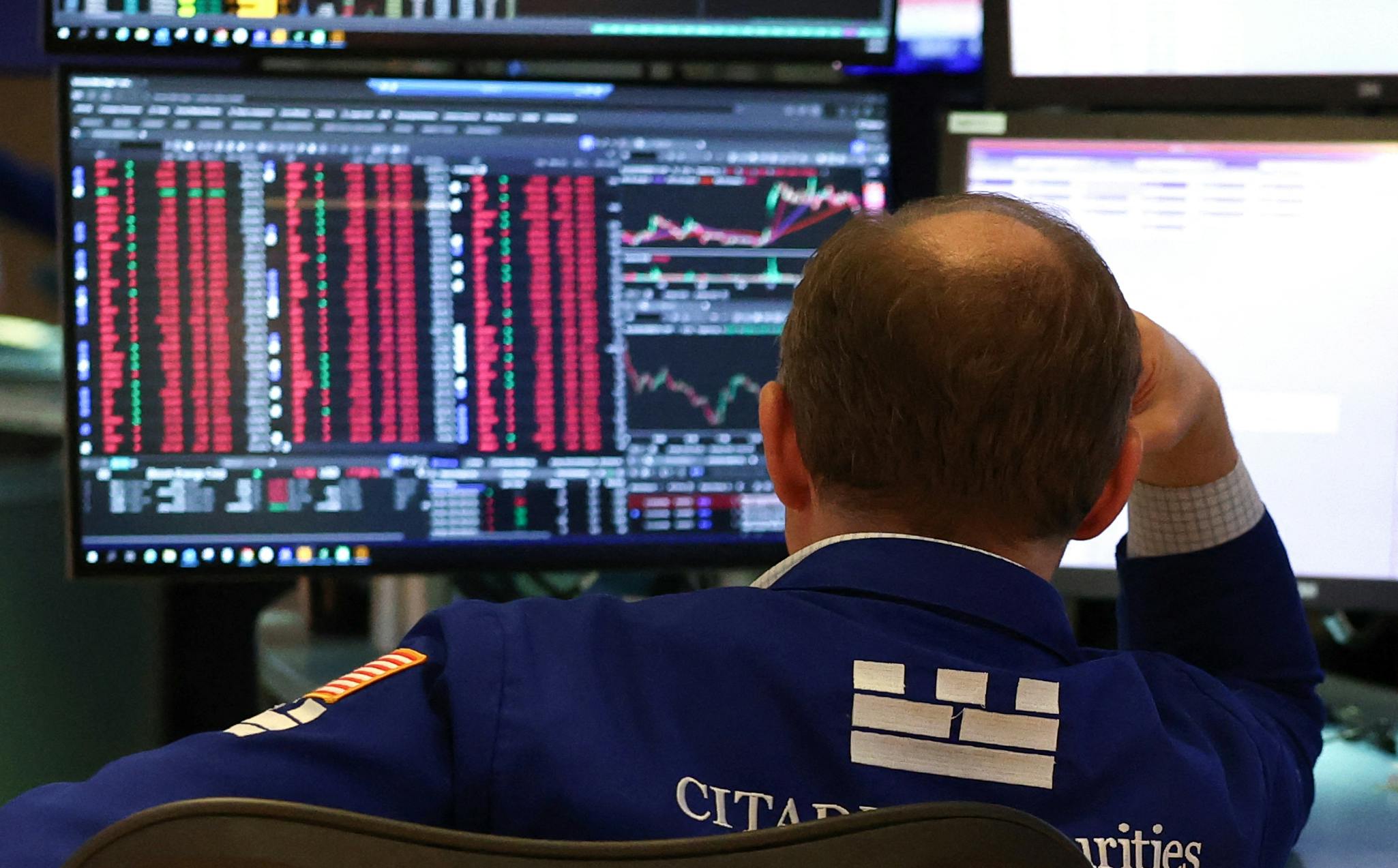
Trader red on screen bald dude
(Timothy A. Clary/Getty Images)

Cuts to S&P 500 earnings “should mimic a recession,” says JPMorgan

JPM equity analysts cut full-year earnings forecast for S&P 500, say tariffs could be “a waterfall event for forward EPS.”

JPMorgan analysts cut their full-year earnings estimate for the S&P 500 by about 7% from $270 per share to $250, warning that the severity of President Trump’s tariffs announced at the White House last Wednesday could prompt a wave of like-minded axe-swinging on estimates in the coming days.

In a note published early Monday, they wrote:

“As a direct result of the new tariffs of an estimated $600 billion (ceteris paribus), S&P 500 negative earnings revisions should mimic a recession assuming most of the incremental tariff burden will be absorbed by companies largely through lower margins and weaker demand. Even though Consensus was gradually revising down estimates even before April 2nd, new tariffs should be a catalyst for a waterfall event for forward EPS with a risk of further downside from potential retaliation (e.g., tit-for-tat tariffs, boycotting, higher friction cost for S&P 500 foreign revenue exposure).”

With earnings season set to unofficially start on Friday, the tone and forecasts offered by executives will also be a factor in how markedly analysts shift their profit projections.

For what it’s worth, even before the tariffs, it didn’t seem like this coming earnings season was expected to be great. Market research firm FactSet reports that more companies than usual have issued “pre-announcements” telegraphing that their results are going to be below Wall Street expectations, and that analysts had been cutting first-quarter estimates by an above-average amount relative to the last 5, 10, and 15 years.

Calendar year and first-quarter 2025 earnings expectations from Wall Street analysts have come down pretty quick, especially since the start of the year.

But stock prices are typically more closely attuned to expected profits over the next 12 to 18 months, and the rolling 12-month bottom-up expectation for S&P earnings haven’t cracked — at least not yet.

To state the obvious, whether or not those full-year expectations tumble in the “waterfall event” JPM foresees as a result of tariffs will be a crucial driver of the market in the coming weeks. Some on Wall Street have said the direction of EPS estimates is the “most important variable” to watch to see if stocks have a chance of durably regaining their footing.

More Markets

See all Markets
markets

Stocks get a jolt as Netanyahu says Israel is helping US efforts to open Strait of Hormuz

Israeli Prime Minister Benjamin Netanyahu said his country was helping with US efforts to open the Strait of Hormuz, putting a jolt into stocks. 

The S&P 500, which had been solidly negative for most of the day, turned slightly green after the remarks. The rebound lost a bit of steam shortly thereafter, but stocks still remained higher than they were before Netanyahu’s comments.

“Israel is helping, in its own way, in intel and other means, the American efforts to open the Strait of [Hormuz],” Netanyahu said, according to a video of the press conference.

Here are another few interesting headlines coming across from the presser, per Reuters:

*NETANYAHU: IRAN HAS NO CAPACITY TO ENRICH URANIUM OR MAKE BALLISTIC MISSILES AFTER 20 DAYS OF WAR

*NETANYAHU: CAN'T DO A REVOLUTION FROM THE AIR, THERE NEEDS TO BE A GROUND COMPONENT AS WELL

*NETANYAHU: ISRAEL ACTED ALONE AGAINST SOUTH PARS

*NETANYAHU: TRUMP ASKED US TO HOLD OFF ON FUTURE SUCH ATTACKS

“Israel is helping, in its own way, in intel and other means, the American efforts to open the Strait of [Hormuz],” Netanyahu said, according to a video of the press conference.

Here are another few interesting headlines coming across from the presser, per Reuters:

*NETANYAHU: IRAN HAS NO CAPACITY TO ENRICH URANIUM OR MAKE BALLISTIC MISSILES AFTER 20 DAYS OF WAR

*NETANYAHU: CAN'T DO A REVOLUTION FROM THE AIR, THERE NEEDS TO BE A GROUND COMPONENT AS WELL

*NETANYAHU: ISRAEL ACTED ALONE AGAINST SOUTH PARS

*NETANYAHU: TRUMP ASKED US TO HOLD OFF ON FUTURE SUCH ATTACKS

markets

Gold tumbles as market sees Fed shifting toward inflation fighting

Gold and gold miners tumbled Thursday, as the rolling Iran war energy crisis revived worries about inflation and pushed the market to take additional rate cuts this year off the table.

Gold (SPDR Gold Shares ETF) futures dropped roughly 6% shortly after 12 pm ET, hammering share prices for miners Newmont and Freeport-McMoRan. Silver (iShares Silver Trust) futures were down nearly 9%

The decline in precious metals came alongside another sharp rise in energy prices. US benchmark crude oil (United States Oil Fund LP) and natural gas prices both jumped more than 3%, after major Iranian attacks on Qatari energy infrastructure. US retail gasoline prices tracked by AAA hit $3.884, up 33% from the end of last month, when a joint US-Israeli attack on Iran ignited hostilities.

Normally, gold prices are seen as a hedge on inflation, which might suggest that they should rise alongside expectations for persistent price increases.

But the speed of the Iran war energy shock — which will add to inflationary pressures already visible in recent economic reports such as this week’s Producer Price Index and could become a political problem for the Trump administration — has nudged traders to change their their views on whether the Federal Reserve would be able to deliver rate cuts widely expected just a few weeks ago.

Yields on shorter-maturity US Treasury notes shot higher Thursday — reflecting expectations for tighter monetary policy. And prices in the market for Fed Funds futures suggest traders no longer see the US central bank cutting interest rates this year at all. (Early this month, market pricing implied expectations for two more cuts this year.)

On Thursday yields fell on longer-term US government securities, such as the US 30-year bond. That suggests the market thinks a Fed shift toward inflation-fighting and away from rate-cutting would likely result in some decline in growth and, or inflation, helping to explain the drop in precious metals prices, as there would be less of a need for inflation hedges in such a scenario.

The decline in precious metals came alongside another sharp rise in energy prices. US benchmark crude oil (United States Oil Fund LP) and natural gas prices both jumped more than 3%, after major Iranian attacks on Qatari energy infrastructure. US retail gasoline prices tracked by AAA hit $3.884, up 33% from the end of last month, when a joint US-Israeli attack on Iran ignited hostilities.

Normally, gold prices are seen as a hedge on inflation, which might suggest that they should rise alongside expectations for persistent price increases.

But the speed of the Iran war energy shock — which will add to inflationary pressures already visible in recent economic reports such as this week’s Producer Price Index and could become a political problem for the Trump administration — has nudged traders to change their their views on whether the Federal Reserve would be able to deliver rate cuts widely expected just a few weeks ago.

Yields on shorter-maturity US Treasury notes shot higher Thursday — reflecting expectations for tighter monetary policy. And prices in the market for Fed Funds futures suggest traders no longer see the US central bank cutting interest rates this year at all. (Early this month, market pricing implied expectations for two more cuts this year.)

On Thursday yields fell on longer-term US government securities, such as the US 30-year bond. That suggests the market thinks a Fed shift toward inflation-fighting and away from rate-cutting would likely result in some decline in growth and, or inflation, helping to explain the drop in precious metals prices, as there would be less of a need for inflation hedges in such a scenario.

markets

Novo says FDA has approved high-dose Wegovy shot

The Food and Drug Administration approved Novo Nordisk’s high-dose Wegovy shot, the company announced on Thursday.

Wegovy HD, a once-weekly 7.2-milligram injection, helped patients lose 20.7% of their body weight after 72 weeks, putting it in line with Eli Lilly’s competitor drug, Zepbound. By comparison, Wegovy typically has a maximum dose of 2.4 milligrams, which resulted in 15% weight reduction over 68 weeks in trials.

Wegovy HD was the first drug to be approved through the FDA’s new priority voucher system. This comes as Novo, despite being early to the GLP-1 boom, has been outpaced in sales by Lilly. The company released a pill version of Wegovy in January, which has shown strong early uptake, though new competitor products are set to debut this year and next.

The stock is down about 1.6% for the day, but was down nearly 3% before the announcement.

markets

Intuit, Workday jump amid Iran war fueling flight-to-software trade

Cash flow positive software companies — the same ones that were seen as doomed to obsolescence by AI a few weeks back — jumped Thursday, with Oracle, Workday, Intuit, and Salesforce staying above water despite the general downtrend in the big indexes.

Some of the uptick is likely linked to the better-than-expected weekly jobless claims numbers that came in early today, which eased concerns about a recession brought on by the most recent monthly employment report. (Payroll-processing stocks like Paycom Software, Paychex, and Automatic Data Processing are clearly breathing a sign of relief.)

And given that these software companies often have a “seat-based” revenue model, the fact that human butts are not rapidly being replaced by AI-enhanced robot keisters gives them a lift as well.

Also as we’ve said before, amid the chaos and uncertainty of the Iran war, the steady cash flows and predictable short-term outlook of software-as-a-service stocks have a definite appeal.

Even if you think that over the long term AI will end up slaughtering these cash cows, that’s a problem for a day perhaps three to five years in the future, whereas the Iran war is a growing risk investors increasingly can’t ignore today.

Latest Stories

Sherwood Media, LLC produces fresh and unique perspectives on topical financial news and is a fully owned subsidiary of Robinhood Markets, Inc., and any views expressed here do not necessarily reflect the views of any other Robinhood affiliate, including Robinhood Markets, Inc., Robinhood Financial LLC, Robinhood Securities, LLC, Robinhood Crypto, LLC, Robinhood Derivatives, LLC, or Robinhood Money, LLC. Futures and event contracts are offered through Robinhood Derivatives, LLC.