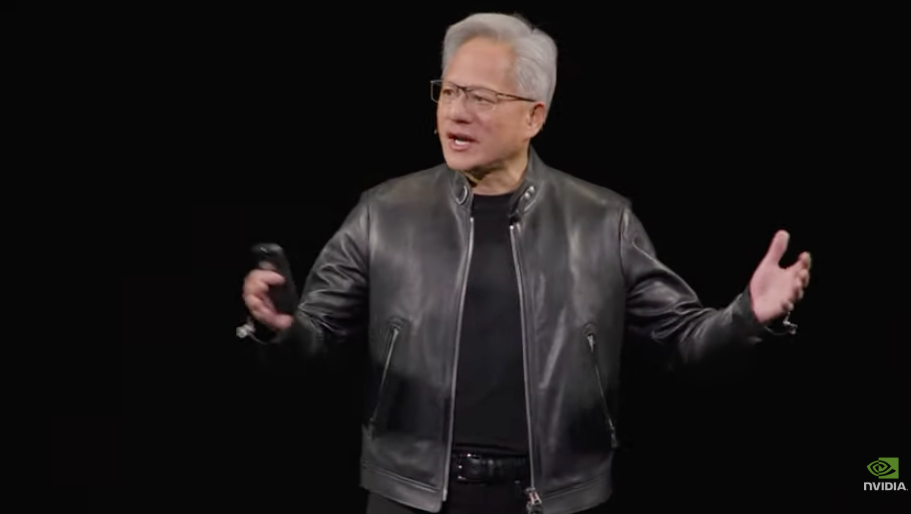
D-Wave CEO explains where the US is falling behind the rest of the world on quantum computing
The US wants a quantum leap; the rest of the world is fine moving forward with quantum steps.
To say that America is falling behind on any emergent technology is a bold statement.
To say it of quantum computing might be even more eyebrow-raising, given that megacap tech companies like Amazon, Microsoft, and Alphabet have all introduced new quantum chips in the past five months, while San Jose-based D-Wave Quantum has booked a sale of a quantum system that continues to generate revenues in part by using D-Wave’s technology to help businesses solve optimization problems.
But that’s still exactly what D-Wave CEO Dr. Alan Baratz thinks of the domestic market.
On the surface, this might look like a bit of a self-serving statement based on D-Wave’s primary approach to quantum computing. US tech companies (and the government) have a preference for gate-based quantum computing models rather than annealing models. To oversimplify, gate-based models have more potential power and flexibility in problem-solving, while annealing computers provide solutions to more specific queries. While D-Wave pursues both, the latter rather than the former is what’s driving sales growth.
In short: the US is deeply interested in the most maximalist quantum approaches, while the rest of the world is interested in both that and utility in the here and now. To put it another way, the US is so focused on a “quantum leap” that the government and major private-sector players aren’t really interested in quantum steps.
When you look at D-Wave customers that have most deeply integrated its technology into their businesses, you start to see where Baratz is coming from: they’re in Turkey, Japan, and Canada.
He says the company “couldn’t even get a foot in the door” with the US government, and is hoping that a recent partnership with Davidson Technologies, which has received a number of government contracts relating to defense and national security issues, will give annealing quantum technology the chance to prove its worth to the powers that be.
The most interesting snippet of our conversation with Baratz following D-Wave’s Q1 report, where record revenues sent the stock more than 50% higher, was on the challenges breaking through in the US market, and why.
A lightly edited transcript of the exchange is below:
Sherwood News: When I look at the customers you’ve highlighted as applying your capabilities into commercial applications, I see Ford Otosan (that’s Turkey), NTT Docomo (that’s Japan), and Pattison Food Group, from Canada. When I think of new technologies, I think Silicon Valley, move fast and break things. I think America. Is there an extra challenge in breaking through with a US customer base? How are you thinking about that and addressing that, because that’s obviously a massive opportunity?
Alan Baratz: As I think you’re aware, there are two main approaches to quantum: annealing and gate, and our current commercial quantum computers are annealing. Quantum computers’ gate models are not at the level of commercial viability yet, and that’s not just our gate-model program — that’s every company in the world that’s working on building a gate-model system.
Those systems are still in the R&D phase. They are not large enough yet. They do not have error correction, which is required to be commercially viable in the gate-model space. They’re just not ready for prime time yet. That having been said, the US is very focused today on gate-model, long-term research, not near-term commercial applications.
The rest of the world is more balanced. They’re interested in both near-term quantum applications as well as longer-term quantum research. Well, since annealing is the only approach to quantum that can provide near-term application value today, they’re looking at annealing for that near-term application value, and they’re looking at gate for longer-term research investigations.
For some reason, which we are trying to overcome, the US is primarily focused on longer-term gate-model research investigations. So there is a challenge for us. We think it is shortsighted. We think that it will be problematic for US competitiveness. We are working hard to move the country to understand the value of near-term quantum. We’re starting to make some progress, but the US is not as advanced as the rest of the world in this area.
Sherwood: That strikes me as profoundly interesting. It’s just so the opposite of the normal approach to tech uptake.
Baratz: It’s also profoundly disappointing. I mean, I am very disappointed in the US government for its lack of focus on this and on Big Tech’s lack of focus on it.
Sherwood: That’s exactly where I was going to go to next, because in the history of tech, from genesis to commercial applications, if it’s not Silicon Valley, it’s the government, the internet/DARPA, etc. And I believe you highlighted in the earnings call the US government’s gate-centric approach.
I presume the Davidson partnership is part of trying to overcome this. What kind of proofs are you trying to show or exemplify to try to change minds about the urgency and the utility of annealing quantum tech and the applications today?
Baratz: So, first of all, I think we just need the opportunity to demonstrate once the value that we can bring to the table when it comes to near-term applications. The challenge we’ve had up until now, frankly, is the US government just hasn’t been interested. We couldn’t even get a foot in the door. However, with our partnership with Davidson Technologies, as well as some other things that we are starting to do with the US government, we think that we have an opportunity to identify a couple of application areas where we can show real value.
And we think that once we do that, that will provide the impetus to start getting the ball rolling on annealing and near-term applications. So we’re focused, we’re executing, and we’re hopeful.