


Europe’s luxury stocks have boomed in the last decade*
*Except Burberry, which has gone backwards
Burberry just reported a seriously unfashionable first quarter.
Retail revenues at the iconic British fashion house dropped 22%, the company’s CEO stepped down, the regular dividend was suspended, and sales in all but one of its major regions were down double digits (except Japan, which was up 6%) — sending shares in the company down more than 18% as of 2:45pm in London.
Plaid out
For a long time, Burberry's iconic trench coats were a must-have for the aspirational elite of UK society and beyond. Originally designed for military use in World War I, by the mid-1990s 1-in-5 coats exported from the UK bore the Burberry name. But, as the global middle class expanded, particularly in China, the company targeted a wider appeal at lower price points — diluting the brand's exclusive appeal. This contributed to a flood of knock-offs and controversies, with some bars and pubs going as far as to ban customers who wore the Burberry label in the early 2000s.
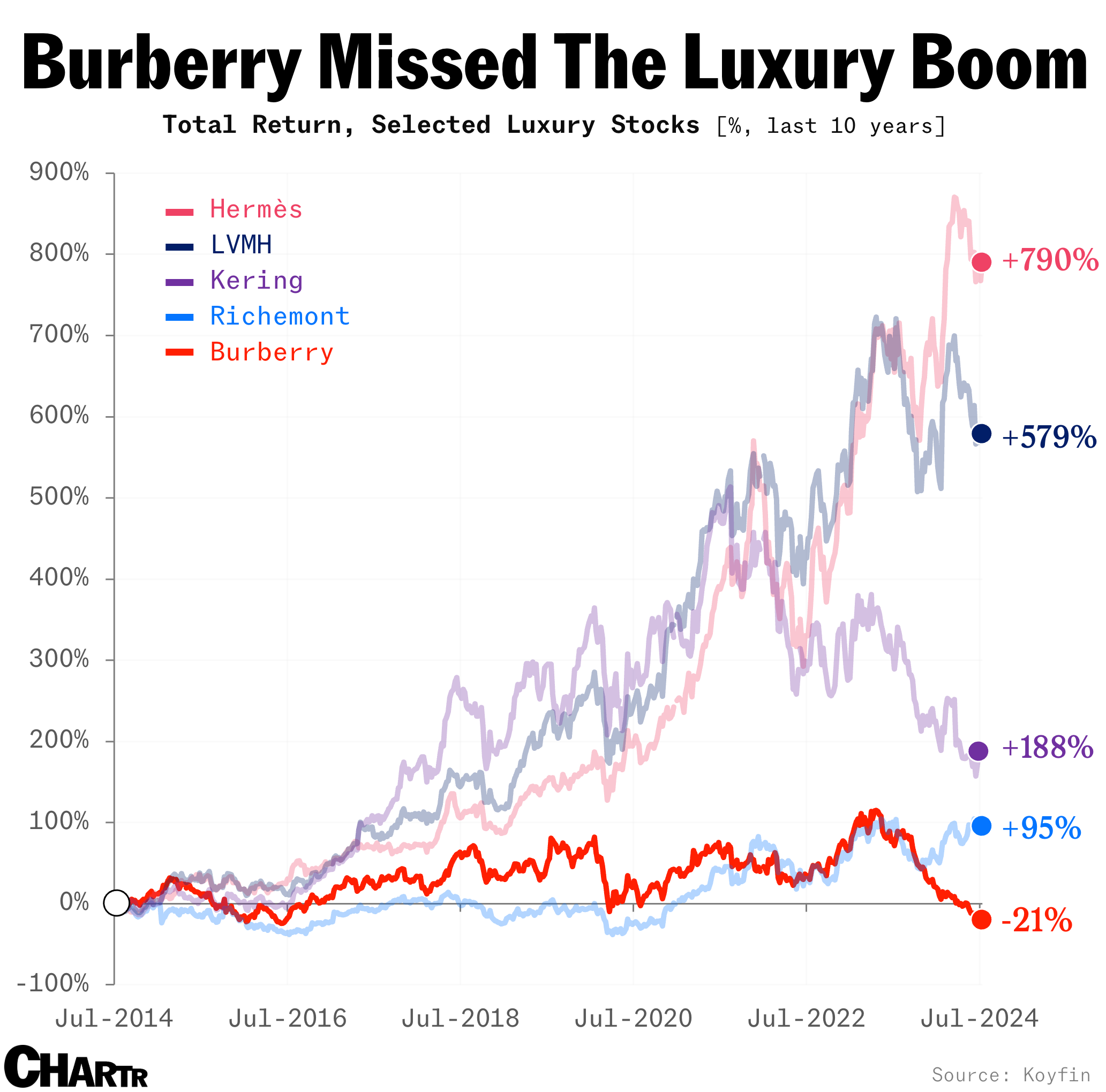
Since then, the brand has undergone reinvention after reinvention. Its latest efforts have mostly focused on elevating the brand’s status, even at the risk of alienating customers with higher prices, as it seeks to replicate the success of other European top-tier labels. Indeed, Europe doesn’t do big tech — it does big luxury, with the soaring stock prices of companies like LVMH and Hermès emblematic of booming demand for European luxury products.
Burberry, unfortunately, hasn’t been able to ride the wave, standing out as one of the few European luxury goods companies to have seen its share price go backwards over the last decade. The brand’s new boss, who has been CEO of both Coach and Michael Kors, is tasked with turning the ship around.




