

Even with a fragile ceasefire in place, the energy crisis is far from over. Here’s what to watch for.
In a Q&A with Sherwood, commodities analyst Rory Johnston lays out how to better understand the oil market’s situation.
Last night’s ceasefire deal between Iran and the US once again scrambled global markets, causing crude oil prices to collapse and stock and bond markets to soar.
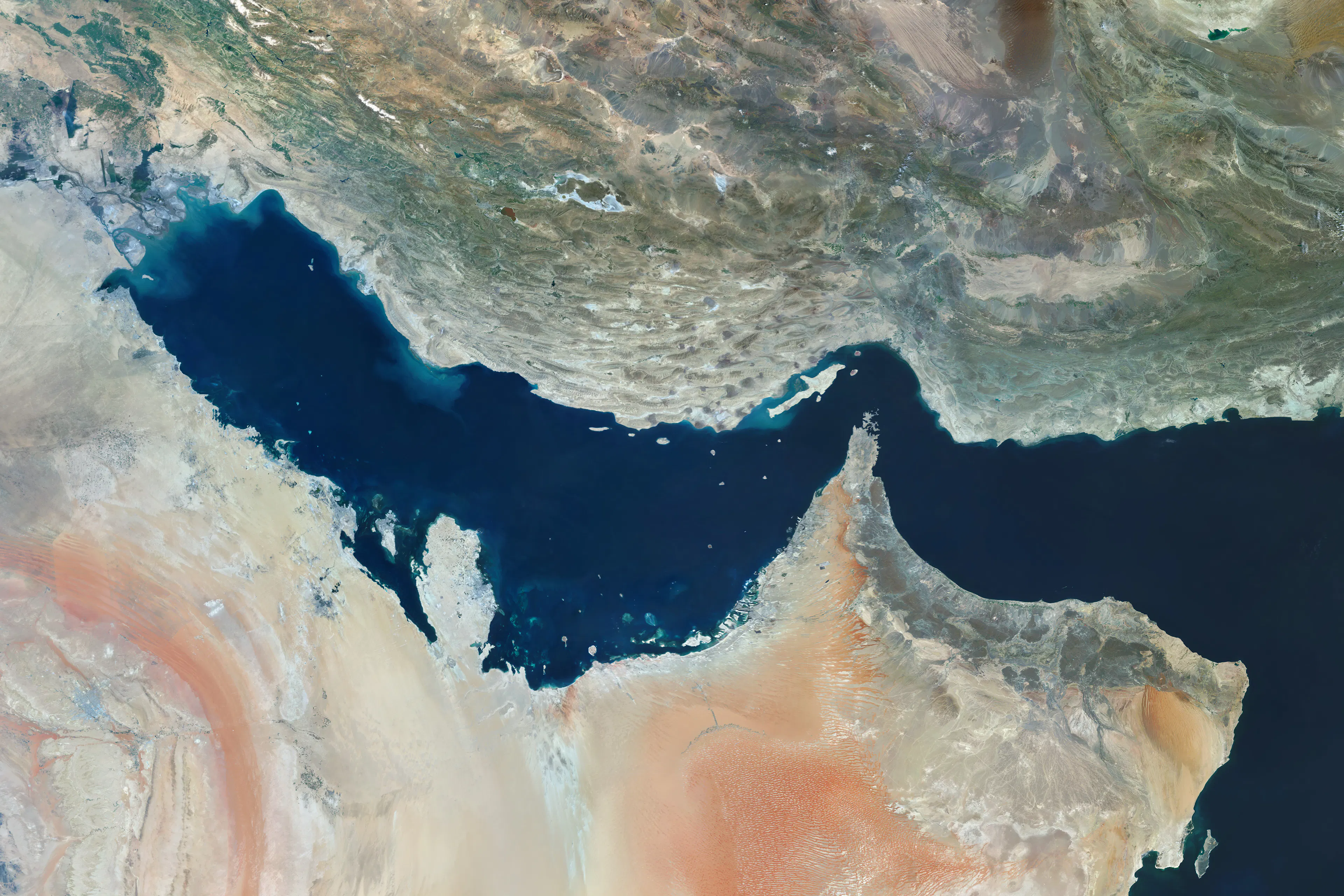
But the energy crisis sparked by the closure of the Strait of Hormuz — which the head of the International Energy Agency this week called “more serious than the ones in 1973, 1979, and 2022 together” — is far from resolved. Hours after the deal was reportedly struck, attacks between Iran and Israel continued. Iran also continued firing on Gulf neighbors after the deal was reached.
Two ships have reportedly passed through the Strait since the ceasefire was brokered, but it still remained largely blocked early Wednesday.
US Vice President JD Vance called the truce “fragile,” and negotiations between the countries will have to take a notable step forward during the ceasefire period, or sentiment could easily slide backward if bombs start falling again.
Key questions remain about the impact of oil and energy costs on economies worldwide. Most of those questions, as usual, boil down to price.
How high would the cost of different products have to climb before bringing about the kind of demand destruction — essentially reductions in economic activity — that would be needed to match supply with demand, if the global economy durably lost access to a large part of the 20% of world energy supplies that flow out of the Persian Gulf through the Strait?
On Tuesday afternoon, before the ceasefire news, we spoke with independent commodities analyst Rory Johnston, who laid out some key prices to watch and how he interprets the message the markets are sending.
This conversation has been edited for clarity and concision.
Matt Phillips, Sherwood News: What should people be watching to make sense of this crisis? Futures prices? Spot prices? Brent? West Texas Intermediate? Like, what is the real price?
Rory Johnston, founder of Commodity Context: I think the challenge is, they’re all real prices. The futures price is real, has a lot of volume behind it, has lot of liquidity.
But I think at the end of the day, one of the things that’s been a hallmark of this crisis so far has been that the bulk of the pressure has manifested at the very, very front of the curve, and even further into the present, into actual, physical spot pricing.
So that’s your sign, basically: that you have extreme backwardation. And backwardation is, essentially, the slope of the futures curve is pointed sharply down.
Sherwood: And just to lay it out very clearly for the readers, that means the market thinks oil a month from now will be a lot cheaper than now, right? Is that correct?
Johnston: That’s typically not the way we think about the futures curve.
Typically we think of the futures curve and its structure not as telling you what the markets think about the future, but what the market is telling you about how scarce and precious things are today. That is, it’s not a discount on future barrels compared to spot. It’s like a premium that someone’s willing to pay for spot today.
When you get in a really, really tight market with not enough supply, everyone is bidding up the current available barrel. And this is causing a lot of weird things to happen.
I’m sure you’ve seen people talking about near-term West Texas Intermediate futures trading at a premium to near-term Brent.
Sherwood: Yes, which is weird, right? I thought Brent was the global price that should be much more exposed to issues in the Gulf.
Johnston: But it’s because these two “near-term” contracts have different delivery months. The current front-month WTI contract is for delivery in May. The current prompt month Brent contract is for delivery in June. If you compare WTI for June delivery to Brent for June delivery, WTI is actually still at basically a $10- or $11-per-barrel discount to Brent.
So really, a lot of these weird indicators you’re seeing are all the manifestations of the exact same thing, which is this mega, hyper-backwardation we’re seeing in markets.
Sherwood: I happened to catch your recent discussion with S&P energy analyst Karim Fawaz on your podcast “Oil Ground Up,” in which you were discussing the key prices that will actually determine economic activity. And they’re not always just crude oil, per se.
What should we be looking at to see where the rubber hits the road? (No pun intended.)
Johnston: What we were saying in that podcast is that at the end of the day, it’s consumers who are going to ultimately be the ones that need to shed demand, destroy demand, if this crisis persists.
They don’t buy crude, right? They buy products.
And each product has its own supply and demand curve, its own inventory, its own everything else. So there’s a market for gasoline, a market of diesel and jet fuel and everything else. Those are the prices that are going to end up driving demand destruction.
So it’s not the price of crude, but the price of diesel that’ll make you balk at the cost of shipping something.
And certain products are already feeling the pain more than others, in part because the Middle East, in addition to crude, also exports over 2 million barrels a day of middle distillates like diesel, gasoline, and jet fuel. And those are the ones, those are products that are seeing the biggest explosion or crack spreads. [Editor’s note: Crack spreads are essentially the difference between the price of crude oil and the price of a refined petroleum product. In other words, they’re the profit margin refiners can expect from turning a barrel of crude oil into a product sold to consumers.]
So the diesel crack spread has gone from, let’s say, $30 at the beginning of this year. It recently hit a peak of $90 and it’s currently sitting around $75.
If you’re talking about the actual realized price of diesel in the wholesale market, you’ve got a $75 crack spread, let’s say, and a $110 Brent price, your realized price to diesel is $185 a barrel. You add in the transportation cost and marketing and everything else, and then you basically divide it into gallons, and that’s how you get the price at your pump.
Jet fuel is even more intense. You’ve seen crack spreads jump up to upwards of $100 a barrel. In the first week of the conflict, we saw Asian jet fuel in Singapore jump to about $200 a barrel, and it’s continued climbing and is about $250 now.
You’re seeing just crazy explosions of prices. So you’re going to see those pinch points in those particular markets first.
And the question that we don’t know the answer to — because we’ve never seen prices of this magnitude — is that it’s hard to be certain of how much of this price pressure is going to come from crude oil specifically or from individual refined products and margins.
I think that’s a question that’s up in the air. But we know the final price for diesel and other products would need to be exceptionally high. So it’s important to look at crude prices, and specifically the time they’re being delivered, because this is mainly happening at the front of the curve and in the spot markets. And in addition, you want to look at the product prices to see the actual pressure on individual and consuming markets.
Sherwood: This has been great. Thanks very much for the time. I really appreciate it.
Johnston: No worries. Talk to you later, Matt.




