
Markets
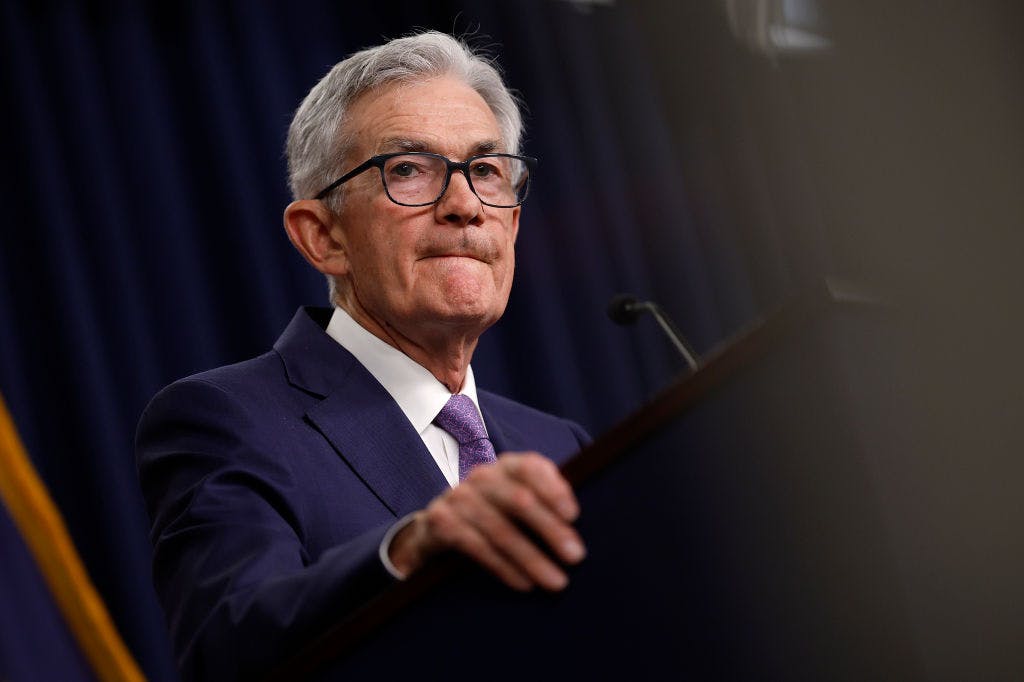
Fed Chair Jerome Powell Holds An News Conference On Interest Rates
Federal Reserve Chair Jerome Powell (Kevin Dietsch/Getty Images)

Federal Reserve keeps rates unchanged; Waller joins Miran in dissenting in favor of rate cut

The US central bank held its policy rate steady at its January meeting.

Luke Kawa

The Federal Reserve held its policy rate at a range of 3.5% to 3.75% at its January meeting.

The decision to stand pat was effectively universally expected by both prediction markets and economists, as monetary policymakers inserted language into their December statement implying that they would not be in a hurry to reduce rates again and the unemployment rate fell by more than anticipated in December, dipping to 4.4%.

Fed officials removed the phrase that “downside risks to employment rose in recent months” from this statement, indicating that the December employment report and other data released in the intervening period have alleviated some of their worries about the labor market.

Stocks were little changed in the aftermath of the decision, but the SPDR S&P 500 ETF moved marginally into positive territory during the press conference.

Two monetary policymakers dissented, preferring a rate cut: Governor Stephen Miran and Governor Christopher Waller.

Miran’s dissension was viewed as a near lock, as he voted for more easing than the central bank has delivered at every meeting since being added to the Federal Open Market Committee. However, event contracts implied it was almost a coin flip as to whether more officials would join him in disagreeing with the majority decision. There was speculation that Governor Chris Waller would join Miran in dissenting in favor of a rate cut in order to bolster his potential to be named as Fed Chair Jay Powell’s successor. President Donald Trump has castigated the central bank for not lowering rates as much or as fast as he believes would be appropriate.

Looking ahead to March, event contracts imply that the odds of the Federal Reserve holding steady again rose to about 90% from roughly 83% ahead of this decision.

(Event contracts are offered through Robinhood Derivatives, LLC — probabilities referenced or sourced from KalshiEx LLC or ForecastEx LLC.)

During the press conference, Powell said that both the downside risks to employment and upside risks to inflation appear to have diminished, and struck an optimistic tone on the US economy.

Since the last meeting, there’s been a “clear improvement” in the economic outlook, he said, remarking that we’re starting off the year “on a firm footing.”

More Markets

See all Markets
markets

Oil’s retreat propels US stocks higher

Front-month West Texas Intermediate futures are down more than 4%, while Brent futures are off more than 2% as of 1:25 p.m. ET as traders glom on to some optimistic signs about the flow of oil through the all-important Strait of Hormuz:

  • A Pakistani-owned tanker passed through the strait this weekend while broadcasting its signal, per Reuters, “indicating ‌that some countries are able to negotiate safe passage for their vessels despite the U.S.-Israeli war on Iran.”

  • US President Donald Trump said that some “fairly local” countries would soon be helping ships traverse the strait (while having added that other countries are “not enthusiastic” about the prospect of participating).

The SPDR S&P 500 ETF and Invesco QQQ Trust are both up over 1% amid oil’s retreat.

That being said, the news flow is far from universally positive.

Reuters reports that the UAE’s crude output has been cut in half since the Mideast conflict started; Bloomberg says Kuwait’s production has suffered a similar decline.

  • A Pakistani-owned tanker passed through the strait this weekend while broadcasting its signal, per Reuters, “indicating ‌that some countries are able to negotiate safe passage for their vessels despite the U.S.-Israeli war on Iran.”

  • US President Donald Trump said that some “fairly local” countries would soon be helping ships traverse the strait (while having added that other countries are “not enthusiastic” about the prospect of participating).

The SPDR S&P 500 ETF and Invesco QQQ Trust are both up over 1% amid oil’s retreat.

That being said, the news flow is far from universally positive.

Reuters reports that the UAE’s crude output has been cut in half since the Mideast conflict started; Bloomberg says Kuwait’s production has suffered a similar decline.

markets

Sandisk and memory stocks rip ahead of Nvidia CEO’s speech

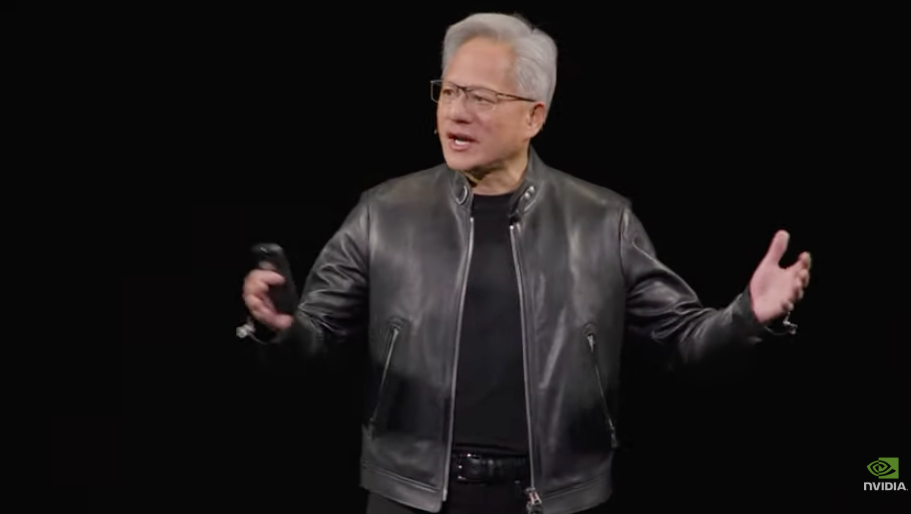
Memory stocks such as Sandisk, Micron, and disk drive makers Western Digital and Seagate sprinted ahead Monday, as this week’s big AI conference for tech bellwether Nvidia gets underway with a speech from the CEO slated for this afternoon.

As Luke Kawa pointed out earlier, CEO Jensen Huang’s speechifying at high-profile company announcements or industry events hasn’t always been a good thing for Nvidia shares. (The chip designer is holding its GPU Technology Conference, or GTC, this week.)

But Huang’s pronouncements have, at times, been pretty dang helpful for share prices of some companies in the orbit of the AI gods. Perhaps foremost among them are the memory stocks that have blasted toward the top of the S&P 500 in terms of price performance in recent years.

Case in point: the nearly 30% gain that Sandisk posted on January 6, the day after Huang’s keynote speech at the Consumer Electronics Show in Las Vegas, in which he spotlighted memory as a key bottleneck constraining the AI build-out. (Fellow memory plays Western Digital, Seagate Technology Holdings, and Micron also posted double-digit gains that day.)

Memory stocks have been the highest-profile outlet for bullish AI industry impulses this year, and notable comments from Huang could put the wind back in their sails after they had slowed in recent weeks.

Of course, there are also other things happening in the sector, such as Micron’s announcement Sunday that it completed an acquisition of a new manufacturing site in Taiwan.

Either way, memory stocks are pushing higher after having exhaled a bit lately.

But Huang’s pronouncements have, at times, been pretty dang helpful for share prices of some companies in the orbit of the AI gods. Perhaps foremost among them are the memory stocks that have blasted toward the top of the S&P 500 in terms of price performance in recent years.

Case in point: the nearly 30% gain that Sandisk posted on January 6, the day after Huang’s keynote speech at the Consumer Electronics Show in Las Vegas, in which he spotlighted memory as a key bottleneck constraining the AI build-out. (Fellow memory plays Western Digital, Seagate Technology Holdings, and Micron also posted double-digit gains that day.)

Memory stocks have been the highest-profile outlet for bullish AI industry impulses this year, and notable comments from Huang could put the wind back in their sails after they had slowed in recent weeks.

Of course, there are also other things happening in the sector, such as Micron’s announcement Sunday that it completed an acquisition of a new manufacturing site in Taiwan.

Either way, memory stocks are pushing higher after having exhaled a bit lately.

Latest Stories

Sherwood Media, LLC produces fresh and unique perspectives on topical financial news and is a fully owned subsidiary of Robinhood Markets, Inc., and any views expressed here do not necessarily reflect the views of any other Robinhood affiliate, including Robinhood Markets, Inc., Robinhood Financial LLC, Robinhood Securities, LLC, Robinhood Crypto, LLC, Robinhood Derivatives, LLC, or Robinhood Money, LLC. Futures and event contracts are offered through Robinhood Derivatives, LLC.
