Markets
markets
Luke Kawa

Intel dives on report of potential manufacturing strategy shift that could cost billions

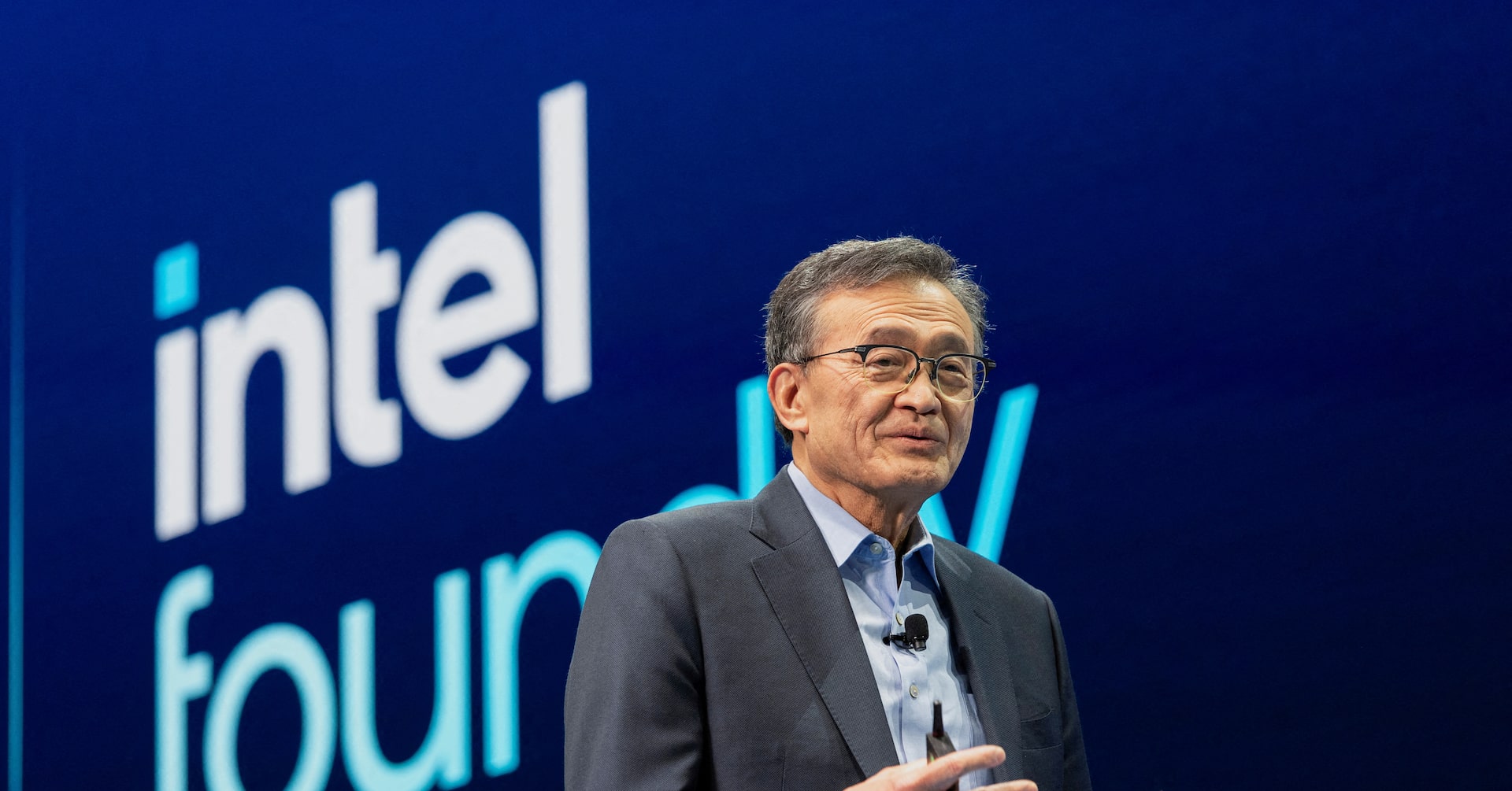
Intel is getting slammed today as investors react to a report from Reuters suggesting new CEO Lip-Bu Tan is mulling a substantial shift to its manufacturing business in a bid to compete with the likes of TSMC.

This would involve stepping away from external sales of chips using one manufacturing process in favor of another. Industry analysts cited by Reuters suggested it would result in a substantial write-off in the “hundreds of millions, if not billions, of dollars.”

Tan’s track record in turning around the financial performance of Cadence Design Systems, which helps chipmakers make chips, caused Wall Street to cheer his arrival at Intel.

It seems as though this potential tactic to bolster the beleaguered chipmaker is not being received as warmly, to put it mildly.
This would involve stepping away from external sales of chips using one manufacturing process in favor of another. Industry analysts cited by Reuters suggested it would result in a substantial write-off in the “hundreds of millions, if not billions, of dollars.”

Tan’s track record in turning around the financial performance of Cadence Design Systems, which helps chipmakers make chips, caused Wall Street to cheer his arrival at Intel.

It seems as though this potential tactic to bolster the beleaguered chipmaker is not being received as warmly, to put it mildly.

More Markets

See all Markets
markets

Nvidia's Jensen Huang thinks markets “got it wrong” on software stocks sell-off

Nvidia CEO Jensen Huang said markets have misjudged AI’s impact on software firms in a CNBC interview on Wednesday, hours after the chipmaker reported better-than-expected Q4 results and strong sales outlook for the current quarter.

So far this year, a slew of software stocks, like Adobe, DocuSign, and Workday, have cratered amid mounting concerns that AI agents would eventually displace traditional enterprise software models.

Huang, however, said he believes “the markets got it wrong,” describing agentic AI as “tool users” of existing software rather than a threat to it.

Products like Microsoft Excel, or platforms such as Cadence, Synopsys, ServiceNow, and SAP all “exist for a fundamentally good reason,” he said, adding that agentic AI will be using those tools “on our behalf and help us be more productive.”

So far this year, a slew of software stocks, like Adobe, DocuSign, and Workday, have cratered amid mounting concerns that AI agents would eventually displace traditional enterprise software models.

Huang, however, said he believes “the markets got it wrong,” describing agentic AI as “tool users” of existing software rather than a threat to it.

Products like Microsoft Excel, or platforms such as Cadence, Synopsys, ServiceNow, and SAP all “exist for a fundamentally good reason,” he said, adding that agentic AI will be using those tools “on our behalf and help us be more productive.”

markets

Nvidia’s strong results, guidance lift AI ecosystem

Data center stocks Applied Digital, IREN, CoreWeave, and Nebius as well as foundry giant TSMC and optical communications company Corning are catching a bid in after-hours trading thanks to strong results and guidance from Nvidia.

The chip designer’s massive outlook for Q1 sales — with the midpoint at $78 billion, versus a consensus estimate of $72.8 billion — underscores the magnitude of the near-term demand for AI compute and chips. As if the hyperscalers’ massive capex budgets hadn’t already done that!

To be sure, the advances in these stocks in after-hours trading are fairly mild, since most had been on fire in recent sessions in anticipation of a strong quarter.

The chip designer’s massive outlook for Q1 sales — with the midpoint at $78 billion, versus a consensus estimate of $72.8 billion — underscores the magnitude of the near-term demand for AI compute and chips. As if the hyperscalers’ massive capex budgets hadn’t already done that!

To be sure, the advances in these stocks in after-hours trading are fairly mild, since most had been on fire in recent sessions in anticipation of a strong quarter.

markets

Joby posts smaller loss, larger cash pile than expected in Q4, says it expects US early operations to begin this year

Air taxi maker Joby Aviation reported its fourth-quarter earnings after the bell on Wednesday. Shares climbed more than 3% in after-hours trading.

The company posted a loss of $0.14 per share, beating estimates of a $0.20 loss.

Joby ended the fourth quarter with $1.41 billion in cash (and cash equivalents), compared to Wall Street expectations of $1.01 billion.

Investors have closely watched Joby’s progress with FAA certification, which will be the determining factor for launching commercial air taxi services in the US. As of the end of Q4, Joby said it is 80% complete with the fourth stage of its five-stage certification process, up from 77% in the third quarter. Joby is 12% complete with the fifth stage, up from 10% in Q3.

Earlier on Wednesday, Joby announced it plans to partner with Uber to offer air taxi rides on the ride-hailing app in Dubai later this year. The companies already partner on Blade helicopter rides.

Joby also said it expects US early operations to begin this year, with the White House’s eVTOL (electric vertical takeoff and landing) Integration Pilot Program “set to select at least five sites for mature eVTOL aircraft to begin operating ahead of Type Certification.”

markets

The Trade Desk plunges on weak Q1 sales guidance

Ad tech platform The Trade Desk offered weak Q1 sales guidance as part of its Q4 earnings numbers, sending the stock down sharply after-hours on Wednesday.

The advertising software company reported:

  • Adjusted Q4 earnings per share of $0.59 vs. the $0.58 consensus estimate, per FactSet.

  • Q4 revenue of $847 million vs. the $840.6 million expectation.

  • Q1 sales guidance of “at least” $678 million vs. Wall Street’s $688.6 million expectation.

The Trade Desk specializes in helping client advertisers shift their ads from traditional linear television toward online streaming services. And the shares posted some impressive gains at times, rising more than 400% over five years starting at the end of 2019.

But the company’s shares have cratered in recent years, in part because of a daunting competitive threat from Amazon’s demand-side advertising platform. Through Wednesday’s close, the stock was down roughly 80% from where it was trading at the end of 2024.

Latest Stories

Sherwood Media, LLC produces fresh and unique perspectives on topical financial news and is a fully owned subsidiary of Robinhood Markets, Inc., and any views expressed here do not necessarily reflect the views of any other Robinhood affiliate, including Robinhood Markets, Inc., Robinhood Financial LLC, Robinhood Securities, LLC, Robinhood Crypto, LLC, or Robinhood Money, LLC.