
Markets
Florida Economy
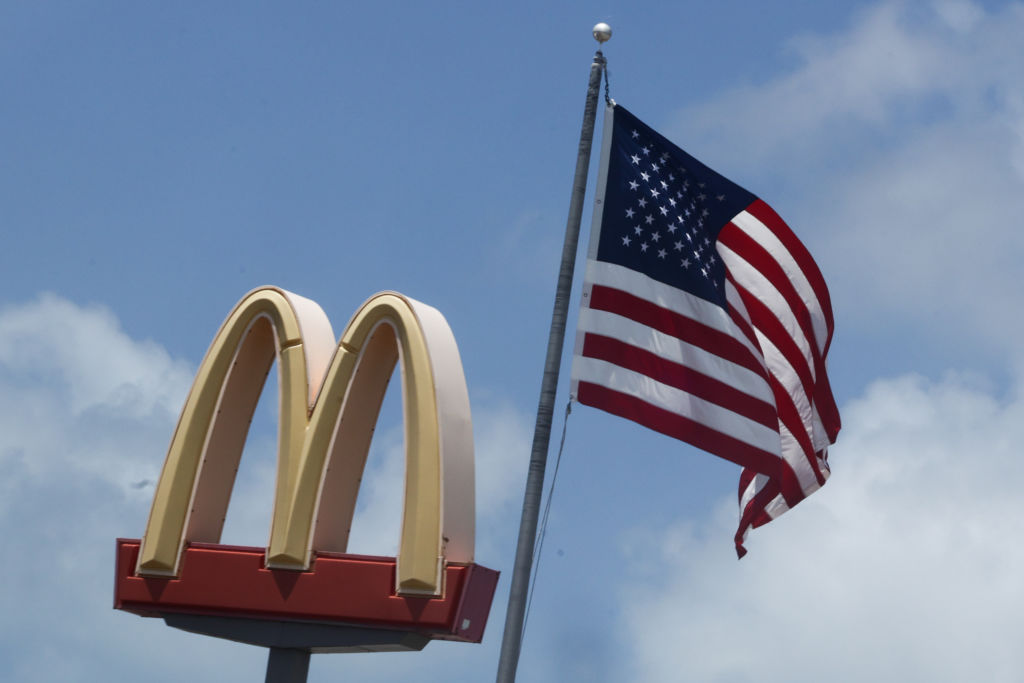
(Photo by Jakub Porzycki/NurPhoto via Getty Images)
Grimace

McDonald’s $5 meal deal is an admission of self-inflicted wounds

Luke Kawa

The golden arches of history are long, but they bend back towards offering Americans cheap food.

Shares of McDonald’s rose 2.6%, their best session since January 2023, after Bloomberg reported that the fast food chain plans to offer a $5 meal deal in the US. Shares of competitors in the quick service restaurant industry broadly fell in response.

This news comes on the heels of McDonald’s April 30 earnings call, where CEO Chris Kempczinski bemoaned the state of the consumer, saying “it is clear that broad-based consumer pressures persist around the world.”

“The macro headwinds have been more significant than I think we even anticipated coming into the year,” added CFO Ian Borden. 

But most economic data we’ve received this year, particularly in the US, doesn’t suggest the consumer is in dire straits. And industry peers weren’t sounding as dour as McDonald’s during their earnings calls. So what’s the deal?

“McDonald’s raised prices significantly, and consumers are finding other places to spend,” writes Samuel Rines, macro strategist at WisdomTree, in a May 9 note.

Chris Turner, CFO at Yum! Brands Inc, talked up same store sales growth at Taco Bell that was above the industry average in the first quarter of 2024, and flagged a pick-up in same store sales growth so far in the second quarter. Part of the success, in his eyes? The Cravings Value Menu introduced in January to better appeal to price-centric consumers.

“We think Taco Bell is incredibly well-positioned for what I would describe as a more normal consumer environment today,” he said. “Consumers care more about value in the US.”

Over at Domino’s, CFO Sandeep Reddy discussed the conscious decision to avoid pushing too many price increases through in 2023, and how this contributed to same store sales growth of 5.6% in the US during the first quarter.

A key focus was on “making sure customer value was maintained,” he said.

McDonald’s is trying to recapture and articulate its value niche (which may or may not be successful with customers and franchisees), while its competitors already have evidence that their tactics are working.

“Domino’s and Taco Bell talked about maintaining their value-oriented propositions,” added Rines. “Meanwhile, that is only now entering the formula for McDonald’s.”

Which raises the question… how did we get to a place where McDonald’s wasn’t offering a clear and obvious value proposition to their customers? Where competitors metaphorically ate McDonald’s lunch as consumers ate a cheaper option?

This may be a part of why those companies — particularly Domino’s — are handily outperforming McDonald’s in the stock market so far this year.


More Markets

See all Markets
markets

Stocks get a jolt as Netanyahu says Israel is helping US efforts to open Strait of Hormuz

Israeli Prime Minister Benjamin Netanyahu said in a press conference that his country is helping with US efforts to open the Strait of Hormuz, putting a jolt into stocks. 

The S&P 500, which had been solidly negative for most of the day, turned slightly green after the remarks. The rebound lost a bit of steam shortly thereafter, but stocks still remained higher than they were before Netanyahu’s comments.

“Israel is helping, in its own way, in intel and other means, the American efforts to open the Strait of [Hormuz],” Netanyahu said, according to a video of the press conference.

Here are another few interesting headlines coming across from the presser, per Reuters:

*NETANYAHU: IRAN HAS NO CAPACITY TO ENRICH URANIUM OR MAKE BALLISTIC MISSILES AFTER 20 DAYS OF WAR

*NETANYAHU: CAN’T DO A REVOLUTION FROM THE AIR, THERE NEEDS TO BE A GROUND COMPONENT AS WELL

*NETANYAHU: ISRAEL ACTED ALONE AGAINST SOUTH PARS

*NETANYAHU: TRUMP ASKED US TO HOLD OFF ON FUTURE SUCH ATTACKS

And here’s how the market reacted instantly after his comments:

“Israel is helping, in its own way, in intel and other means, the American efforts to open the Strait of [Hormuz],” Netanyahu said, according to a video of the press conference.

Here are another few interesting headlines coming across from the presser, per Reuters:

*NETANYAHU: IRAN HAS NO CAPACITY TO ENRICH URANIUM OR MAKE BALLISTIC MISSILES AFTER 20 DAYS OF WAR

*NETANYAHU: CAN’T DO A REVOLUTION FROM THE AIR, THERE NEEDS TO BE A GROUND COMPONENT AS WELL

*NETANYAHU: ISRAEL ACTED ALONE AGAINST SOUTH PARS

*NETANYAHU: TRUMP ASKED US TO HOLD OFF ON FUTURE SUCH ATTACKS

And here’s how the market reacted instantly after his comments:

markets

Gold tumbles as market sees Fed shifting toward inflation fighting

Gold and gold miners tumbled Thursday, as the rolling Iran war energy crisis revived worries about inflation and pushed the market to take additional rate cuts this year off the table.

Gold (SPDR Gold Shares ETF) futures dropped roughly 6% shortly after 12 p.m. ET, hammering share prices for miners Newmont and Freeport-McMoRan. Silver (iShares Silver Trust) futures were down nearly 9%.

The decline in precious metals came alongside another sharp rise in energy prices. US benchmark crude oil (United States Oil Fund LP) and natural gas prices both jumped more than 3% after major Iranian attacks on Qatari energy infrastructure. US retail gasoline prices tracked by the American Automobile Association hit $3.884, up 33% from the end of last month, when a joint US-Israeli attack on Iran ignited hostilities.

Normally, gold prices are seen as a hedge on inflation, which might suggest that they should rise alongside expectations for persistent price increases.

But the speed of the Iran war energy shock — which will add to inflationary pressures already visible in recent economic reports, such as this week’s Producer Price Index, and could become a political problem for the Trump administration — has nudged traders to change their their views on whether the Federal Reserve would be able to deliver the rate cuts widely expected just a few weeks ago.

Yields on shorter-maturity US Treasury notes shot higher Thursday, reflecting expectations for tighter monetary policy. And prices in the market for federal funds futures suggest traders no longer see the US central bank cutting interest rates this year at all. (Early this month, market pricing implied expectations for two more cuts this year.)

On Thursday, yields fell on longer-term US government securities, such as the US 30-year bond. That suggests the market thinks a Fed shift toward inflation fighting and away from rate cutting would likely result in some decline in growth and/or inflation, helping to explain the drop in precious metals prices, as there would be less of a need for inflation hedges in such a scenario.

The decline in precious metals came alongside another sharp rise in energy prices. US benchmark crude oil (United States Oil Fund LP) and natural gas prices both jumped more than 3% after major Iranian attacks on Qatari energy infrastructure. US retail gasoline prices tracked by the American Automobile Association hit $3.884, up 33% from the end of last month, when a joint US-Israeli attack on Iran ignited hostilities.

Normally, gold prices are seen as a hedge on inflation, which might suggest that they should rise alongside expectations for persistent price increases.

But the speed of the Iran war energy shock — which will add to inflationary pressures already visible in recent economic reports, such as this week’s Producer Price Index, and could become a political problem for the Trump administration — has nudged traders to change their their views on whether the Federal Reserve would be able to deliver the rate cuts widely expected just a few weeks ago.

Yields on shorter-maturity US Treasury notes shot higher Thursday, reflecting expectations for tighter monetary policy. And prices in the market for federal funds futures suggest traders no longer see the US central bank cutting interest rates this year at all. (Early this month, market pricing implied expectations for two more cuts this year.)

On Thursday, yields fell on longer-term US government securities, such as the US 30-year bond. That suggests the market thinks a Fed shift toward inflation fighting and away from rate cutting would likely result in some decline in growth and/or inflation, helping to explain the drop in precious metals prices, as there would be less of a need for inflation hedges in such a scenario.

markets

Novo says FDA has approved high-dose Wegovy shot

The Food and Drug Administration approved Novo Nordisk’s high-dose Wegovy shot, the company announced on Thursday.

Wegovy HD, a once-weekly 7.2-milligram injection, helped patients lose 20.7% of their body weight after 72 weeks, putting it in line with Eli Lilly’s competitor drug, Zepbound. By comparison, Wegovy typically has a maximum dose of 2.4 milligrams, which resulted in 15% weight reduction over 68 weeks in trials.

Wegovy HD was the first drug to be approved through the FDA’s new priority voucher system. This comes as Novo, despite being early to the GLP-1 boom, has been outpaced in sales by Lilly. The company released a pill version of Wegovy in January, which has shown strong early uptake, though new competitor products are set to debut this year and next.

The stock is down about 1.6% for the day, but was down nearly 3% before the announcement.

Latest Stories

Sherwood Media, LLC produces fresh and unique perspectives on topical financial news and is a fully owned subsidiary of Robinhood Markets, Inc., and any views expressed here do not necessarily reflect the views of any other Robinhood affiliate, including Robinhood Markets, Inc., Robinhood Financial LLC, Robinhood Securities, LLC, Robinhood Crypto, LLC, Robinhood Derivatives, LLC, or Robinhood Money, LLC. Futures and event contracts are offered through Robinhood Derivatives, LLC.