
Markets
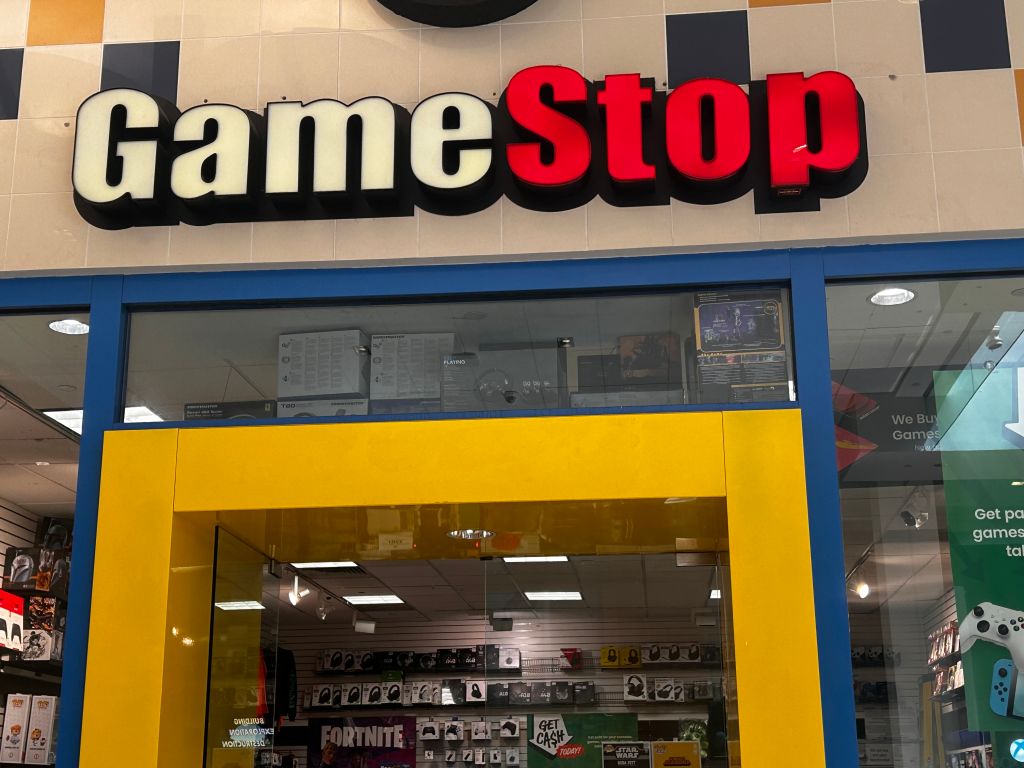
GameStop store entrance at Rego Center shopping mall, Queens, New York
(Photo by Lindsey Nicholson/UCG/Universal Images Group via Getty Images)
Stonks

The return of GameStop stock mania was weeks in the making

Options traders were making wild bets on GME much earlier in May

Luke Kawa, Jack Raines

The return of the meme stock mania that’s seen shares of GameStop rise as much as 270% over the past two days was shaped by bullish bets that were weeks in the making. And if those wagers were ever going to pay off, the surge needed to happen by this specific time.

With hindsight, trading volumes in the stock were picking up for no good reason well ahead of this week. These higher volumes were accompanied by some eyebrow-raising behavior in the options market.

“Something has been percolating”

Daily trading volume ranged from 2.1 million to 7.7 million over the last three months, besides a few days in late March where it briefly jumped to 17 million shares. But then things started changing: on May 3, volume spiked to 36.3 million shares, and between 24 million and 48 million shares changed hands each day until May 13, when volume spiked to 182 million. Speculators were accumulating shares in the week leading up to Roaring Kitty's tweet.

“Frankly, I’ve been trading this for the past two weeks in both directions because something has been percolating,” said Tom Hearden, senior trader at Skylands Capital.


Steve Sosnick, chief strategist at Interactive Brokers, flagged a noteworthy dynamic at play in options markets ahead of this week’s rally in GameStop: bullish bets on where the stock would be by May 17, the end of this week, were skewed towards lotto-ticket, moonshot outcomes. 

That is, people were buying more options that would be in-the-money if GameStop shares rose more than 150%, compared to those that would be in the money if the stock only rose 35%. Prior to this week, the only times GameStop had rallied more than 100% over a 10-day period was the meme stock frenzy in Q1 2021 and the much fainter echo that followed one year later.

Typically, you would expect interest in upside targets that would be easier to reach to become more in demand during the stock’s gradual rise, Sosnick said.

“This has been building for some time, someone got long big slugs of the $25 and $30 calls,” said Sosnick. “The fact that we saw the open interest creeping higher and steadily increased in the 30s faster than in the 20s, was odd, and a signal that something was up.”

Those call options, barring a repeat of the Q1 2021 and 2022 episodes, would have expired completely worthless. As of Friday, the ability to buy shares of GameStop by May 17 at a price of $30 was worth $0.43. Now, those options are worth over $20.

Compare those trends in open interest to a much larger, heavily-traded stock like Apple. Coming into the week, there was more than five times as much open interest in options that would be in the money in the event of a 4% increase in the iPhone maker compared to options with a strike price about 15% above the market close on May 17.

More Markets

See all Markets
markets

SpaceX gets a wave of bullish ratings from Wall Street analysts

SpaceX received more than a dozen positive analyst calls on Tuesday — including from major Wall Street banks — as they initiate coverage on Elon Musk’s space and AI company.

SpaceX went public on June 12 at a $2.2 trillion valuation, the largest debut in history. While the company hasn’t yet posted a profit, it seems to have convinced Wall Street that it will get there and grow its valuation on the way.

Of the at least 17 analysts that gave a rating on Tuesday, all but one gave it a “buy” or “outperform” rating. MoffettNathanson was "neutral."

The ratings come as SpaceX joined the Nasdaq 100 index, a benchmark tech-heavy basket of companies that underpins millions of portfolios. The inclusion adds built-in demand for the stock from index funds and ETFs.

Still, SpaceX fell more than 5% on Tuesday amid a broader sell-off, and is currently effectively flat from its opening price of $150 a share.

markets

Nike sinks to lowest level since 2014 after warning of “challenged” sales environment in Q4 report

Did Nike do it?

Investors had a mixed reaction after the global sports apparel company reported its fourth quarter earnings on Tuesday after the bell. Shares initially rose 5% as Nike beat out Wall Street expectations amid a hefty tariff refund bonus. However, the stock then sank to its lowest level since August 2014 in postmarket trading.

Here are the Q4 numbers:

  • Revenue of $11.0 billion (estimate: $10.8 billion).

  • Adjusted earnings per share of $0.20 (estimate: $0.12).

Ahead of this report, Nike warned that results would be flattered by a one-time tariff refund (now estimated at roughly $0.52 per share for the bottom line). That gave the company an extra cushion in snapping its streak of seven quarters of year-over-year profit declines.

Over the past year, the company had been punished by tariffs on imported goods, stagnant consumer spending, and increasing competition from other footwear brands like New Balance, Adidas, and Hoka.

Outgoing CFO Matthew Friend deemed it an “increasingly challenging operating environment, where sell-through remains challenged.”

Latest Stories

Sherwood Media, LLC and Chartr Limited produce fresh and unique perspectives on topical financial news and are fully owned subsidiaries of Robinhood Markets, Inc., and any views expressed here do not necessarily reflect the views of any other Robinhood affiliate, including Robinhood Markets, Inc., Robinhood Financial LLC, Robinhood Securities, LLC, Robinhood Crypto, LLC, Robinhood Money, LLC, Robinhood U.K. Ltd, Robinhood Derivatives, LLC, Robinhood Gold, LLC, Robinhood Asset Management, LLC, Robinhood Credit, Inc., Robinhood Ventures DE, LLC and, where applicable, its managed investment vehicles.

