


Meet the “$OPEN ARMY”
Opendoor’s retail shareholders on why they’re long the stock and what the new management team needs to do.
To truly understand why Scott Findlay is one of Opendoor Technologies biggest retail shareholders, you have to hear the story of how his 9-year-old son’s baseball team overcame a 12-run deficit in their final at bat a decade ago.
Underdog stories offer the potential for outsized returns. Teams with positive, passionate members have a better shot at success than ones that don’t — especially when they have visionary leaders who provide clear, consistent direction. That’s the Opendoor bull case in a nutshell, from its retail investors. It also happens to be Findlay’s life story.
Findlay was sitting at a table at the Individual Investor Summit on September 12 in New York City, handing out “$OPEN ARMY” T-shirts and long cards that had a QR code to track Opendoor revenues to anyone who wanted — “just a way to break the ice and form some friendships,” he said.
That’s far from his home in Murfreesboro, Tennessee, where the 52-year-old and his wife own “Tommy’s Express” car washes in the Nashville area with plans to open up a “Human Bean” coffee franchise in the near future. His success as an entrepreneur afforded him the opportunity to put $1.2 million in a brokerage account to manage as a discretionary investor.
The third-generation Marine originally started out swing trading Palantir before a big win buying the dip in Uber, and decided to dip his toes into Opendoor while shopping at Lowe’s with his wife on August 8. He was scrolling through X on his phone when he noticed someone whose views on Palantir he trusted tweeting about the online real estate company, and he bought 120,000 shares “on a whim,” he said.
The online real estate company, which went public in late 2020 via a SPAC led by venture capitalist/“All-In” podcaster Chamath Palihapitiya and operates in the same business as the since shuttered home-flipping service Zillow Offers, suffered a spectacular fall from grace but has been revitalized by retail investors like Findlay.
His position is now up to 725,000 shares as of Tuesday — more than the combined positions of Dana Hamilton, David Benson, and Eric Feder, who make up nearly half the company’s board, per regulatory filings.
X marks the spot
The X account that inspired Findlay’s first purchase was formerly known as @Karp_God (in reference to the Palantir CEO).
Now known as @Opendoor_God, he posts his OPEN position publicly and describes himself as a middle-aged American business owner with extensive experience trading in equity and commodity markets. He says he’s been following Opendoor for years and doubled down on the stock as the old management team was downsizing its positions.
He’s far from the only pseudonymous X user who owns Opendoor and holds an influential position among retail traders. Others also pointed to @8bitsteveo (STEVEO), @founderwithadhd (Mind Dump), and @RandianCapital as intellectual leaders and agents of change in the community on X.
The power of X for idea generation, community building, and engaging with Opendoor’s management to drive the change they want to see are common refrains from retail traders who hold the stock. After all, it was a tweet thread from EMJ Capital’s Eric Jackson that accelerated the wave of retail interest in the company.
And over on r/WallStreetBets, user gregw134, a 37-year-old software engineer from the Bay Area, had actually posted his case for why “Opendoor is the next Carvana” two months ahead of Jackson’s similarly inspired thesis on X. He says he began to get involved in the stock in 2021, when shares were trading around $6 to $7, and “put in 70% of my net worth and decided to plead this company’s case to the court of Reddit” as he published his DD (or “due diligence”). It’s about 10% of his portfolio now.
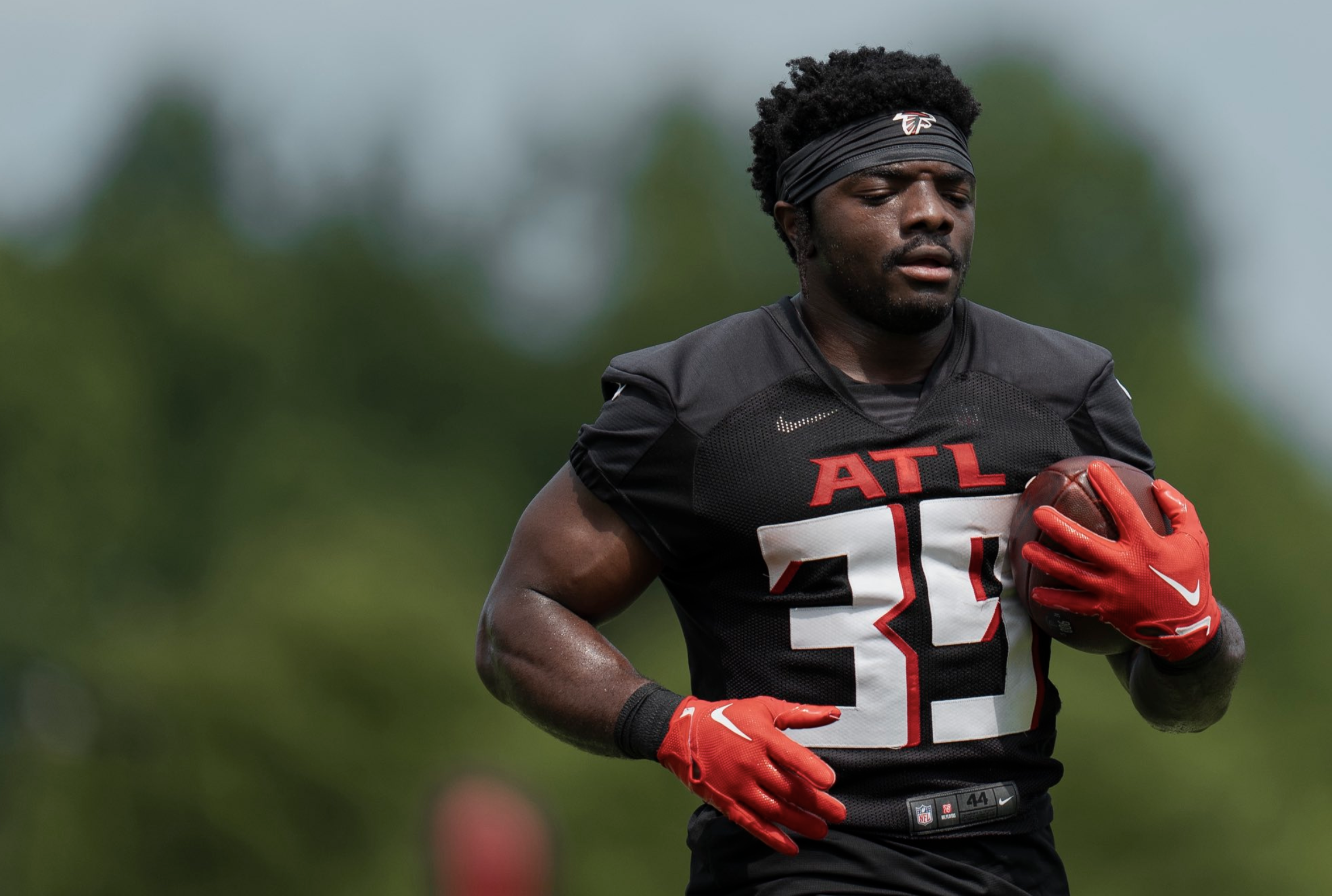
Robert Burns, 26, started dedicating more time to analyzing financial markets after being placed on the injured reserve by the NFL’s Atlanta Falcons, and during the process of self-education he “started to realize that X was like a good place for alpha.”
Originally, he thought $OPEN was a reference to a meme coin.
“Then I see this guy named Eric Jackson, who’s like, ‘All these idiots think it’s a meme coin, but it’s not, you know,’ and I was like, wait, like am I one of those guys? And why am I?” he said. “So I started reading and seeing his analysis and I was like, man, I want to be on the right side of this trade.”
Burns said he started to buy shares shortly before they hit $4, and slowly added to his exposure after that.
“The presence, the energy in the community, it reminds me of so many other communities that I’ve been able to watch and play on certain traits,” he said, likening the passion in Opendoor’s shareholder base to that of Palantir’s. “I feel like before I started investing, it was hard to get the CEO’s attention. But now you can literally get on X and if you ‘@’ them enough, if you mention them enough, and there’s enough retweets, they’re going to see it.”
Change starts at the top
The ability to spark change through social media was best demonstrated by retail traders’ successful campaign to oust much of Opendoor’s old management and replace them with leaders they preferred.
“One campaign was to bring Rabois back, another was to get Carrie Wheeler the hell out of the company. You know, it was probably like three or four campaigns that we just went hard on altogether at once, maximum pressure,” said @FounderWithADHD, whose X bio lists him as a former founder with two business exits. “And then when Eric [Jackson] flew down for a meeting in San Francisco, which by the way had nothing to do with Opendoor, we started applying maximum pressure to make sure they would take a meeting with him. And that’s when Rabois stepped into the picture, and it’s been great ever since. I don’t need to be too busy tweeting anymore.”
The “maximum pressure” campaigns produced eye-popping results, punctuated by the near 80% gain upon news that cofounders Keith Rabois and Eric Wu were coming back to be on the board of directors, with Shopify COO Kaz Nejatian joining to serve as CEO.
The combination of Rabois and Nejatian leading the board and C-suite has been an especially galvanizing catalyst for the company’s retail bulls.
“Since Opendoor came public, I have been infatuated with the idea of making homebuying frictionless,” @RandianCapital said. “Keith has been thinking about this problem for 20 years — I believe the world is finally ready for his solution.”
Findlay came to New York with three specially made “$OPEN ARMY” T-shirts with a captain’s insignia on the arm. He gave one to Eric Jackson and two to Anthony Pompliano, CEO of ProCap and Opendoor shareholder — telling him to keep one for himself and give the other to new chairman Keith Rabois.
“Kaz and the team must build innovative products that people want that don’t exist in the real estate market right now,” @Opendoor_God said over direct messages on X. “It’s week 1 for Kaz, but he looks to be a good leader for the company. We’ll get to know him better as time goes on. To build the next tech giant, we need a completely individual and original CEO at the top who is fearless and strategic.”
Which doors to open?
Now that Opendoor’s shareholders have the leaders they want, the next question is: what do they want them to do?
Findlay’s original purchase may have been on a lark, but subsequent ones were not. When he got the chance to meet Eric Jackson, who asked him if he had any thoughts to pass along to management, he said he stayed up the whole night thinking about it.
After a couple days, he typed up a multi-page letter for Rabois, Nejatian, and Jackson titled “Operation ‘Make It Better.’”
A summary of his suggestions:
Fix Opendoor’s product/services menu to make it clear how it offers benefits to potential customers;
Cut the fat and invest that in a marketing campaign for a “Grand Opening”;
Offer special benefits to customers to promote repeat business;
Dream big, and do big: “Be the leader to make assumable mortgages available to all like a VA loan does with veterans.”
Robert Burns, who since leaving the NFL has launched his own AI assistant for business called “Dreamr,” said the company might need to rebuild its entire web flow to create a better customer experience.
“I make apps; I love apps. And typically we like apps because they’re easy to use, they’re fun, they’re engaging,” he said. “I think the current experience, if you go through some of the comments on X, there seems to be a lot of friction.”
Beyond that, he stressed the need to create a resilient business model that was well buffered even when trends in interest rates might be working against the company, and expand its footprint to be a platform for buyers as well as sellers.
“I want to see Opendoor help buyers and sellers save money. The housing market is broken — we pay 5-6% fees to realtors in the US, versus only 1-2% in other countries. That’s on top of costs from listing on the MLS, repairs, staging, closing, title, escrow, etc. It’s a racket,” gregw134 wrote. “That’s what I want to see Opendoor do, lower the cost of buying and selling houses by cutting out the grift.”
But the primary door that Opendoor needs to keep open, per its retail owners, is its communications policy.
“Kaz gets it, it seems like he’s super transparent — he’s posting everything, changes that are coming, what he has in mind,” @FounderWithADHD said. “Hopefully he keeps that up. For me, that’s the most important thing because I have millions of dollars in Opendoor right now. So transparency for me is probably going to be key.”
Management seemingly committed to that path with a filing on Wednesday morning stating that its corporate account, as well as that of its CEO, would be used as a means of disclosing material nonpublic information.
Keeping the faith
Retail traders have been the linchpin behind the revival in Opendoor’s stock price, its ability to retain new management, and millions in free marketing. What does the company need to do to keep them in the fold?
Burns, for his part, is taking a measured approach. His trust in the company is conditional on execution. If management continues to be at the forefront of engagement with retail, proves its business model is sustainable, and improves its app, “I think I will continue to be a bull,” he said.
Findlay, on the other hand, is taking a different approach.
He knows what it’s like to be counted out and go all in on what you believe in. He detailed his life’s highlights and lowlights in his letter to management: at the age of 16, his mother moved to Las Vegas, leaving him with a stepdad who kicked him out of the house soon thereafter. His biological father passed away that same year. After completing training in the Marine Corps Reserve, he flourished as a salesman of everything from strobe lights to Cadillacs, and he and his wife spent everything they had to buy that first car wash franchise. It opened at possibly the worst time ever: on March 19, 2020, as the world was shutting down due to the coronavirus pandemic.
Now, they own three.
Is Opendoor’s management as good at hustling and working to overcome daunting challenges as Findlay? One thing’s for sure: he plans to stick around and find out.
“My account value is $5,169,000, just under $5.2 million. And the way I look at it is, well, my account is worth $5.2 million, but I only put just under $1.2 million in it. So even if it all goes to zero tomorrow, I’ve lost a million bucks. It’s not going to change my life one way or another,” he said. “But the way I’m looking at it is, okay, well, let’s just let this sucker ride and if it gets to be $20, $30, $40, $50, $82, $100, $200, $500, it will change my life substantially.”
Which brings us full circle to Findlay’s fond memories of a big baseball comeback. The next day after the game, one of his assistant coaches called him, saying a local radio DJ was talking about their weekend and had said, “Well, I just watched an entire dugout cry after they were winning by 12 runs and the other team came back.”
Right now, Opendoor’s recent shareholders are those same 9-year-old boys in the midst of pulling off the grand upset. But in markets, the game is never over, and which dugout those donning the “$OPEN Army” uniforms end up in will be determined by the course charted by its new coaches and how the umpire — the weighing machine that is the markets, over the long term — calls the balls and strikes of their operations.




