Markets
markets

Opendoor surges after trading firm Jane Street reveals 5.9% stake

Shares in retail darling Opendoor Technologies are 8% higher in early trading on Thursday after proprietary trading firm Jane Street revealed a 5.9% stake in the company in a new filing, equivalent to beneficial ownership of more than 44 million shares. At current prices, that’s a position worth $390 million and change.

Many Opendoor bulls are cheering this announcement as vindication from a major institution and a material positive catalyst for the online real estate company. The reality is much less clear and considerably more nuanced. Jane Street is a firm that specializes in market-making and holds a 5% stake or more in 221 US publicly traded securities, per Bloomberg data. It is impossible to know what Jane Street’s true net Opendoor exposure is, since its options positions are not disclosed. No one but Jane Street knows that.

If we had to make an educated speculation, this stock position is much more likely to be a hedge related to calls Jane Street may have sold on Opendoor than it is a plain vanilla expression of optimism on the company’s prospects.

(There is a certain irony that, in this scenario, traders’ reaction to the revelation of a hedge serves as something that immediately makes that hedge more useful!)

The stake is owned by a number of different Jane Street Group subsidiaries. Jane Street Capital reported owning about 3.2 million shares; Jane Street Global Trading reported owning 17.2 million shares; while Jane Street Options, LLC, was reported as the beneficial owner of the bulk of the stake, equivalent to 23.6 million shares. A little over one-third of the stake, 15.5 million shares, were reported as “acquirable through conversion of convertible bonds held.”

Opendoor’s stock has whipsawed in recent days as large shareholders have exited some of their positions. Indeed, just yesterday it came to light that Access Industries, one of Opendoor’s top shareholders, had sold nearly $100 million of OPEN on Tuesday.

Separately, data out yesterday revealed that “sales of newly built homes rose a much larger-than-expected 20.5% in August compared with July,” per CNBC, which might have contributed to positive sentiment on the stock, which gained 16% yesterday.

As of 5 a.m. ET, the stock was the ninth-most-traded in the United States, with heavier volumes (in dollar terms) than tech giants Oracle, Google, and fellow retail favorite Palantir.

More Markets

See all Markets
markets
Rani Molla

Amazon just matched its longest losing streak in 20 years

Amazon shares marked their ninth straight day of losses — the company’s longest losing streak since 2006.

The milestone follows a fourth-quarter earnings miss, downbeat guidance, and a plan to spend a whopping $200 billion on capital expenditure this year.

Amazon is hoping that by spending big on AI infrastructure now, it will reap rewards from the technology later. Investors aren’t so sure.

Interestingly enough, the current situation sounds quite similar to the one Amazon was in two decades ago. Back then, Amazon endured a similar stretch as it was upping spending on tech and an online toy store — moves that would eat into its profits.

At the time, an asset manager told Bloomberg, “They want to capture as many eyeballs as they can on the Internet and be the go-to place on the Internet, but thats costing them earnings, at least right now.”

Sound familiar? In case you’re wondering, Amazon stock has risen 14,849% since that quote.

markets

Rivian is on pace for its best-ever trading day as analysts dig into Q4 results

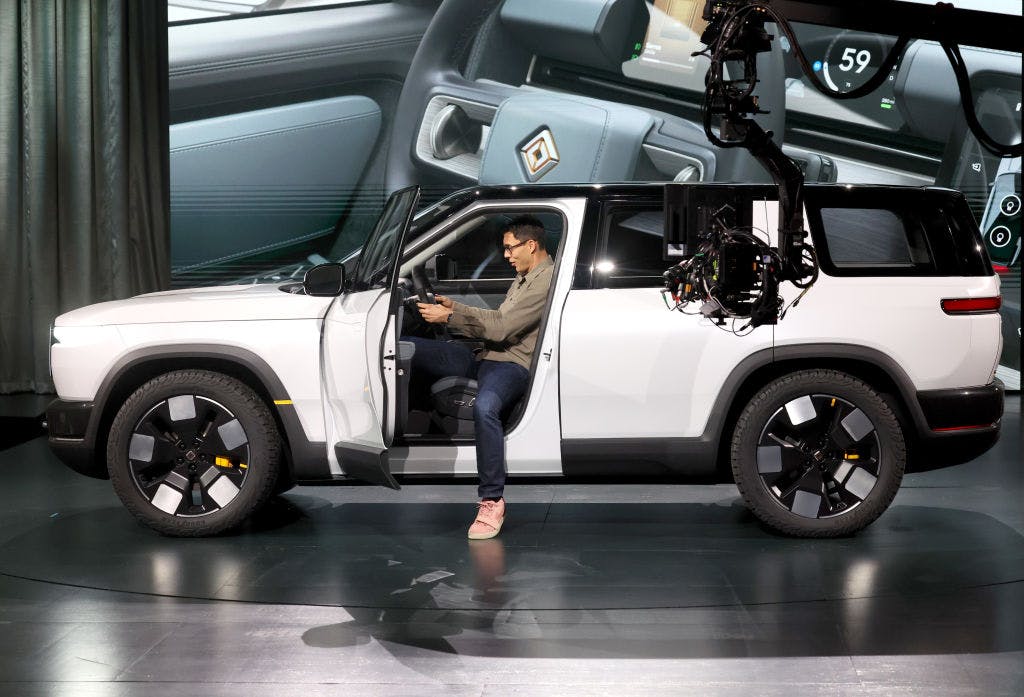
EV maker Rivian is on track to log its best trading day on record Friday, as investors pour in following its fourth-quarter earnings report and 2026 guidance and analysts issue bullish appraisals of the shares.

Rivian shares are up more than 30% on Friday afternoon, easily surpassing its previous best trading day, which came in January 2025.

“We continue to remain confident in the long-term vision that RIVN is amid a massive transformation,” Wedbush Securities’ Dan Ives wrote in a fresh note on Friday. The firm maintained its $25 price target and “outperform” outlook and said that the launch of Rivian’s upcoming lower-cost SUV, the R2, is “crucial.”

Rivian received upgrades from Deutsche Bank (to “buy” from “hold”) and UBS (to “neutral” from “sell”) following its results.

On its Thursday earnings call, Rivian said it expects its delivery volume of its existing vehicle lineup to land “roughly in line with... 2025 total volumes.” Given the automaker’s full-year delivery guidance, that statement implies 2026 R2 deliveries to land between 20,000 and 25,000 units.

Self-driving features also appear to be boosting investor optimism. On Thursday’s earnings call, CEO RJ Scaringe said the company would enable “point-to-point” driving in its vehicles later this year. In a podcast interview released Thursday, Scaringe predicted that by 2030, it will be “inconceivable to buy a car and not expect it to drive itself.” Rivian is targeting “a little sooner than that,” he added.

Rivian shares are also likely benefiting from something of a snapback: before the release of its Q4 results, Rivian shares had been hammered recently, down 38% since their recent high in December.

“We continue to remain confident in the long-term vision that RIVN is amid a massive transformation,” Wedbush Securities’ Dan Ives wrote in a fresh note on Friday. The firm maintained its $25 price target and “outperform” outlook and said that the launch of Rivian’s upcoming lower-cost SUV, the R2, is “crucial.”

Rivian received upgrades from Deutsche Bank (to “buy” from “hold”) and UBS (to “neutral” from “sell”) following its results.

On its Thursday earnings call, Rivian said it expects its delivery volume of its existing vehicle lineup to land “roughly in line with... 2025 total volumes.” Given the automaker’s full-year delivery guidance, that statement implies 2026 R2 deliveries to land between 20,000 and 25,000 units.

Self-driving features also appear to be boosting investor optimism. On Thursday’s earnings call, CEO RJ Scaringe said the company would enable “point-to-point” driving in its vehicles later this year. In a podcast interview released Thursday, Scaringe predicted that by 2030, it will be “inconceivable to buy a car and not expect it to drive itself.” Rivian is targeting “a little sooner than that,” he added.

Rivian shares are also likely benefiting from something of a snapback: before the release of its Q4 results, Rivian shares had been hammered recently, down 38% since their recent high in December.

Latest Stories

Sherwood Media, LLC produces fresh and unique perspectives on topical financial news and is a fully owned subsidiary of Robinhood Markets, Inc., and any views expressed here do not necessarily reflect the views of any other Robinhood affiliate, including Robinhood Markets, Inc., Robinhood Financial LLC, Robinhood Securities, LLC, Robinhood Crypto, LLC, or Robinhood Money, LLC.