

Palantir is a cash-spewing monster, but traders seem bored by it
Cash flow for days. Fast-growing profits. An increasingly rational valuation. Where’s the fun in that?
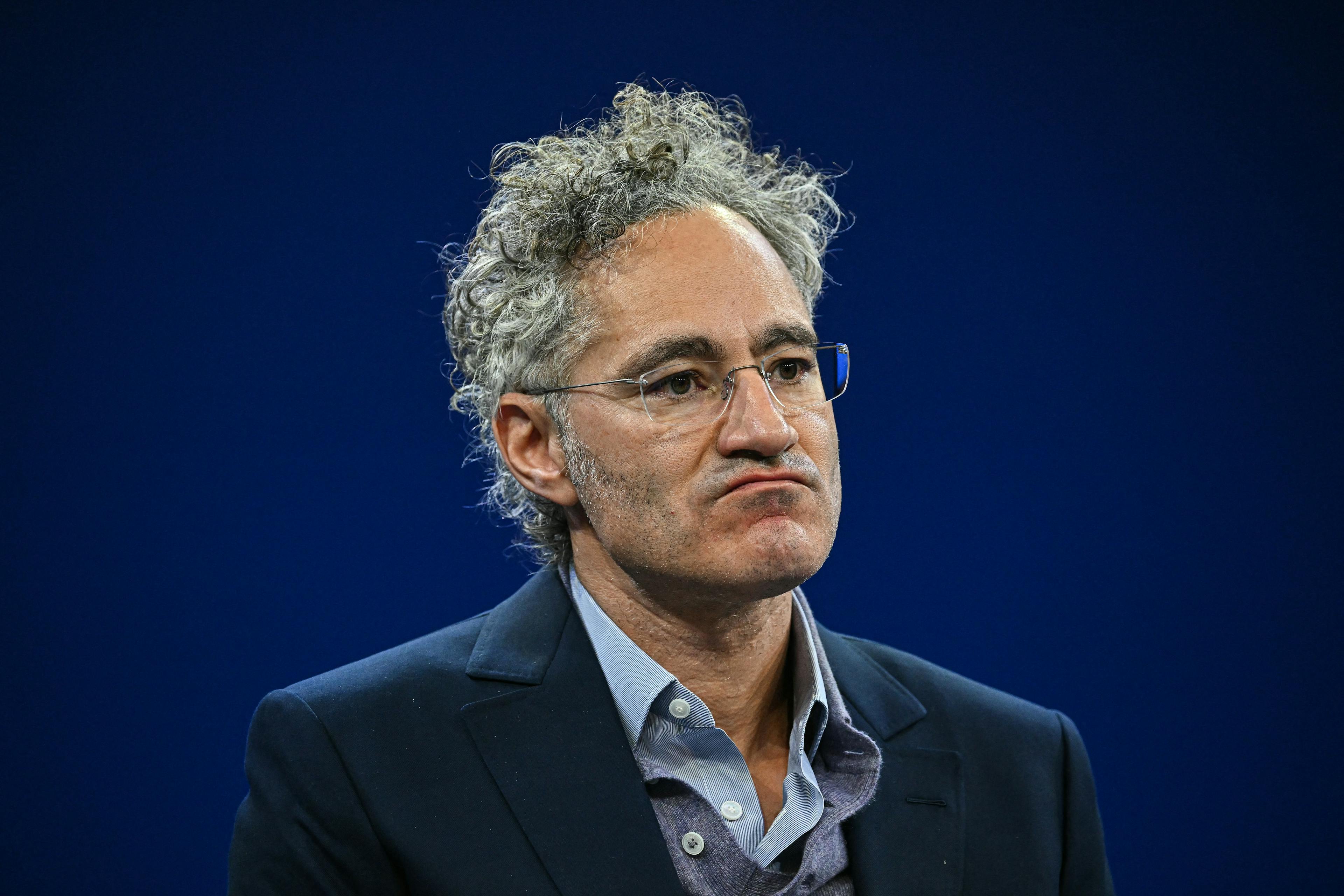
Have some sympathy for Alex Karp... No, really.
True, it’s tough to shed tears for a guy who pulled down about $7 billion in compensation a couple years ago. But there’s a decent argument to be made that he’s earned it. (Or at least a good chunk of it.)
Palantir — the defense, intelligence, and AI software firm Karp leads — has been performing remarkably well under his command, a fact underscored by Palantir’s print after the bell Monday.
It was, objectively, a remarkable beat and raise, with sales growth sizzling at a better-than-expected 85% to start 2026, and earnings growth rocketing up by 150%. Guidance was hiked across the board.
Even less easily fudge-able metrics, like cash flows, are showing extraordinary strength.
Never one to hide his, or Palantir’s, light under a bushel basket, Karp described the Q1 print as demonstrating “a level of strength that dwarfs the performance of essentially every software company in history.”
Traders, especially the retail crowd, used to devour such Karpian bombast.
But it seems they’ve largely stopped listening, at least if you look at Palantir’s shares today. They’re down, losing a weak grip on their 50-day moving average to slip below the short-term momentum gauge once again.
Why? Sticklers point to the fact that Palantir’s US commercial revenues — which includes its fast-growing business selling software that helps corporations better use AI — undershot Wall Street expectations ever so slightly.
Maybe that’s it. But back in February, Palantir received a fairly similar post-earnings response after posting exceptional Q4 results. The numbers drew rave reviews from the Street. But the stock dove 12%.
It’s hard to say conclusively what’s going on. Part of it is likely the fact that Palantir, before yesterday’s report, had already gone up by an insane amount. That gain of nearly 1,900% over the previous three years basically priced in the current earnings growth the company is seeing.
On the other hand, with the Iran war continuing to highlight the need for the kind of secure intelligence and military software Palantir sells to the US government — still the company’s single largest customer — and the Trump administration signaling that it wants to massively jack up defense spending, one might expect more support for the shares.
Retail traders, a key constituency for Karp and Palantir over the last few years, have clearly gotten less excited about the stock. Goldman Sachs’ daily read on retail participation in individual shares shows that about 13% of trading in recent days has been retail-related. A year ago, the share of retail trading in Palantir consistently hovered around 25%, according to Goldman.
That lack of enthusiasm is also visible in the sharp decline of Palantir’s price-to-earnings multiple, which reached truly ludicrous levels during the peak of the retail frenzy around the stock a couple years back.
Over the last six months, however, Palantir’s price-to-earnings ratio has plunged from more than 250x expected earnings in November 2025 to less than 100x. That’s still elevated, for sure. But also, a lot more reasonable.
Part of that decline reflects the fact that Palantir’s share price is down more than 20% over the last six months. But it also reflects the upsurge in analyst estimates for the company’s profitability over the next 12 months, after seeing the strength of the company’s last couple earnings reports.
And perhaps, in some ways, that profitability is a turnoff for traders, too.
After all, the market has developed an allergy over the last year to software companies that spew off massive cash flows, amid worries that their future is at risk as a result of AI.
Could it be possible that when investors look at Palantir now, they’re wondering whether they’re not seeing the AI platform of the future, so much as a slightly sexier version of ServiceNow or Salesforce? Anyway, I wonder.




