
Markets
Palantir soars
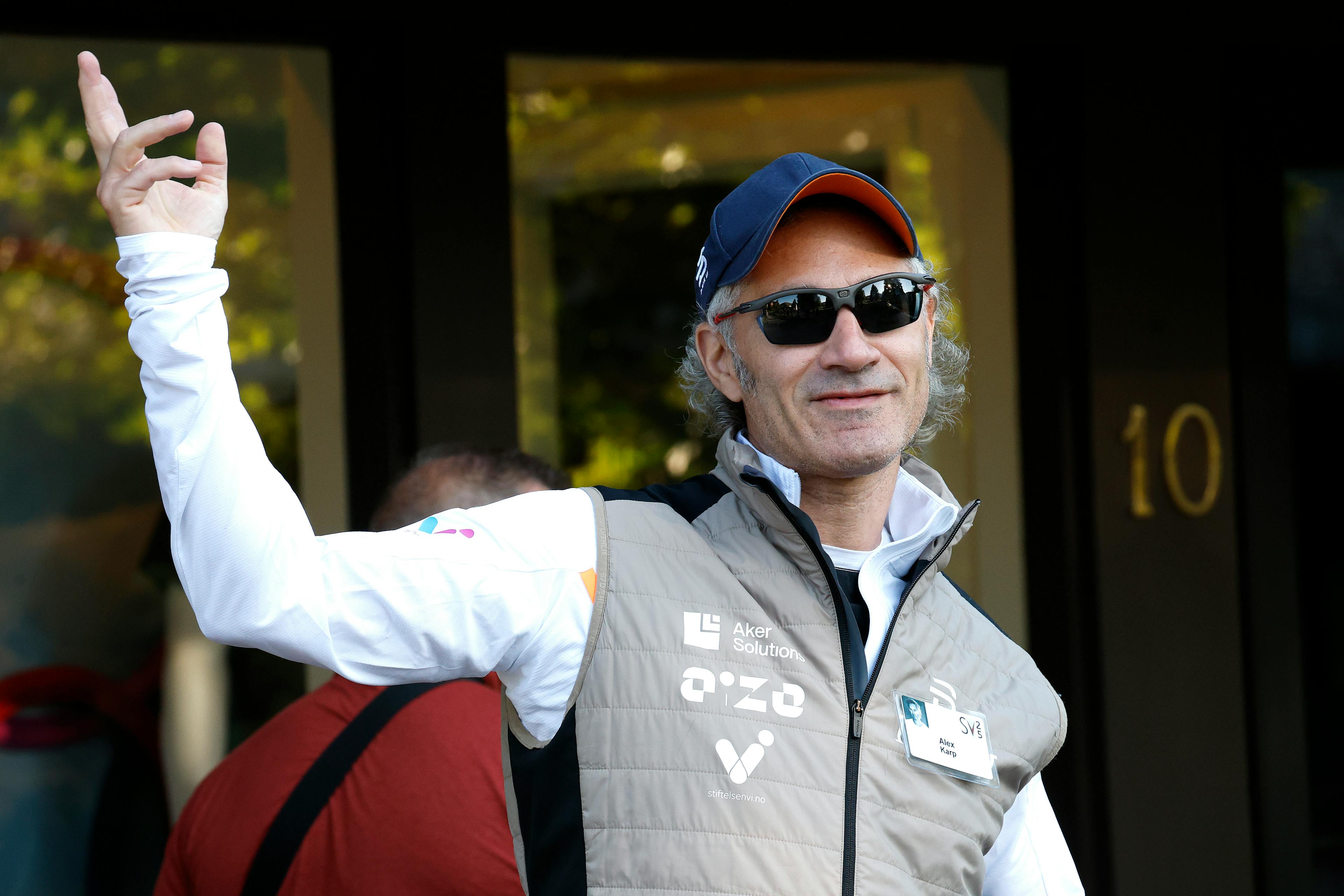
Palantir CEO Alex Karp (Kevin Dietsch/Getty Images)

Palantir soars to new record closing high

Euphoria is building in the shares once again after the company posted a classic beat and raise in its Q2 earnings report this week.

Matt Phillips

Palantir finished the week strong, closing at a new record high of $186.96 on a weekly gain of 21% after its Monday earnings report seemed to meet sky-high expectations implied by the company’s arguably insane valuation metrics.

The excitement surrounding shares of the government data contractor and AI software company reaccelerated amid a wave of price target hikes from Wall Street analysts in the aftermath of the strong report.

In fact, the consensus price target for Palantir shares among Wall Street analysts covering the stock jumped 30%, up to $150 a share from $115.50 just before the numbers were released to the market Monday.

For the record, the Wall Street hive mind had a price target of $25 a share on Palantir a year ago, so it doesn’t exactly have a great track record on the stock. It’s also had a devil of a time getting on the right side of it. The last jump in the collective price target on Palantir came in February right before a fairly steep sell-off.

This time, however, the share price is outrunning Wall Street’s higher targets. Palantir jumped roughly 20% for the week, a gain that added to the stunning amounts of capital appreciation that have put Palantir on track to be the top stock in the S&P 500 for second straight year. It’s up nearly 150% year to date and roughly 675% over the last 12 months.

It should also be noted that even though Palantir’s Q2 numbers were great and estimates for earnings and sales have risen, the outsized share price jump this week means that Palantir’s valuation is only getting more extreme compared to its market contemporaries and also historical high-water marks for valuation — think the dot-com boom of the 1990s — that were followed by price crashes. But there’s clearly no crash in the offing today, and in fact quite the opposite.


More Markets

See all Markets
markets

Rocket Lab drops after announcing at-the-market offering to sell up to $1 billion of equity

What goes up must come down, and that’s exactly what's happened with Rocket Lab shares over the last day or so.

After a rally that saw the stock rise more than 10% on Tuesday, Rocket Lab shares came back down to earth in after-hours trading, after the company filed an offering that could see it sell as much as $1 billion in common stock over time, with RKLB down around 3% in premarket trading on Wednesday, as of 6:30 a.m. ET.

In the after-hours filing, the space company wrote that it would use proceeds from the offering to “fund future growth, including potential future acquisitions, and for general corporate and working capital purposes.” Rocket Lab’s Neutron rocket, which will be key in any path to profitability that the cash-burning business may forge, was delayed again last month, sending shares down at the time.

RKLB was involved in a wider space, satellite, and drone stock surge yesterday, as investors rallied around the sectors amid the ongoing war in Iran. The FAA had also announced new streamlined launch licensing requirements which will affect companies like Rocket Lab, Firefly Aerospace, and SpaceX. Per the FAA, the new rule, dubbed “Part 450,” will:

reduce the number of times an operator needs an FAA license approval and allow one license for a portfolio of operations, different vehicle configurations and mission profiles, and even multiple launch and reentry sites.

That should cut down on the administrative burden on the industry more broadly.

markets

AI drone company Swarmer soars on IPO debut

AI drone software company Swarmer soared 520% on Tuesday, its first day as a public company, and shares continued to climb in premarket trading on Wednesday.

Swarmer sold 3 million shares at $5 each, raising ~$15 million in total, and giving it an initial market cap of about $60 million. By the time the closing bell rang on Tuesday it was worth $382.8 million, according to FactSet.

Swarmer makes AI software that allows operators to coordinate large fleets of unmanned drones. Its technology has been used on the battlefield in Ukraine, and the company's IPO comes amid the ongoing conflict in Iran.

The company made $310,000 in revenue in 2025, down 6% on the prior year, while its total losses also ballooned from $2.1 million in 2024 to approximately $8.5 million in 2025.

markets

Oklo reports larger-than-expected full-year loss per share

Oklo, the revenue-free nuclear power start-up that more than tripled last year and became a favorite of retail traders, reported full-year results after the close of trading Tuesday. 

It reported: 

  • A full-year net loss per share of $0.72 vs. the $0.61 loss per share that Wall Street analysts expected for the year.

  • R&D expenses of $58.9 million vs. the $46.0 million consensus estimate, according to FactSet.

Earnings have not been a big driver of Oklo shares. After all, analysts don’t expect the company to generate consistent revenues until at least 2028. 

(The stock has tended to trade more on the company’s latest announcements about regulatory approvals and incremental steps toward generating revenue, such as those it made this morning.) 

This report seems unlikely to turn around the recent performance of the shares, which has been awful. Oklo was down slightly in the after-hours session on Tuesday.

Oklo has dropped roughly 60% from its all-time high, which it hit back in mid-October. That’s also when Goldman Sachs’ themed basket of unprofitable tech stocks — of which Oklo is a member — topped out, suggesting that Oklo’s ills have, at least, something to do with shifting market sentiment among investors toward long-shot tech bets, in addition to its own performance. 

markets

Nvidia’s Jensen Huang says the chip designer is getting closer to selling AI chips to China

H200 sales to China are back 𝚘̶𝚗̶ 𝚘̶𝚏̶𝚏̶ 𝚘̶𝚗̶ 𝚘̶𝚏̶𝚏̶ 𝚘̶𝚗̶ 𝚘̶𝚏̶𝚏̶ 𝚘̶𝚗̶ 𝚘̶𝚏̶𝚏̶ 𝚘̶𝚗̶ 𝚘̶𝚏̶𝚏̶ on the menu.

Bloomberg headlines from Nvidia’s conference in San Jose on Tuesday indicate that CEO Jensen Huang said the chip designer has received purchase orders from Chinese customers, received licenses for many customers, and that it’s firing up manufacturing to sell these AI chips from the Hopper generation to buyers in the world’s second-largest economy.

The situation in China has changed, he added.

Earlier this month, the FT had reported the opposite: that Nvidia had asked TSMC to ramp down its production of H200 chips in order to produce Vera Rubin, its upcoming flagship generation.

The situation loosely remains that Nvidia wants to sell AI chips to China, Chinese buyers want them, but authorities in both DC and Beijing don’t seem to want Chinese companies to be able to get their hands on too many of these processors.

Shares of Nvidia are ending the day lower, and are off more than 3% from their Monday knee-jerk peak reached after Jensen said that the company’s Blackwell and Vera Rubin sales would total at least $1 trillion through 2027.

It’s another case of good financial news from Nvidia failing to give the stock anything more than a short-lived lift.

Latest Stories

Sherwood Media, LLC produces fresh and unique perspectives on topical financial news and is a fully owned subsidiary of Robinhood Markets, Inc., and any views expressed here do not necessarily reflect the views of any other Robinhood affiliate, including Robinhood Markets, Inc., Robinhood Financial LLC, Robinhood Securities, LLC, Robinhood Crypto, LLC, Robinhood Derivatives, LLC, or Robinhood Money, LLC. Futures and event contracts are offered through Robinhood Derivatives, LLC.