
Markets
Real estate stocks

Higher rates hurt, but structural issues are more concerning

Foundational issues

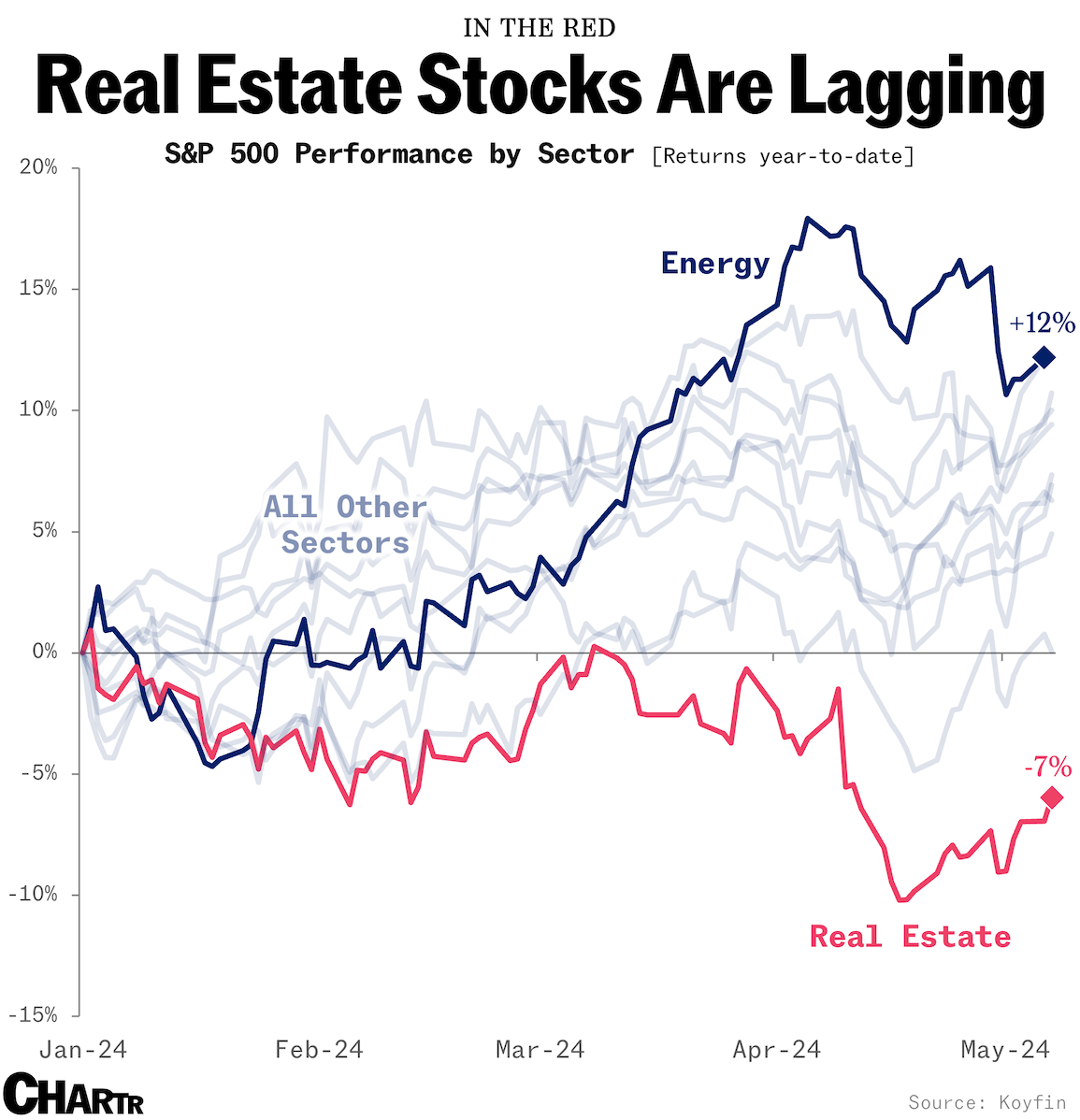
While the broader S&P 500 has soared to record highs this year, up some 9% at the latest count, one sector has remained in the red for most of 2024: real estate.

Indeed, the XLRE, an ETF designed to track the real estate segment of the S&P 500, is down 7% in 2024. That makes it the worst performing of any S&P 500 sector — an undesirable title which it also holds over 3-year, 5-year, and 10-year lookback periods.

So, what’s going on with real estate?

Some analysts would argue that it’s all about rates. Real estate has historically been a comfortable, safe place to park your money and earn a yield from rent-producing assets like offices, retail space, or residential properties. When rates rise — as they have done over the last 24 months — other opportunities to invest and earn a good return crop up, making real estate look less attractive.

That is certainly part of the puzzle. Another is arguably more structural: in the post-pandemic world, we might simply have too much office and retail space, which many REITs (Real Estate Investment Trusts) and real estate stocks own a lot of… usually with borrowed money.

Indeed, as of the first quarter, office vacancy rates have hit a 40-year high, just shy of 20%, according to Moody’s Analytics. As demand stagnates and leases come up for renewal, commercial real estate is being sold at significant discounts, with some buildings that have been empty for years selling for pennies on the dollar in New York, San Francisco, St. Louis, and elsewhere.

The flip side: The one part of real estate that’s booming? Demand for space for AI data centers, which jumped 26% last year.

More Markets

See all Markets
markets

SpaceX gets a wave of bullish ratings from Wall Street analysts

SpaceX received more than a dozen positive analyst calls on Tuesday — including from major Wall Street banks — as they initiate coverage on Elon Musk’s space and AI company.

SpaceX went public on June 12 at a $2.2 trillion valuation, the largest debut in history. While the company hasn’t yet posted a profit, it seems to have convinced Wall Street that it will get there and grow its valuation on the way.

Of the at least 17 analysts that gave a rating on Tuesday, all but one gave it a “buy” or “outperform” rating. MoffettNathanson was "neutral."

The ratings come as SpaceX joined the Nasdaq 100 index, a benchmark tech-heavy basket of companies that underpins millions of portfolios. The inclusion adds built-in demand for the stock from index funds and ETFs.

Still, SpaceX fell more than 5% on Tuesday amid a broader sell-off, and is currently effectively flat from its opening price of $150 a share.

Latest Stories

Sherwood Media, LLC and Chartr Limited produce fresh and unique perspectives on topical financial news and are fully owned subsidiaries of Robinhood Markets, Inc., and any views expressed here do not necessarily reflect the views of any other Robinhood affiliate, including Robinhood Markets, Inc., Robinhood Financial LLC, Robinhood Securities, LLC, Robinhood Crypto, LLC, Robinhood Money, LLC, Robinhood U.K. Ltd, Robinhood Derivatives, LLC, Robinhood Gold, LLC, Robinhood Asset Management, LLC, Robinhood Credit, Inc., Robinhood Ventures DE, LLC and, where applicable, its managed investment vehicles.

