

Markets
markets

Sandisk bounces off 50-day moving average amid reprieve for memory stocks

Sandisk shares bounced off their 50-day moving average Friday, ending a multi-day bloodbath for the stock that sent it down as much as 15% from where it closed last week.

The worst of the slump came as Google Research disclosed details this week of its TurboQuant AI algorithm, which Google claimed could allow AI language models to operate more efficiently, cutting demand for memory storage at AI data centers.

Sandisk tumbled in response, along with other AI memory trade stocks such as Micron, Western Digital, and Seagate Technology Holdings that have been some of the market's top performer this year.

Friday’s reprieve comes as analysts have emphasized the so-called Jevons paradox implications of the TurboQuant news.

That is, if the Google algorithm lowers the amount of memory required for AI operations, it could make data centers more affordable and cheaper to use, resulting in more investment, and thus, more sales of memory products over time.

“In this scenario, lower memory requirements could then be offset by higher overall AI adoption and ultimately support inference-led storage demand rather than weaken it,” wrote Citi analysts in a note published Thursday after meetings with Sandisk executives. “This is counter to the initial market reaction, which was instead focused on the short-term view that more efficient AI models would simply reduce memory demand.”
More Markets

See all Markets
markets

Peloton spikes after Eric Jackson says he’s long the stock at $4

Peloton jumped to session highs to trade up more than 7% after EMJ Capital’s Eric Jackson said he was long the fitness company at $4.

Jackson has a big following in the retail community after serving as the architect of the parabolic rally in online real estate company Opendoor Technologies from July through September.

His tweet at 11:56 a.m. ET coincided with a spike in the share price as well as volumes traded (which may well imply that algos are geared to buy any stock he comments favorably on). Shares of other companies he’s announced a bullish view on since the Opendoor episode also saw a massive announcement effect, including Better Home & Finance in September and Nextdoor in December.

All three of those stocks are currently down 50% or more from their 52-week highs.

In a thread on X, Jackson indicated that Peloton screens as very cheap based on how much free cash flow it generates and sees recent insider purchases as an important vote of confidence in the company from its management team. In an updated tweet, he noted that what he previously thought were insider purchases were actually options exercises, but indicated that this had no impact on his outlook.

markets

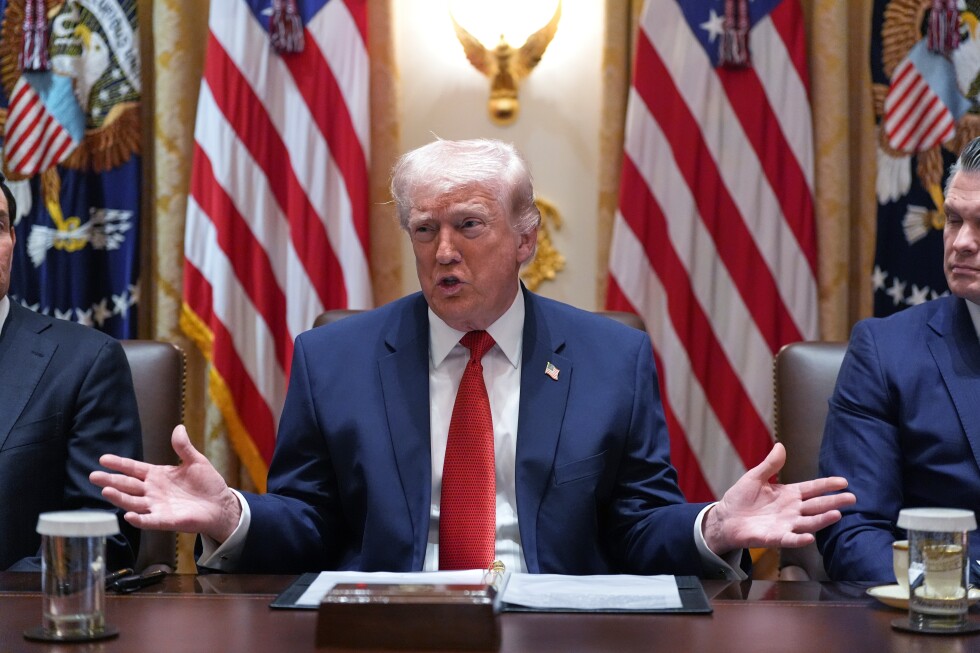
Trump’s Hormuz deadline delay fails to soothe markets amid signs of US and Iranian escalation

There’s little sign of relief in the markets from President Trump’s announcement yesterday of a 10-day delay of the deadline he imposed on Iran to reopen the Strait of Hormuz.

Crude oil prices are climbing and stocks are once again slumping, with the S&P 500, Nasdaq Composite, and Russell 2000 small-cap index all in the red early Friday.

Consumer discretionary stocks sank. Cruise lines Norwegian, Royal Caribbean, and Carnival — which cut its profit outlook on climbing fuel costs as part of earnings Friday — are falling. Other bellwethers of discretionary consumer spending that are less oil-exposed, like Airbnb, DoorDash, and Starbucks, are sinking.

On the other hand, consumer staples stocks — which typically hold up better during tough economic times — rallied.

Soup giant Campbell’s, cigarette seller Altria, ketchup behemoth Kraft Heinz, and spice maker McCormick are climbing.

Energy shares bounced along with rising crude oil prices, with gas driller APA Corporation, oil field services company Halliburton, and integrated giant Exxon gaining.

The energy trade, of course, keyed off the climb in crude oil prices, with benchmark US West Texas Intermediate rising to roughly $98 a barrel, despite Trump’s assurances as part of his deadline delay on Thursday that talks to end the war “are going very well.”

Those comments were largely brushed aside by the markets, a starkly different reaction from the president’s previous delay of the same deadline on Monday. That announcement generated a massive relief rally in crude oil prices and stocks on the hopes that substantive negotiations would begin shortly, or already had.

But Iran’s rejection of an initial US peace plan on Thursday, along with reports that the administration is considering sending another 10,000 US troops to the region and that Chinese ships trying to transit the Hormuz choke point had turned back, seemed to undercut that message.

“Any further statements by Trump about a deal are white noise to the markets,” market analyst Jim Bianco wrote in a post on LinkedIn on Friday. “Only if the IRANIANS say the talks are going well will it impact markets.”

Consumer discretionary stocks sank. Cruise lines Norwegian, Royal Caribbean, and Carnival — which cut its profit outlook on climbing fuel costs as part of earnings Friday — are falling. Other bellwethers of discretionary consumer spending that are less oil-exposed, like Airbnb, DoorDash, and Starbucks, are sinking.

On the other hand, consumer staples stocks — which typically hold up better during tough economic times — rallied.

Soup giant Campbell’s, cigarette seller Altria, ketchup behemoth Kraft Heinz, and spice maker McCormick are climbing.

Energy shares bounced along with rising crude oil prices, with gas driller APA Corporation, oil field services company Halliburton, and integrated giant Exxon gaining.

The energy trade, of course, keyed off the climb in crude oil prices, with benchmark US West Texas Intermediate rising to roughly $98 a barrel, despite Trump’s assurances as part of his deadline delay on Thursday that talks to end the war “are going very well.”

Those comments were largely brushed aside by the markets, a starkly different reaction from the president’s previous delay of the same deadline on Monday. That announcement generated a massive relief rally in crude oil prices and stocks on the hopes that substantive negotiations would begin shortly, or already had.

But Iran’s rejection of an initial US peace plan on Thursday, along with reports that the administration is considering sending another 10,000 US troops to the region and that Chinese ships trying to transit the Hormuz choke point had turned back, seemed to undercut that message.

“Any further statements by Trump about a deal are white noise to the markets,” market analyst Jim Bianco wrote in a post on LinkedIn on Friday. “Only if the IRANIANS say the talks are going well will it impact markets.”

markets

Meta’s energy deal with Entergy boosts AI-linked utilities stocks

Shares of Entergy are soaring on Friday after Meta agreed to fund the creation of seven natural gas-fired power plants to secure energy for its mammoth Hyperion data center project in Louisiana.

The news is also boosting other AI-linked utilities plays, with Constellation Energy, Vistra, and NRG also trading well to the upside on Friday.

In a press release, Entergy said the deal was “structured to ensure Meta pays its full cost of service.” Electricity prices have become a hot-button political issue, with President Trump pushing tech giants to pay their own way” on the costs associated with fueling data centers in a bid to avoid having households shoulder any of this burden.

markets

Fundrise’s venture fund falls amid concerns about valuation gap

Fundrise Innovation Fund, a publicly traded venture capital fund with stakes in private companies like Anthropic and SpaceX, is coming back down to earth after swelling to more than 25x the value of its assets early this week.

Shares of the fund, which went public on March 19 and uses the ticker VCX, closed at $262 on Thursday and had sunk to $189.26 shortly after market open on Friday. The stock closed at $533 on Wednesday.

The fund is still trading well above its net asset value (NAV), which was $18.26 per share as of March 2, 2026, according to its IPO documents. That means retail investors, desperate for exposure to high-flying private companies but left with no other ways in, are paying a hefty premium.

The gap between its NAV and the stock price led Citron Research to go short on the stock, the firm revealed Thursday.

Ben Miller, Fundrise cofounder and CEO, pushed back on the short report in an interview on CNBC Friday morning, saying his firm can’t control the stock price and noting that pre-IPO investors were actually worried the fund would end up trading at a discount, not a premium.

markets

Cyber stocks plunge after reportedly leaked document shows Anthropic is worried its new model will enable indefensible online attacks

Cybersecurity stocks are suffering from another case of Claude-struption:

Palo Alto Networks, CrowdStrike, Cloudflare, Fortinet, Zscaler, and Okta are all slumping in premarket trading after Fortune reported that a data leak from Anthropic revealed an updated AI model the company fears is so powerful that malicious actors could launch cyberattacks that these companies wouldn’t be able to defend against.

Per the leaked document reviewed by Fortune, the new model “presages an upcoming wave of models that can exploit vulnerabilities in ways that far outpace the efforts of defenders,” and Anthropic plans to release it early to cybersecurity companies in order to help improve their ability to withstand attacks.

According to experts cited by Fortune, this leak was able to be discovered because digital assets created in Anthropic’s content management system “are set to public by default” unless a user shifts them to be kept private. Anthropic refers to this as “human error.”

But given how Claude Cowork was created by Claude Code, one presumes that Anthropic makes extensive use of its AI tools for code and products deployed both internally and externally.

This leaves us with a bit of a conundrum. Anthropic is simultaneously able to:

  • Develop an AI model so powerful that traditional cyber defenders might be bringing a paper shield to a gun fight; and

  • Not utilize anything resembling appropriate safeguards for protecting its own information and products using those same powerful AI tools it has developed.

When “hey, maybe make sure we don’t default to publishing information publicly!” can be considered an improvement on one’s own cybersecurity standards, it’s a little difficult to trust one’s assessment of future threats.

These cyber stocks had previously slumped in late February after Anthropic launched a new security feature for its AI model.

Latest Stories

Sherwood Media, LLC produces fresh and unique perspectives on topical financial news and is a fully owned subsidiary of Robinhood Markets, Inc., and any views expressed here do not necessarily reflect the views of any other Robinhood affiliate, including Robinhood Markets, Inc., Robinhood Financial LLC, Robinhood Securities, LLC, Robinhood Crypto, LLC, Robinhood Derivatives, LLC, or Robinhood Money, LLC. Futures and event contracts are offered through Robinhood Derivatives, LLC.