
Markets
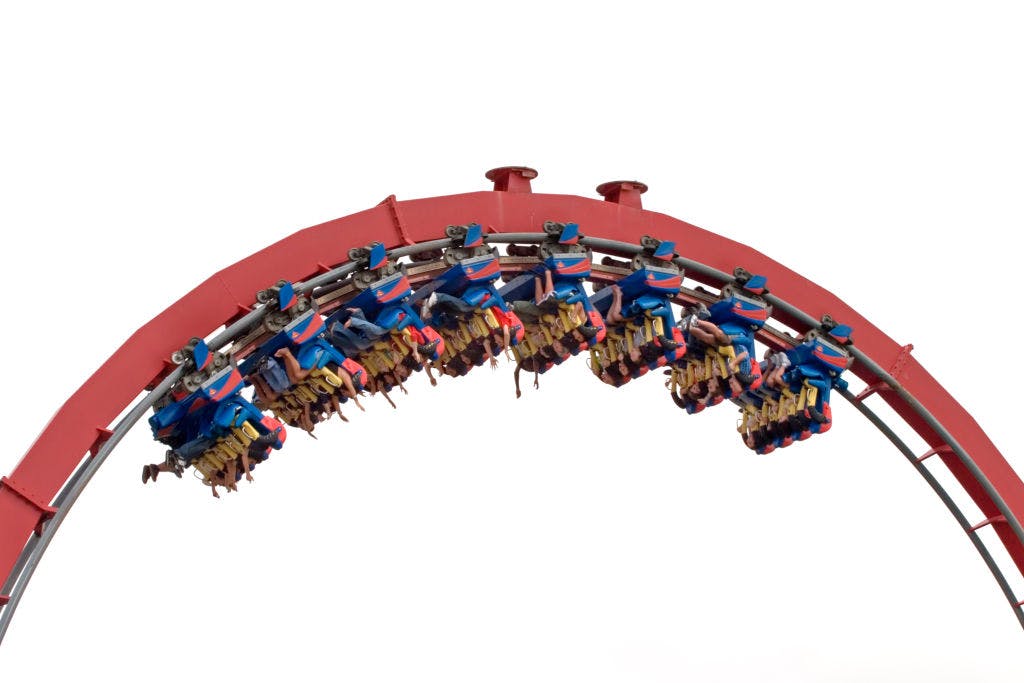
Roller coaster steel car full of riders
Roller coaster with a car full of screaming people (MyLoupe/Getty Images)

Semiconductors surge as yield spike abates, Nvidia earnings await

Oh, and executives spent all of Tuesday talking up the strength of demand for AI infrastructure.

Semiconductors are putting their sharp, sudden three-session swoon in the rearview mirror.

The VanEck Semiconductor ETF is up about 2% in early trading. Arm Holdings, Astera Labs, Marvell Technology, Intel, and Advanced Micro Devices are all up at least 4% less than 15 minutes into the session.

What’s behind the return to form? Three things come to mind.

  • Semiconductors bottomed when 30-year Treasury yields peaked on Tuesday:

  • Seemingly 95% of major semiconductor and AI-adjacent executives spent yesterday at the JPMorgan Global Technology, Media, and Communications Conference talking about just how fast they’re growing and how robust appetite for AI infrastructure is.

    • These comments helped buoy sentiment for the group on Tuesday, helping the industry finish well off its lows. Astera Labs stands out as a big outperformer, with its CEO highlighting the pickup in sales of its Scorpio switches and hinting these may be further supported by other major customers lining up behind UAL networking standards.

  • Nvidia’s earnings may be a useful catalyst for the group by reinforcing this strength in demand, with its sales expected to be up about 80% from the year-ago quarter.

More Markets

See all Markets
markets

Micron jumps on looming Samsung strike

Micron shares are climbing early Wednesday, breaking a sharp multiday semiconductor pullback. The rally comes amid the potential for a critical supply-side disruption at one of its largest global competitors, Samsung Electronics, as well as building investor enthusiasm ahead of Nvidia’s highly anticipated earnings report.

As demand for AI compute accelerates, Micron is increasingly viewed as a top-tier beneficiary due to its role in the critical high-bandwidth memory (HBM) market. The operational catalyst sparking Micron’s rally is a massive looming labor dispute in South Korea. According to Reuters, roughly 48,000 Samsung workers are set to begin an 18-day strike Thursday after negotiations broke down.

As global HBM production is effectively controlled by Micron, Samsung Electronics, and SK Hynix, any manufacturing hiccup at Samsung shifts pricing leverage to Micron. This backdrop comes as South Korea’s broader chip ecosystem is benefiting from the global infrastructure boom, pushing the country to the seventh-largest stock market in the world.

Micron has been expanding its own AI memory footprint. In March, the company completed its acquisition of PSMC’s Tongluo P5 site, a strategic integration designed to scale its domestic HBM production capacity and meet accelerating hyperscaler demand.

markets

Target sinks on expense concerns despite Q1 earnings beat

Target shares are sinking in volatile early Wednesday trading, erasing its premarket gains as investor anxiety over rising corporate overhead and tightening profit margins appeared to overawe strong Q1 earnings results that beat Wall Street estimates.

Key numbers:

  • Revenue of $25.44 billion (estimate: $24.11 billion).

  • Adjusted earnings per share of $1.71 (estimate: $1.43).

  • Same-store sales growth of 5.6% (estimate: 1.85%).

Target’s headline numbers signaled a clear, if partial, comeback story with 6.7% net sales growth, breaking a yearlong slump. The company also raised its full-year sales growth forecast to 4.0% compared with 2025, double its previous forecast of 2% growth. The company now projects annual EPS to land at the high end of its $7.50 to $8.50 range, beating the $8.10 consensus estimate from Wall Street.

However, Target’s operational expenses climbed to 21.9% of its total revenue last quarter, up from last year, with the company citing higher compensation costs and higher marketing expense to explain the jump. These rising costs were only partially offset by the boost from Target’s strong sales growth.

While we have momentum, we’re also being cautious about the near-term operating environment, said Michael Fiddelke, CEO of Target. With consumers weighing multiple headwinds and tailwinds, and recent dips in consumer sentiment, we continue to place a premium on flexibility, not wanting to swing too hard too quickly, despite the early signs of momentum we’re seeing.

This is the first earnings report under the newly appointed CEO, who officially took the helm in February and who’s focused on enhancing operational efficiency amid a prolonged retail sales slump.

Target yesterday announced that it tapped former Walmart exec Jeff England as chief supply chain officer to optimize inventory and delivery, part of a wider $6 billion turnaround. The retailer is also overhauling its beauty, baby, and apparel categories through exclusive Parke and “Pokémon” partnerships, though margins remain sensitive to inventory markdowns and labor costs.

markets

Roblox jumps after announcing $3 billion share buyback plan

Roblox rallied in postmarket trading on Tuesday after unveiling its first-ever share repurchase program.

The somewhat controversial, but certainly popular, gaming company has put forth a plan for $3 billion in future stock buybacks, with the intention to back up to $1 billion over the next 12 months. The stock subsequently jumped 4% after-hours.

On Tuesday, Naveen Chopra, chief financial officer of Roblox, said:

“Investing in continued growth will always be our highest priority, but the strength of our balance sheet and free cash flow generation allows us to support industry leading innovation while simultaneously reducing dilution.”

As of Q1 2026, Roblox had $6.2 billion in total cash, cash equivalents, and investments (for a net $5.2 billion after subtracting its $1.0 billion in debt). The company posted a consolidated net loss of $248 million in Q1.

While management has the cash on hand for a $3 billion buyback, the stock been taking hits recently — falling 28% over the past month (and 45% since the beginning of the year) as the company adjusts its safety standards. In April, the video game company slashed its full-year guidance due to age verification hurdles, which have slowed growth.

Latest Stories

Sherwood Media, LLC and Chartr Limited produce fresh and unique perspectives on topical financial news and are fully owned subsidiaries of Robinhood Markets, Inc., and any views expressed here do not necessarily reflect the views of any other Robinhood affiliate, including Robinhood Markets, Inc., Robinhood Financial LLC, Robinhood Securities, LLC, Robinhood Crypto, LLC, Robinhood Money, LLC, Robinhood U.K. Ltd, Robinhood Derivatives, LLC, Robinhood Gold, LLC, Robinhood Asset Management, LLC, Robinhood Credit, Inc., Robinhood Ventures DE, LLC and, where applicable, its managed investment vehicles.

