
Markets
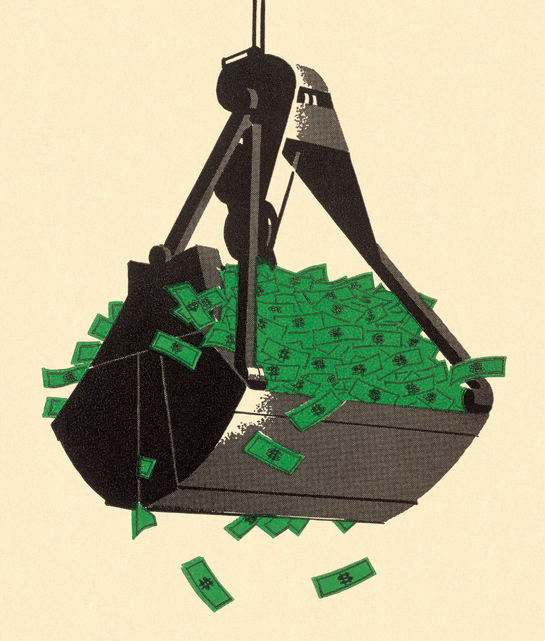
Scoop Full of Money
Scoop Full of Money

Stock manias are not a zero interest rate phenomenon

It’s time to put to bed the notion that ZIRP fuels zanier, riskier investing

“We hope the Federal Reserve is taking note of the gambling that’s being done with the zero-interest money it’s pumping out,” wrote the Washington Post’s Editorial Board in late January 2021, chiding the US central bank for its supposed role in fueling the meme stock moment.

“It is hard to imagine anything like GameStop if the Fed hadn’t cut rates to zero, promised to keep them there, and pumped more money into the system,” wrote John Authers, a columnist at Bloomberg Opinion, a month later.

Well, it’s easy if you try.

Now that [gestures wildly at the stock charts of GME and AMC] is happening again and the Federal Reserve’s policy rate is above 5%, can we scrap the notion that there’s some kind of mechanical relationship between the interest rate that banks charge one another on overnight loans and the sliding scale of sane-to-crazy things Americans are willing to invest in?

To quote Mark Dow, founder of Dow Global Advisors (and one of the best all-round thinkers on financial markets, for my money), “The relationship between policy rate levels and risk appetite formation is neither predictable nor stable.”

And to be clear, this isn’t something we needed to wait until now to adjudicate. This is just another reminder. The late 90s happened! Pets dot com and so on. This case was closed before it was even open. 

Dow, again:

Now, there’s a completely separate question of whether this episode says anything about if the stance of US monetary policy is doing enough to put downward pressure on inflation. I’m all for having that debate — at least it’s a debate we haven’t had the answer for more than two decades.

More Markets

See all Markets
markets

SpaceX gets a wave of bullish ratings from Wall Street analysts

SpaceX received more than a dozen positive analyst calls on Tuesday — including from major Wall Street banks — as they initiate coverage on Elon Musk’s space and AI company.

SpaceX went public on June 12 at a $2.2 trillion valuation, the largest debut in history. While the company hasn’t yet posted a profit, it seems to have convinced Wall Street that it will get there and grow its valuation on the way.

Of the at least 17 analysts that gave a rating on Tuesday, all but one gave it a “buy” or “outperform” rating. MoffettNathanson was "neutral."

The ratings come as SpaceX joined the Nasdaq 100 index, a benchmark tech-heavy basket of companies that underpins millions of portfolios. The inclusion adds built-in demand for the stock from index funds and ETFs.

Still, SpaceX fell more than 5% on Tuesday amid a broader sell-off, and is currently effectively flat from its opening price of $150 a share.

markets

Nike sinks to lowest level since 2014 after warning of “challenged” sales environment in Q4 report

Did Nike do it?

Investors had a mixed reaction after the global sports apparel company reported its fourth quarter earnings on Tuesday after the bell. Shares initially rose 5% as Nike beat out Wall Street expectations amid a hefty tariff refund bonus. However, the stock then sank to its lowest level since August 2014 in postmarket trading.

Here are the Q4 numbers:

  • Revenue of $11.0 billion (estimate: $10.8 billion).

  • Adjusted earnings per share of $0.20 (estimate: $0.12).

Ahead of this report, Nike warned that results would be flattered by a one-time tariff refund (now estimated at roughly $0.52 per share for the bottom line). That gave the company an extra cushion in snapping its streak of seven quarters of year-over-year profit declines.

Over the past year, the company had been punished by tariffs on imported goods, stagnant consumer spending, and increasing competition from other footwear brands like New Balance, Adidas, and Hoka.

Outgoing CFO Matthew Friend deemed it an “increasingly challenging operating environment, where sell-through remains challenged.”

Latest Stories

Sherwood Media, LLC and Chartr Limited produce fresh and unique perspectives on topical financial news and are fully owned subsidiaries of Robinhood Markets, Inc., and any views expressed here do not necessarily reflect the views of any other Robinhood affiliate, including Robinhood Markets, Inc., Robinhood Financial LLC, Robinhood Securities, LLC, Robinhood Crypto, LLC, Robinhood Money, LLC, Robinhood U.K. Ltd, Robinhood Derivatives, LLC, Robinhood Gold, LLC, Robinhood Asset Management, LLC, Robinhood Credit, Inc., Robinhood Ventures DE, LLC and, where applicable, its managed investment vehicles.

