Markets
markets

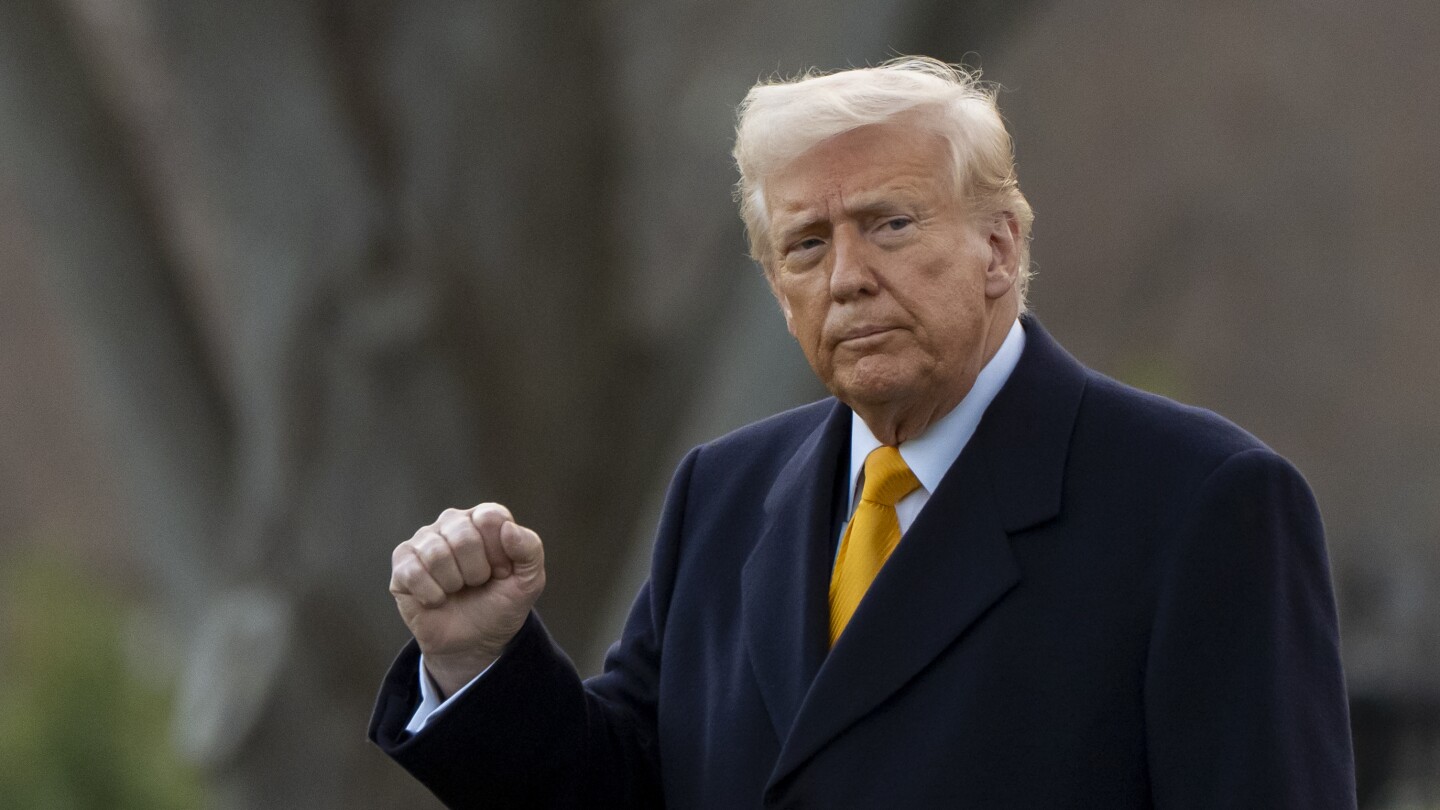
Stocks lurch lower after Trump escalates tariffs

A fresh tariff threat from President Trump worsened the stock market’s losses Tuesday, pushing the S&P 500 closer toward a technical correction, or a drop of 10% from a recent high.

For the record, just because stocks fall into a correction doesn’t necessarily imply a bear market will follow. The 10% line in the sand is a relatively arbitrary Wall Street way of describing a market sell-off that’s a bit more than your garden variety slump, but not quite as bad as a bear market.

More Markets

See all Markets
markets

UnitedHealth, CVS, Humana drop after WSJ reports Trump admin will propose flat rates for Medicare insurers

Major health insurers dropped after The Wall Street Journal reported Monday that the Trump administration will propose roughly flat rates for Medicare insurers next year.

The Centers for Medicare and Medicaid Services is expected to announce an average 0.09% increase in payments to the plans in 2027, less than the 4% to 6% analysts expected, the Journal reported Monday after the bell.

markets

GameStop surges after Michael Burry reveals he owns the stock

Shares of GameStop are surging after Michael Burry, former hedge fund manager of “The Big Short” fame and current Substacker, announced that he’s been buying the video game and collectibles retailer recently.

The revelation came in Burry’s long-anticipated follow-up post on GameStop. The stock initially jumped when Burry tweeted about his history of being long the stock in November, and again in December as he teased a more thorough write-up of the experience.

Per CNBC, Burry wrote in a Substack post on Monday:

“I own GME. I have been buying recently. I expect I am buying at what may soon be 1x tangible book value / 1x net asset value. And getting a young Ryan Cohen investing and deploying the company’s capital and cash flows. Perhaps for the next 50 years.”

Trading volumes in GameStop went parabolic after the news crossed the wires. As of noon ET, 11.9 million shares have changed hands, more than 6x the average by this time of day.

And while Burry said he’s “willing to hold long-term,” his ownership is spurring a big rush into short-term call options on GameStop. As of 12:20 p.m., call volumes are more than double their 20-day moving average. The four most active contracts are calls that expire this Friday with strike prices of $25, $24, $20, and $23.

GameStop is a stock that has traded off of nostalgia, its exposure to things that are cool or entertaining, and leaders with big main character energy. And Burry’s the first injection of main character energy into the shares since Keith Gill, aka Roaring Kitty, came back to spur another meme stock rally in GameStop in the second quarter of 2024 and then disappeared almost as quickly as he’d arrived.

Gill and Burry have a lot in common: both like GameStop because they think it’s cheap and they’re willing to make “a bet on the management, in particular, of course, Ryan fucking Cohen.”

markets

Extreme optimism on global growth is a bad omen for cyclically sensitive trades

By mid-December, it became pretty clear that investors were pricing in an acceleration in global growth for 2026, and price action since then has only calcified that narrative.

“The equity market has rapidly priced a positive expected growth outlook for this year,” Goldman Sachs’ Cullen Morgan wrote. “Similar has been seen in other asset classes as well, leading to our Global Growth Optimism Factor (RAI PC1) hitting a level seen only a handful of times over the last two decades.”

RAI stands for “risk appetite indicator,” the bank’s proprietary metric for investor sentiment.

One problem with all this optimism embedded in asset prices, Morgan noted, is that it can serve as a high-water mark for trades perceived to be sensitive to the ebbs and flows of the economy — in particular, small-caps and cyclicals versus defensives.

Goldman Growth Optimism
Source: Goldman Sachs

“To be clear, we continue to recommend select cyclicals as beneficiaries of the economic acceleration in early 2026 given the market does not yet appear to be fully pricing our economists’ above-consensus growth forecasts, but we are growing wary of a limited runway,” he concluded.

RAI stands for “risk appetite indicator,” the bank’s proprietary metric for investor sentiment.

One problem with all this optimism embedded in asset prices, Morgan noted, is that it can serve as a high-water mark for trades perceived to be sensitive to the ebbs and flows of the economy — in particular, small-caps and cyclicals versus defensives.

Goldman Growth Optimism
Source: Goldman Sachs

“To be clear, we continue to recommend select cyclicals as beneficiaries of the economic acceleration in early 2026 given the market does not yet appear to be fully pricing our economists’ above-consensus growth forecasts, but we are growing wary of a limited runway,” he concluded.

markets

Goldman Sachs: Megacap tech stocks’ relative valuations are near their 2022 lows

With Microsoft and Meta jump-starting the megacap tech reporting period this Wednesday, Goldman Sachs equity derivatives and flows specialist Cullen Morgan commented on a relative rarity for the cohort of behemoths: they’re not really that expensively priced. He wrote:

“Valuations of the mega-cap tech stocks have declined substantially in recent months. The group now trades at a forward P/E of 27x, which ranks in the 59th percentile relative to the past decade. Relative to the rest of the S&P 500, the 31% P/E premium ranks in the 24th percentile during the past 10 years...

While elevated FCF multiples leave room for further de-rating, the current PEG ratio of 1.4x nearly matches the trough from late 2022.”

Goldman Mega Cap Tech Valuations

This is exactly why we suggested keeping an eye on hyperscaler valuations coming into this year, particularly this divergence between price-to-earnings ratios and price-to-free cash flow ratios, as a way to monitor whether profit expectations surrounding the transformative potential of AI were getting extrapolative or not:

“One way to square this circle between elevated, not crazy forward valuations based on one metric and sky-high ones based on another is to conclude that the lack of runaway forward price-to-earnings ratios suggests that the market does continue to have some skepticism about the long-term earnings power associated with all these capital outlays.

Less doubt would equal higher valuations and higher stock prices. No doubt and unbridled optimism about how much these first movers in AI will reap rewards for years if not decades to come… that’s how we really get a bubble.”

So far in 2026, the market has been squarely focused on rewarding companies that are poised to benefit from near-term shortages and excess profit opportunities brought about by the AI boom, rather than its potential long-term winners. We’ll see if that changes as megacap tech leaders start to step up to the plate this week.

Latest Stories

Sherwood Media, LLC produces fresh and unique perspectives on topical financial news and is a fully owned subsidiary of Robinhood Markets, Inc., and any views expressed here do not necessarily reflect the views of any other Robinhood affiliate, including Robinhood Markets, Inc., Robinhood Financial LLC, Robinhood Securities, LLC, Robinhood Crypto, LLC, or Robinhood Money, LLC.