
Markets
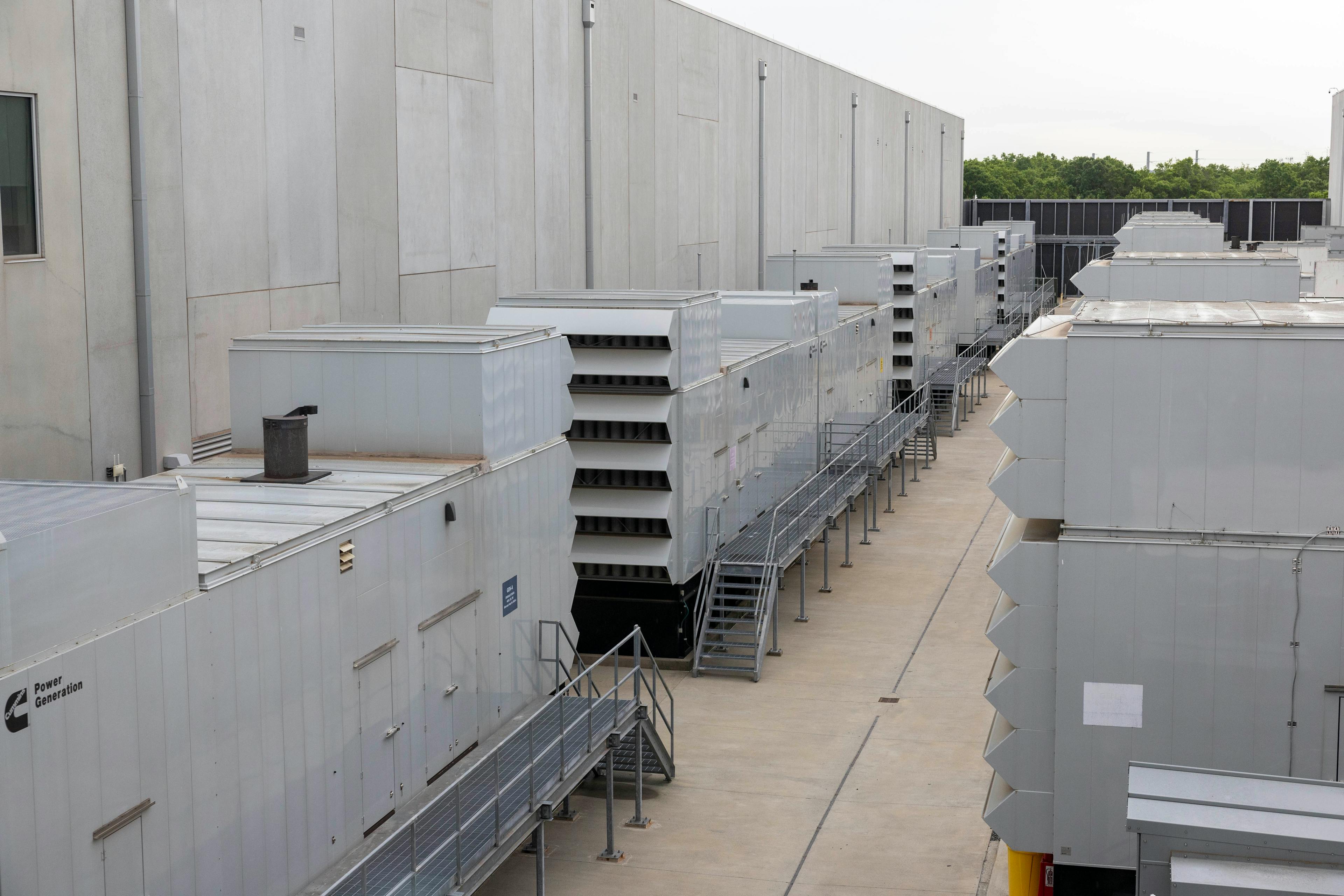
A data center
(Amanda Andrade-Rhoades/Getty Images)

Traders still like AI, but maybe not data centers

There seems to be some hedging of bets.

The stock market put together a respectable recovery from the panic of Monday’s DeepSeek dive, especially market behemoth Nvidia’s recovery of a solid $125 billion or so in market value to retake the $3 trillion mark in terms of market cap.

Clearly the AI trade isn’t dead.

But on closer inspection, the damage to stocks associated with the capital expenditure blitz on data centers that we’ve seen over the past few years continues to be deep.

Meanwhile, the recovery in so-called AI software stocks — firms like Salesforce, Palantir Technologies, and ServiceNow, which stand to benefit from AI advancements without sinking massive amounts of capital into highly illiquid bets on cavernous data centers — has been much more robust.

As of Tuesday, the Goldman Sachs thematic bucket of AI software stocks is now outpacing stocks depending on the ongoing largesse of big data center spenders for the first time over the last year. (See above.)

Of course, even within that carnage there are a few recovery stories, with GE Vernova and Vistra rallying strongly after the former announced a deal with Chevron to form a company to supply power to data centers.

Sure, it could be a mere fluke that will revert once the animal AI spirits recover. At the same time, the scale of the paper losses yesterday in some stocks is bound to make an impression on investors, and shifting exposure from asset-heavy AI bets toward AI free riders seems to make a lot of sense if the technical advances on DeepSeek — which our colleague is smart enough to understand and explain — are legit.

More Markets

See all Markets
markets

Spectrum-owner Charter Communications is on pace for its worst day ever as broadband numbers and Q1 results disappoint

Cable and broadband company Charter Communications is on pace for its worst-ever trading day on Friday, as investors dump the stock following its Q1 results and forward guidance.

Charter, which owns Spectrum, reported adjusted earnings of $9.17 per share, below Wall Street estimates of $9.96 per share from analysts polled by FactSet. On the company’s earnings call, CFO Jessica Fischer appeared to lower its full-year revenue per user guidance.

“It'll be close either way in terms of whether we end up with net growth,” said Fischer.

The company lost 120,000 internet subscribers in the quarter, deeper than the expected 94,800 and double its loss from the same period last year. That news comes one day after Comcast’s earnings provided a bit of optimism for broadband as a category: the company reported Q1 losses of 65,000, significantly improving from 183,000 losses in the same quarter last year. Comcast is down more than 10%, on pace for its worst day since January 2025.

markets

Nvidia poised to snap longest run without a record close since the AI boom began

The stock price of the company responsible for the brains of the AI boom is finally showing some brawn again.

Nvidia, the world’s most valuable company, is poised to close at a record high for the first time since October 29, 2025, on Friday (if it ends above $207.04).

The AI chip trade is on fire, with the Philadelphia Semiconductor Index slated to deliver its 18th consecutive gain as Intel’s robust results and outlook juice the entire ecosystem. Hyperscalers report earnings next week, and their capex guidance can be thought of as the earnings guidance for Nvidia and other AI suppliers for the quarters to come.

This would end Nvidia’s longest stretch without a record close since the unofficial start of the AI boom (when the chip designer delivered blowout quarterly results in May 2023).

(Sorry if I jinx this!)

markets

Lilly slips after prescriptions for its weight-loss pill come in below expectations in second week

Eli Lilly fell on Friday after prescription data for its new weight-loss pill, Foundayo, showed that it’s having a significantly slower rollout than its top competitor.

The pill was prescribed about 3,700 times in its second week, according to IQVIA data cited by Deutsche Bank analysts, compared to the roughly 8,000 they were expecting. Novo Nordisk’s Wegovy pill, which came out in January, hit over 18,000 prescriptions in its second week.

The FDA approved Foundayo on April 1 and shipments began on April 9. Deutsche analysts noted that Lilly’s GLP-1 injections, which currently outsell Novo’s, also had a slower start.

Lilly fell more than 4% after the numbers were released. Novo Nordisk rose more than 5%.

Latest Stories

Sherwood Media, LLC produces fresh and unique perspectives on topical financial news and is a fully owned subsidiary of Robinhood Markets, Inc., and any views expressed here do not necessarily reflect the views of any other Robinhood affiliate, including Robinhood Markets, Inc., Robinhood Financial LLC, Robinhood Securities, LLC, Robinhood Crypto, LLC, Robinhood Derivatives, LLC, or Robinhood Money, LLC. Futures and event contracts are offered through Robinhood Derivatives, LLC.

