Markets
markets

TSMC grew its sales 30% year on year in January and February

Taiwan Semiconductor ticked higher in premarket trading on Tuesday after the chipmaker reported a 30% jump in sales for the first two months of 2026, compared to the year before.

A key supplier for AI industry giants like Nvidia and Advanced Micro Devices, TSMC saw its combined January and February revenue grow to NT$718.9 billion ($22.6 billion), per its monthly revenue report, published early on Tuesday morning.

The company notched NT$317 billion in February alone, growing 22% from a year ago and decelerating from Januarys 37% year-on-year growth. For the coming full Q1, analyst estimates compiled by Bloomberg are anticipating growth of 33% — suggesting a strong March will be needed to meet that figure.

Charles Shum, a Bloomberg Intelligence analyst, noted that the modest weakness in the first two months is more likely due to softer performance in smartphones and PCs, rather than cooling AI chip demand, as soaring memory prices put pressure on shipments.

More Markets

See all Markets
markets

CarMax rises after activist investor Starboard takes $350 million stake

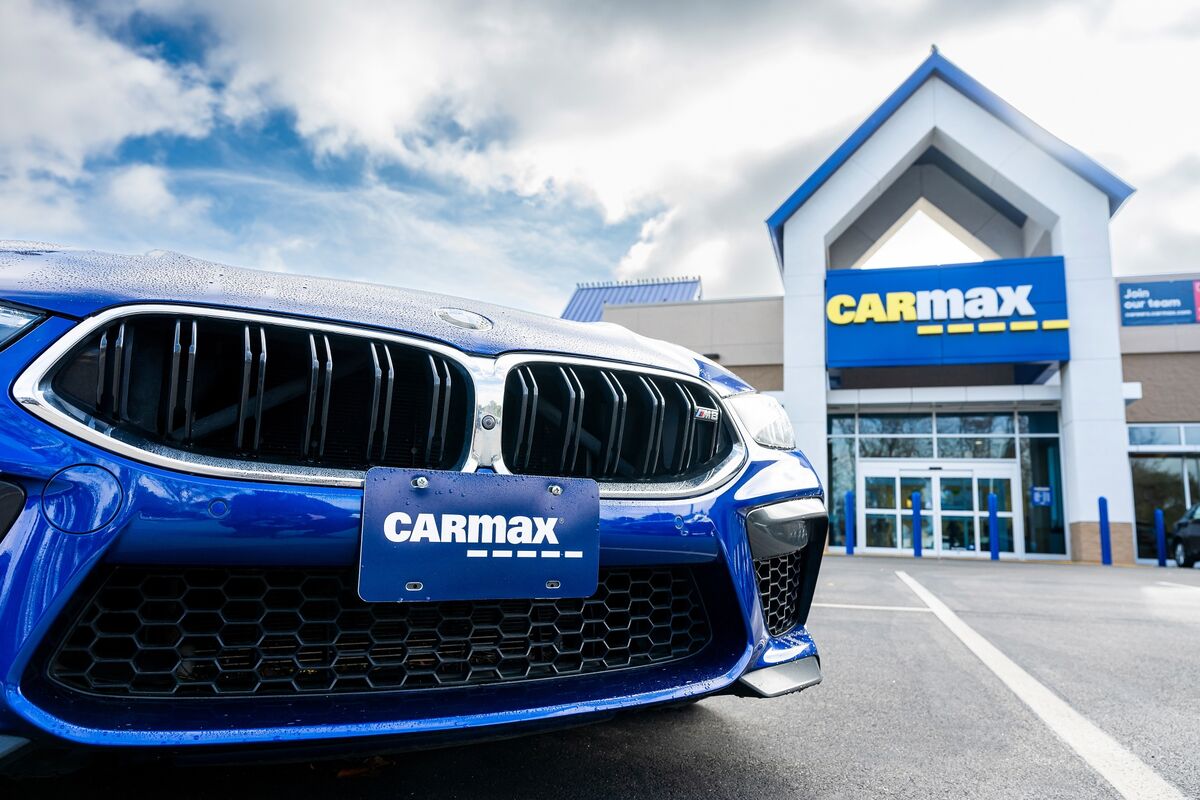
Online car retailer CarMax is climbing in premarket trading on Wednesday following reports that activist investor Starboard Value has taken a $350 million stake in the company.

Starboard nominated two directors to CarMax’s board, including its own CEO Jeff Smith and Frontdoor CEO Bill Cobb.

According to a letter sent by Starboard to CarMax, the hedge fund thinks the company can improve performance by adopting more dynamic pricing, reconditioning vehicles more efficiently, and reducing admin and other costs by more than $300 million.

Per Starboard’s letter: “If the experience is superior, CarMax does not need to be the lowest-priced provider to win. We strongly encourage you to be hyper-focused on the digital end-to-end consumer experience. We believe there is an ample amount of low hanging fruit; so much fruit that it may even be touching the ground.”

CarMax is the largest US used car retailer, but rival Carvana has closed the retail sales gap between the two companies to about 6,000 vehicles as of the two most recent comparable quarters.

According to a letter sent by Starboard to CarMax, the hedge fund thinks the company can improve performance by adopting more dynamic pricing, reconditioning vehicles more efficiently, and reducing admin and other costs by more than $300 million.

Per Starboard’s letter: “If the experience is superior, CarMax does not need to be the lowest-priced provider to win. We strongly encourage you to be hyper-focused on the digital end-to-end consumer experience. We believe there is an ample amount of low hanging fruit; so much fruit that it may even be touching the ground.”

CarMax is the largest US used car retailer, but rival Carvana has closed the retail sales gap between the two companies to about 6,000 vehicles as of the two most recent comparable quarters.

markets

A “Pokémon” game similar to “Animal Crossing” is selling out at US retailers, boosting Nintendo shares

“Pokémon Pokopia,” a Switch 2 exclusive game in the vein of “Animal Crossing,” has become something of a sleeper mass hit for Nintendo, sending the gaming giant’s shares climbing. The stock closed up more than 8% in Japan on Wednesday. US ADRs are up 5% in premarket trading.

Physical editions of “Pokopia” are currently out of stock on Walmart’s website, and earlier this week Amazon temporarily hiked the price of the game to $80 as demand surged.

“Pokopia” falls into a category of cozy games that have become a major industry category. “Animal Crossing” is the second-most-popular title on the original Switch and has sold more than 49 million copies. The 10-year-old “Stardew Valley” has sold more than 50 million copies across consoles and PC.

The Switch 2 is seeing a momentum boost from the “Pokémon” exclusive, Jefferies analyst Atul Goyal wrote in a recent note. That’s helping to offset investor fears around the growing issue of memory prices.

markets

Nebius spikes after announcing $2 billion investment from Nvidia

Nebius is soaring in premarket trading after deepening its partnership with the world’s most valuable company.

Nvidia will invest $2 billion in the neocloud to help “develop and deploy the next generation of hyperscale cloud for the AI market, from AI natives to enterprises,” according to the press release. “To enable Nebius to deploy more than 5 gigawatts of capacity by end of 2030, NVIDIA will support Nebius’s early adoption of the latest generation of NVIDIA’s accelerated computing platform.”

The chip designer already held roughly $100 million in Nebius stock as of the end of 2025, per a filing.

Nvidia has actively sought out $2 billion equity stakes via partnerships with smaller publicly-traded AI plays as of late. Earlier this month, Nvidia said it would take $2 billion positions in advanced optics firms Lumentum and Coherent. In late January, the chip designer announced an investment of the same amount in CoreWeave, the neocloud whose IPO it also anchored.

markets

Oracle jumps after Q3 results exceed expectations, boost to sales guidance

Oracle had gained nearly 12% in early trading on Wednesday after the company's quarterly results and outlook gave investors reason to cheer.

The hyperscaler reported:

  • Sales of $17.2 billion (estimate: $16.9 billion).

  • Adjusted earnings per share of $1.79 (estimate: $1.70).

  • RPO (remaining performance obligations, or backlog) of $553 billion (estimate: $537.8 billion).

Oracle’s closely watched capex for the quarter was $18.64 billion, above analyst estimates of $14 billion.

Management also raised its sales outlook for the next fiscal year to $90 billion; analysts had expected $86.7 billion.

One year ago, management suggested that its fiscal 2027 top-line growth rate would be around 20%. And last quarter, the company said that 2027 sales would be $4 billion higher than previously expected. Putting this all together, this means Oracle’s previous 2027 sales guidance was in the neighborhood of $84.4 billion ahead of this report.

Breaking down Oracle’s cloud business:

  • Cloud revenue was $8.9 billion, up 44% year on year.

  • Cloud infrastructure revenue was $4.9 billion, up 84% year on year.

  • Cloud application revenue was $4 billion, up 13% year on year.

All of those figures were marginally ahead of estimates.

The cloud company’s elevated indebtedness and expected cash burn compare unfavorably to other hyperscalers, which caused markets to treat its aggressive capex plans as more risky than those of its peers. That’s been exacerbated by OpenAI, itself a cash incinerator, being the source of much of Oracle’s pipeline of future business.

Oracle’s five-year credit default swap spreads widened significantly from mid-September through late January due to this counterparty and credit risk. The company’s perceived creditworthiness recovered after announcing plans to raise money through equity, not just debt, to find its expansion plans, before CDS spreads once again blew out to their widest level since 2009.

“Oracle has been stained by the negative sentiment around OpenAI and is generally viewed as a poster child for AI Capex excess / madness and so a super squeezy rally in the stock could tell us AI Capex fears have peaked for now,” Brent Donnelly, president of Spectra Markets, wrote ahead of this release.

Oracle shares took a beating recently, as a number of analysts have lowered their price targets for the stock, which is down about 56% from its 52-week high of $345.72.

Latest Stories

Sherwood Media, LLC produces fresh and unique perspectives on topical financial news and is a fully owned subsidiary of Robinhood Markets, Inc., and any views expressed here do not necessarily reflect the views of any other Robinhood affiliate, including Robinhood Markets, Inc., Robinhood Financial LLC, Robinhood Securities, LLC, Robinhood Crypto, LLC, or Robinhood Money, LLC.