
Markets
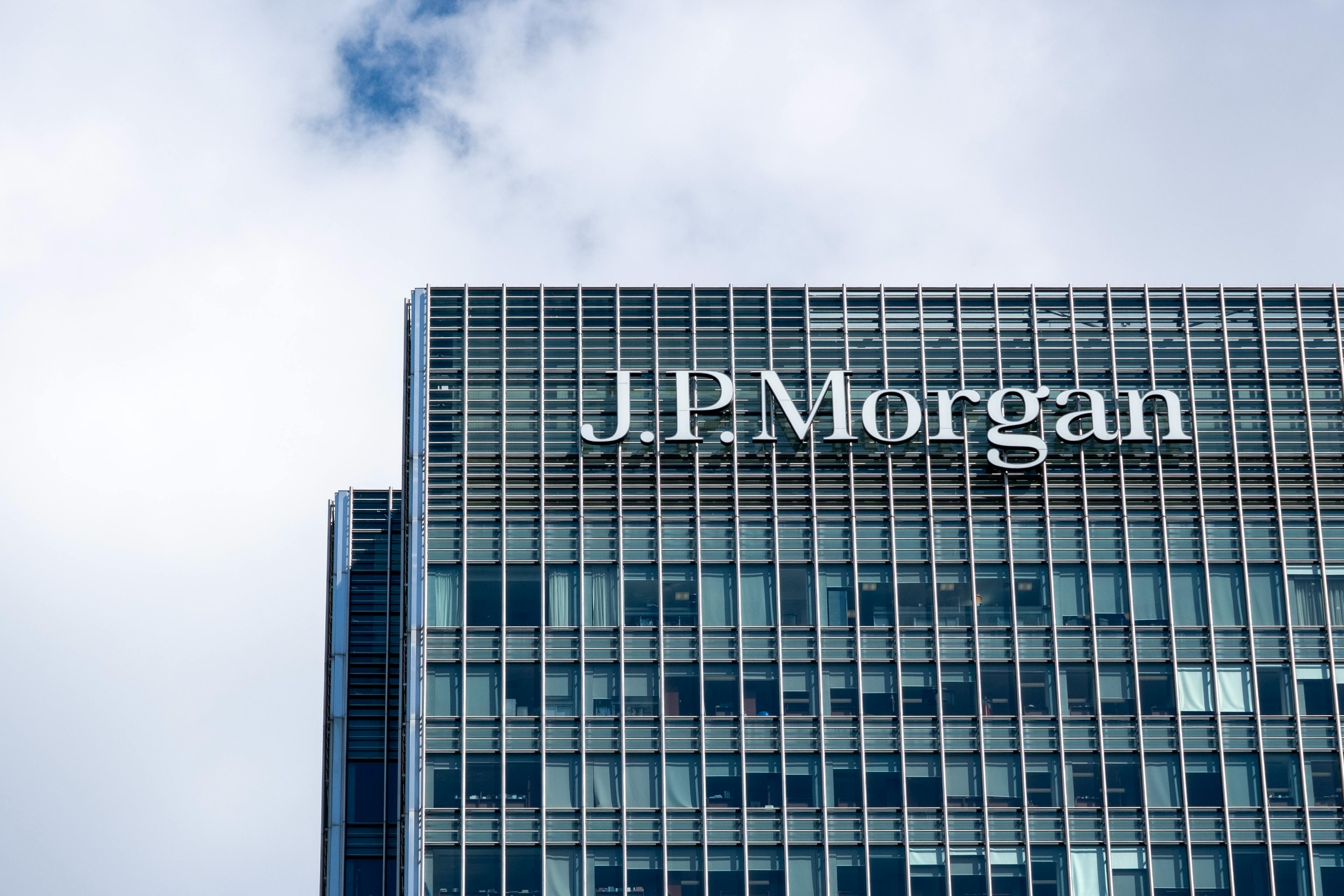
jpmorgan chase
(Mike Kemp/Getty Images)
Talkchain

Wall Street is talking a lot more about stablecoins

The steady creep of crypto closer to the traditional financial sector is a key theme of the markets this year.

Matt Phillips

Stablecoins — crypto assets typically pegged to the US dollar and supposedly backed by ample, easy to sell, super safe securities like US Treasurys — are thought to be the most boring corner of the crypto market. By design, they don’t offer the wild, potentially lucrative swings that have enticed crypto traders in recent years.

But try telling that to investors of Circle, the issuer of the second-largest stablecoin, USDC. Since the company started trading publicly in early June, it’s up over 600%. Coinbase, which co-launched USDC with Circle through the Centre Consortium and is a major player in increasing its adoption, is up more than 50% this year and just touched a new high.

In part, that’s because stablecoins’ status as the seemingly safest part of the crypto-verse has put the dollar substitutes at the bleeding edge of a key theme powering market momentum this year: steadily increasing connections between crypto and the traditional, regulated US financial system.

That fusion has gathered pace since President Trump’s second administration began. The White House has publicly embraced crypto and pushed to ease regulations on an industry that — as should be noted — has directly and personally enriched the sitting president and his family. (One estimate said that for the year through April, the Trump family and its business partners had made some $350 million in fees on its trump coin.)

But pro-crypto pressure is also coming from the legislative branch, where crypto has emerged as a key source of political donations over the last couple years. The bipartisan GENIUS Act — which would set the rules of the road for stablecoins — passed the Senate in June. And while it still faces hurdles in the House, the writing seems to be on the wall that stablecoins, in some incarnation, will be connected to the US banking system in the not too distant future.

Case in point: stablecoin-related chatter from S&P 500 companies is picking up steam as we head into the heart of earnings season, especially from the big Wall Street banks that reported this week.

Even before that, the appearance of the term in conference call transcripts surged to a new high in June, FactSet data shows, which doesn’t even count this week’s comments from the big US banks. At last glance, financial titans talking stablecoins included Mastercard, BlackRock, Bank of New York Mellon, JPMorgan, Citigroup, Morgan Stanley, and Goldman Sachs.

For the record, many of the bankers have merely acknowledged developments on the stablecoin regulation front, telling analysts that they’re “following closely” or some such pabulum.

But the uptick in chatter is often triggered by questions from analysts, who are likely interested to know if some of the stablecoin fairy dust that supercharged Circle shares could rub off on the old-school banks they cover. That suggests there’s a lot more stablecoin talk to come.

More Markets

See all Markets
markets

ServiceNow’s guidance shows that there’s no margin for error in software shortfalls

Why do investors like software stocks? Because they have high recurring revenues and extremely high margins.

Why are investors worried about the impact of AI on software stocks? At the most basic level, AI tools reduce the barriers to entry and the cost of creating software.

Nothing shows traders’ willingness to shoot first and ask questions later (or not bother to ask questions at all!) when the crux of the case for owning software seemingly shows cracks more than the reaction to ServiceNow’s Q1 results and updated outlook.

ServiceNow is cratering after the software company’s Q1 margins came in shy of estimates. Full-year guidance for ServiceNow’s gross and operating margins was revised lower, while subscription revenues got a big bump.

There are some extenuating circumstances that cut both ways: integrating recently acquired businesses is the proximate cause of the expected sales bump and operating margin pressure, according to management.

But given how important margins have been to the investment case for software stocks — and the significant profitability premium they’ve enjoyed relative to the S&P 500 as a whole — details don’t seem to matter.

In early February, Nvidia CEO Jensen Huang called the idea that the software industry would be replaced by AI the “most illogical thing in the world,” arguing that AI agents will leverage existing software tools rather than reinvent them.

(For what it’s worth, my view is that if AI is intelligent in a transcendent way, then reinventing the wheel is absolutely something you should expect. If AI is just fishing in the ocean of human consciousness with the best net possible, then it may work within our existing toolbox. I’m thinking about the story of why it took so long to develop a sewing machine — inventors were trying to mimic the motion of sewing by hand rather than taking a novel mechanical approach.)

But I digress. The bear case for software is that AI tools render many established giants obsolete. But going the way of the woolly mammoth isn’t something that happens overnight. You won’t be able to find any of them to ask, obviously, but I’m told it was a 10,000- to 16,000-year process.

Well before obsolescence comes the threat of incremental substitution. And margin pressure would be one way you’d expect competitive pressures to be absorbed. At the surface level, ServiceNow is affirming a base case for software stocks that traders have spent months fearing, which still apparently hasn’t taken the industry to levels where it’s viewed as attractively valued.

Nothing shows traders’ willingness to shoot first and ask questions later (or not bother to ask questions at all!) when the crux of the case for owning software seemingly shows cracks more than the reaction to ServiceNow’s Q1 results and updated outlook.

ServiceNow is cratering after the software company’s Q1 margins came in shy of estimates. Full-year guidance for ServiceNow’s gross and operating margins was revised lower, while subscription revenues got a big bump.

There are some extenuating circumstances that cut both ways: integrating recently acquired businesses is the proximate cause of the expected sales bump and operating margin pressure, according to management.

But given how important margins have been to the investment case for software stocks — and the significant profitability premium they’ve enjoyed relative to the S&P 500 as a whole — details don’t seem to matter.

In early February, Nvidia CEO Jensen Huang called the idea that the software industry would be replaced by AI the “most illogical thing in the world,” arguing that AI agents will leverage existing software tools rather than reinvent them.

(For what it’s worth, my view is that if AI is intelligent in a transcendent way, then reinventing the wheel is absolutely something you should expect. If AI is just fishing in the ocean of human consciousness with the best net possible, then it may work within our existing toolbox. I’m thinking about the story of why it took so long to develop a sewing machine — inventors were trying to mimic the motion of sewing by hand rather than taking a novel mechanical approach.)

But I digress. The bear case for software is that AI tools render many established giants obsolete. But going the way of the woolly mammoth isn’t something that happens overnight. You won’t be able to find any of them to ask, obviously, but I’m told it was a 10,000- to 16,000-year process.

Well before obsolescence comes the threat of incremental substitution. And margin pressure would be one way you’d expect competitive pressures to be absorbed. At the surface level, ServiceNow is affirming a base case for software stocks that traders have spent months fearing, which still apparently hasn’t taken the industry to levels where it’s viewed as attractively valued.

markets

Oklo says it’s partnering with Nvidia, sending the stock up

Oklo shares were up in early Thursday trading after the revenue-free retail favorite announced a collaboration between itself, Los Alamos National Laboratory, and Nvidia “to support critical infrastructure development and accelerate the deployment of nuclear energy.”

Oklo said in its press release:

“Projects under the agreement include integrated full-stack solutions to support nuclear powered AI factories; AI development, including physics and chemistry trained AI models to support nuclear fuel R&D; grid stabilization, reliability, and redundancy studies; materials science efforts focused on plutonium-bearing fuel; and proof of concept work related to the development of a nuclear powered AI factory.”

The release leaves several questions about the agreement between Oklo, Nvidia, and the storied federal nuclear research center unanswered, including which entity, if any, is providing funding, and a timeline for the research to begin or yield possible useful findings. Sherwood News has reached out to Oklo for comment and will update with any additional information.

Oklos shares have been ripping lately. Theyre up more than 8% in Thursday morning trading, pushing their gains so far this month to more than 50%.

That surge — in shares of a company with no commercially available products and no revenue — is part and parcel, after a few weeks of war-related jitters, of the return of the speculative appetite we saw last fall.

“Projects under the agreement include integrated full-stack solutions to support nuclear powered AI factories; AI development, including physics and chemistry trained AI models to support nuclear fuel R&D; grid stabilization, reliability, and redundancy studies; materials science efforts focused on plutonium-bearing fuel; and proof of concept work related to the development of a nuclear powered AI factory.”

The release leaves several questions about the agreement between Oklo, Nvidia, and the storied federal nuclear research center unanswered, including which entity, if any, is providing funding, and a timeline for the research to begin or yield possible useful findings. Sherwood News has reached out to Oklo for comment and will update with any additional information.

Oklos shares have been ripping lately. Theyre up more than 8% in Thursday morning trading, pushing their gains so far this month to more than 50%.

That surge — in shares of a company with no commercially available products and no revenue — is part and parcel, after a few weeks of war-related jitters, of the return of the speculative appetite we saw last fall.

Zepbound vial

Hims rises after it says it now offers “full range” of FDA-approved GLP-1s

Hims providers can now send prescriptions to Eli Lilly’s direct-to-consumer pharmacy.

markets

Super Micro craters on report that Oracle canceled a more than $1 billion contract

Super Micro’s share price was just on the verge of filling the gap caused by the bombshell revelation that its cofounder was indicted on allegations of smuggling servers containing Nvidia AI chips into China in violation of US export controls.

Now, that very same event may be fueling the latest rug-pull in the shares.

Super Micro Computer is down sharply in early trading after BlueFin Research said that the AI server company “lost a significant contract” with Oracle worth roughly $1.1 billion to $1.4 billion, according to reporting from Bloomberg. The canceled contract “is believed to be related” to the charges brought against Super Micro’s cofounder.

This contract loss “could be a leading indicator of companies seeking to de-risk their exposure to the server maker following the indictment of its co-founder for smuggling GPUs to China,” wrote Bloomberg Intelligence analyst Woo Jin Ho, noting that this could weigh on its sales prospects next year. “We view Dell as a leading beneficiary in picking up the order slack.”

Dell, which benefited from the announcement of the allegations back in March, is modestly lower in premarket trading.

markets

Applied Digital surges after announcing $7.5 billion data center lease contract with its third hyperscaler client

Applied Digital is soaring in early trading after the data center company announcing that it’s booked its third hyperscaler client.

This customer signed a lease for $7.5 billion in contracted value over a 15-year period covering 300 megawatts of IT load at a location expected to begin operations in mid-2027.

“This addition expands total contracted lease revenue to over $23 billion and further diversifies the company’s customer base with a third hyperscale tenant,” per the press release. “More than 50% of total contracted revenue is now backed by investment-grade customers.”

Needham analyst John Todaro’s best guess is that the client is Amazon or Meta, but Google is also a possibility.

“We believe demand remains robust and note APLD is still marketing a significant amount of additional capacity which, if signed, would add a further $990m+ in annual net operating income,” he wrote.

During the company’s Q2 conference call in January, CEO Wes Cummins said Applied Digital was in “advanced discussions” on deals with another investment-grade hyperscaler for three different sites. During the Q3 earnings call earlier this month, Cummins said he was “more optimistic” that leases would get signed in the near term.

Latest Stories

Sherwood Media, LLC produces fresh and unique perspectives on topical financial news and is a fully owned subsidiary of Robinhood Markets, Inc., and any views expressed here do not necessarily reflect the views of any other Robinhood affiliate, including Robinhood Markets, Inc., Robinhood Financial LLC, Robinhood Securities, LLC, Robinhood Crypto, LLC, Robinhood Derivatives, LLC, or Robinhood Money, LLC. Futures and event contracts are offered through Robinhood Derivatives, LLC.

