

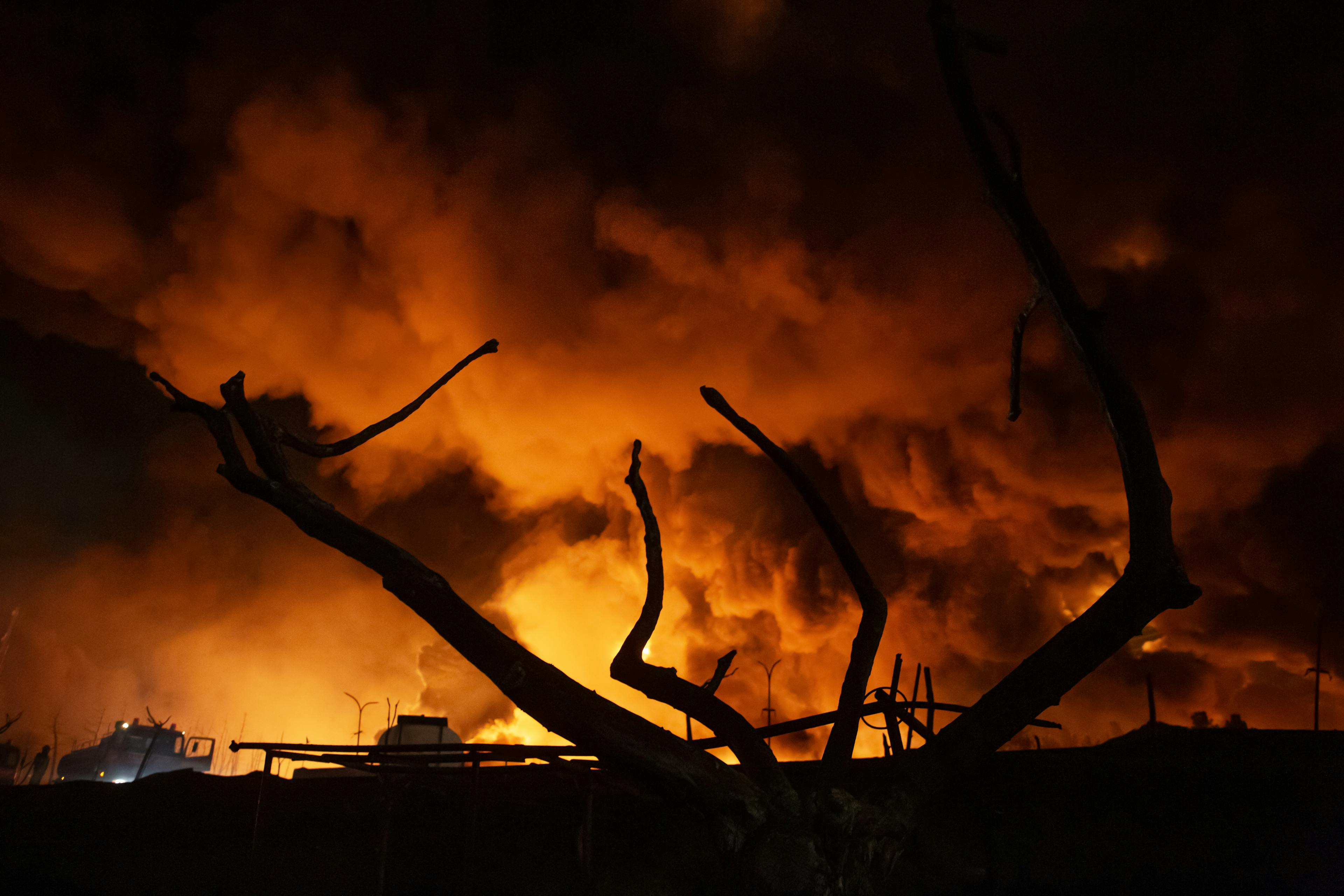
What analysts say they’re looking for next in the oil markets
“It has the makings of a once-in-a-generation market dislocation.”
Oil markets continue to whipsaw on the latest headlines on the war in Iran, with the president’s comments yesterday that the war “is very complete, pretty much,” apparently helping to calm the nerves of traders.
Benchmark US oil prices are now down over 25% from the eye-popping nearly $120 a barrel they touched Sunday night.
A report out of Reuters — citing three unnamed sources — that the White House is considering easing sanctions on Russia to cool off energy prices may be adding to the downward pressure.
Oil field services companies such as SLB Limted, Baker Hughes, and Halliburton rallied on the news Tuesday. Fuel refiners and retailers like Valero, Marathon Petroleum, and Phillips 66 also rose, as the decline in oil prices could boost their profit margins.
Still, the price of crude is up more than 30% in the last month. And the national average price of a gallon of gas is up more than 20%. The crucial regional choke point known as the Strait of Hormuz remains, essentially, closed.
As long as the Iran war continues, the eyes of investors and traders will be riveted to energy costs, with much of the market taking its cues from the latest headlines about what can still become a global energy crisis.
We spoke to two top energy analysts, asking them for their thoughts and ideas about what to watch as the situation evolves.
“It has the makings of a once-in-a-generation market dislocation,” said Tom Liles, senior vice president of upstream research at energy consulting firm Rystad.
Liles said one area to watch is the effort to find alternative ways to move crude oil out of the Persian Gulf.
The closure of the Strait has left producers without a way to move most of their liquid energy products. As a result, producers in Iraq, Kuwait, and Saudi Arabia have started to cut production. Production cuts in the Persian Gulf region have now amounted to roughly 7% to 8% of global demand, Liles said.
That makes other shipping options crucial, Liles said. The best option is an east-west pipeline carrying oil from Saudi Arabia’s primary oil-producing region in the east of the country to the western port city of Yanbu on the Red Sea.
That pipeline could help alleviate some of the pressure related to the Strait.
“That’s where they’re going to attempt to send a lot of volumes,” Liles said.
On Tuesday, Saudi Aramco Chief Executive Amin Nasser told analysts on the company’s Q4 conference call that he expects that pipeline to Yanbu to reach its capacity of 7 million barrels a day within a few days.
But about 2 million barrels of that will be used for domestic refining. And despite having roughly 5 million barrels available for export, there will delays in shipping related to redirecting tankers into the Red Sea, rather than the Persian Gulf, Nasser said.
That means the key issue remains the Strait, which remains roughly 90% closed, according to Rory Johnston, an independent energy analyst and the founder of research group Commodity Context.
President Trump had mused on social media about ordering naval escorts for tankers attempting to cross the channel. But on Tuesday, General Dan Caine, chairman of the Joint Chiefs of Staff, told reporters at a Pentagon briefing that no orders for such an escort have been issued.
Liles said such an escort wouldn’t be without risk, either.
“It could help,” he said. “It could also go in a lot of different directions if a Navy ship is hit or if a tanker is hit.”
The pressure, however, is building. And the combination of high oil prices and the renewed availability of war insurance coverage for tankers will raise incentives for someone to try to cross the Strait, Johnston said.
“The longer this goes on and the higher prices get and the more kind of insurance is available, etc., you’re going to begin to build incentives to begin pressuring people to cross the Strait again,” Johnston said. “We’re waiting to see when that will happen. And if Iran starts bombing those tankers very aggressively, well that resets it again, and then we need to figure something else out.”
In the meantime, high oil prices — if sustained — could begin to weigh on the global economy and even erode demand for oil, a process known as “demand destruction.”
Johnston is keeping a close eye on so-called crack spreads — essentially refiner margins — which give a sense of the cost end users will actually have to pay for refined fuel products like gasoline or diesel.
“Diesel as an example was around a crack spread, or a refining margin, of around $40 going into this. And now it’s at $60 a barrel,” Johnston said. “I think that will continue. And it’s those prices that are going to force the demand destruction across the consuming world.”
Another development to watch, Johnston said, would be for any chatter about possible releases from strategic oil reserves, which could ease pressure on prices. (Energy ministers from the G7 group of nations on Tuesday asked the International Energy Agency to study options for releases from strategic reserves.)
During Covid-era inflation, which coincided in part with an energy shock related to sanctions on Russia in response to its invasion of Ukraine, the Biden administration released oil from the US strategic reserve to ease prices.
“The White House is quite resistant to tapping those reserves, because they lambasted Biden about it,” Johnston said.
At any rate, without a conclusive resolution to the war or the reopening of the Strait, Johnston expects crude oil prices to rise.
“When we jumped $25 a barrel in a day, I thought that might be overdoing it,” Johnston said of the price spike that hit early Monday morning. “But I think we will get back there very soon if this doesn’t end.”


