
Markets
QE?

Investors turn towards China

China Xi Jinping Chinese Economy
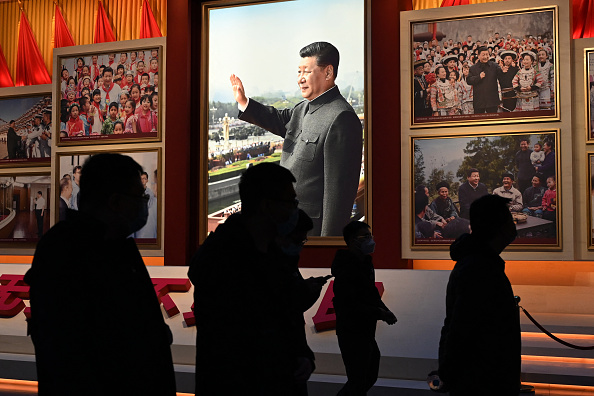
Open for business! (Getty Images)

Is it actually time to get bullish on China?

Xi Jinping’s economy has gotten so bad, it might be good.

It isn’t going to make the New York Times best sellers list.

But the biggest book of the year, for investors, could well turn out to be a modest volume that hit bookshelves in late March, published by a niche Beijing imprint, Central Party Literature Press.

“Excerpts of Xi Jinping’s Speeches on Finance Work” probably doesn’t read like “The Big Short” (full disclosure: Haven’t read it), but the state-published compilation of financial directives from the CCP strongman has already caused waves in financial markets.

On March 28, the South China Morning Post reported that the book contains never-before-public statements from Xi seemingly urging the People’s Bank of China — the country’s powerful central bank — to boost purchases of Chinese government bonds.

"The People’s Bank of China must gradually increase the trading of treasury bonds in its open market operations,” Xi told officials during a central financial work conference on October 30.

For the uninitiated, that sounds like technocratic gobbledygook. But basically “open market operations” is how central bankers describe buying and selling financial assets, usually government bonds, in financial markets.

But Xi’s comments, appearing as China grapples with its worst economic challenges in decades, were seen as a remarkable hint that the the party may be considering the kind of money-printing policies — known as quantitative easing or QE — it has long avoided, as it struggles to revive its deeply dysfunctional economy.

This matters, for a couple reasons.

For one thing, it’s a sign of just how badly China’s economy is faring. While official GDP and employment figures — often looked upon skeptically by outside analysts — don’t appear too bad, there are other indications of entrenched problems.

After a massive real estate bust, demand for credit — the fuel for market economies — has collapsed. Consumer confidence is slumping. The country has slipped into deflation for months at a time. Government spending appears to be the main source of economic activity, but it requires large amounts of borrowing.

In recent decades, governments in similar straits have used central bank money-printing programs as part of a program to escape from such economic pickles.

The Bank of Japan pioneered them in the early 2000s, in the aftermath of a real estate and banking crisis that led to a recession. They weren’t especially successful at restarting growth, but the Bank of Japan doubled down on quantitative easing during the early 2010s.

The U.S. Federal Reserve also pursued quantitative easing for most of the decade that followed the financial crisis of 2008 and ensuing recession. It then restarted QE when Covid delivered another major jolt to the economy in 2020.

But beyond the economic issues, Chinese QE could also be a major development for markets, and an opportunity for traders.

That’s because, at least recently, when central banks have embraced QE, they’ve also sometimes ignited powerful, years-long stock market rallies.

A QE turning point?

Between the end of 2012 and the middle of 2015, Japan’s Nikkei 225 rose 100%, as the BoJ doubled down on monetary easing, which it called “quantitative and qualitative easing.” Similarly, in the US, between the end of 2008 and the 2014 — when the Fed paused quantitative easing — the S&P 500 doubled in a years-long romp.

If China goes that way, this may turn out to have been the moment for global traders to dangle their well-pedicured toes back into Chinese markets. It’s been a long time since they’ve been tempted to do so.

For years, a string of issues has made China almost un-investable for global money. The Trump trade war. Saber-rattling over Taiwan. The government’s ham-fisted crackdown on its most innovative tech companies. COVID-19, and China’s growth-crushing lockdowns. Its housing bust. Its wobbly financial sector. And a government seemingly less interested in growth than its predecessors.

They’ve all combined to drive a flood of foreign capital out of the country.

It could be hard to coax it back, even as the party puts on its version of a charm offensive.

To be clear, we don’t know how close Beijing is to unleashing a Chinese version of QE, or if it will go that route at all.

For the record, the central bank has repeatedly protested that, even if it were to boost its activity in the bond markets, it wouldn’t amount to QE, rather it would simply be “liquidity management.” Hmmmm.

Still, there have been additional hints that it is in the cards. Last month, the People’s Republic’s powerful finance ministry publicly supported the idea of the central bank buying more government bonds. And late last month, the central bank itself came out to support the idea of trading more government securities, adding further support to the notion that QE could be on its way.

And for what it’s worth, the markets are acting like they see quantitative easing coming down the pike. Chinese government bond prices have risen, interest rates have fallen, the currency has declined — which you would expect if traders thought China’s central bank was going to print a lot more of them — and Chinese stocks have begun to rally.

In fact, Hong Kong’s Hang Seng index which was down as much as 12% earlier this year, has suddenly gotten a spring in its step, and has overtaken the S&P 500 in terms of year-to-date gains.

That obviously isn’t going to fix China’s issues. But given the headaches the country’s leaders face over the economy, it could be a start, and something they’d like to see continue.

More Markets

See all Markets
markets

TSMC surges as Taiwan eases single-stock investment limits for funds

TSMC’s ADRs jumped 3% in premarket trading on Friday after the island’s financial regulator announced plans to ease limits on funds’ allocations to single funds.

Previously, active fund managers were limited to allocating up to a maximum of 10% of their net assets into any one company. Under the revised framework, local equity funds and active exchange traded funds that solely invest in Taiwanese stocks can allocate up to 25% of their assets in any listed company if it has a weighting above 10% in the Taiwan Stock Exchange.

The new rule, announced Thursday, will come into effect after the regulator issues an order on Friday. Relaxing the long-standing rule will mean fewer restrictions on local money managers to take full advantage of TSMC’s skyrocketing share price in recent years. TSMC, now Asia’s largest company by market cap, has seen its share price surge 150% in the past year — adding more to its gains in the last few days after crushing estimates in its first-quarter results.

TSMC is currently the only company that meets that 10% criterion, holding some 44% weight in Taiwan’s benchmark index, though the latest change also moved other large-cap Taiwanese stocks higher on Friday.

markets

Intel’s earnings send fellow CPU sellers Arm and AMD higher

A strong set of Q1 results and Q2 guidance from Intel is sending shares of fellow CPU sellers Arm Holdings and Advanced Micro Devices about 6% and 4% higher in postmarket trading, respectively.

Intel’s robust report is seemingly a rising tide that lifts all boats in the industry, not just a company-specific dynamic.

Arm recently pivoted to designing and selling CPUs for data center customers (like Meta!) in addition to its long-standing business of licensing out the design architecture.

And AMD, of course, has been a well-established giant in the space before it ever started offering GPUs.

It’s the latest reminder that the AI boom isn’t just juicing demand for the most advanced chips, but also memory, older-school units, and a wide array of hardware.

markets

Intel crushes Q1 earnings expectations, forecasts strong Q2 revenue, shares soar

Intel shares surged in after-hours trading Thursday after the semiconductor giant reported much better-than-expected Q1 earnings and sales numbers, as well as robust guidance for Q2.

Intel reported:

  • Q1 revenue of $13.6 billion vs. a consensus expectation for $12.42 billion.

  • Adjusted earnings per share of $0.29 vs. the $0.02 consensus estimate from FactSet.

  • A forecast for Q2 sales of between $13.8 billion and $14.8 billion vs. analysts’ $13.11 billion expectation.

  • A forecast for adjusted Q2 EPS of $0.20 vs. Wall Street expectations for $0.10.

“The next wave of AI will bring intelligence closer to the end user, moving from foundational models to inference to agentic. This shift is significantly increasing the need for Intel’s CPUs and wafer and advanced packaging offerings,” Intel CEO Lip-Bu Tan said in the company’s earnings release.

The quarterly result was clearly a surprise to both analysts and investors. Shares were up 15% shortly after the report in after-hours trading — despite having risen roughly 50% already in the month of April before the results were released.

Intel’s results could not be more different from the previous quarter. In its Q4 report, Intel issued lackluster guidance for Q1, which it blamed on a dearth of available silicon wafers it could use to make finished chips. The stock plunged 17% the next day.

“Intel was explicit on the Q4 call that they were living hand-to-mouth on wafers,” Cody Acree, a senior semiconductor analyst at brokerage firm Benchmark/StoneX, said in a brief phone interview with Sherwood News Thursday. “If this kind of upside was possible, than why the ultraconservative guidance?”

The Q1 results are a significant coda to what has been one of the best periods of share price performance for the company in decades. The stock has more than tripled over the last 12 months.

That run-up, however, had seemed to far outpace Intel’s actual business results, resulting in a nosebleed-inducing forward price-to-earnings valuation nearly 100x expected earnings over the next 12 months, dwarfing even the valuations the company was receiving during the peak of the dot-com boom of the 1990s. But the Q1 numbers suggest the market was picking up good vibrations that seem to have been borne out.

markets
Saleah Blancaflor

The national average of US gas prices drops to $4.03

Drivers can breathe a small sigh of relief... for now. The national average gas price has gone down $0.06 since last week to $4.03 per gallon, according to the American Automobile Association.

The national average was at $4.09 per gallon a week ago.

Meanwhile, US crude oil prices have gone under $100 per barrel, which has played a part in helping drive down the cost of gas for customers. But how long the downward trend will continue remains uncertain due to instability along the Strait of Hormuz.

Loading...
 

(Event contracts are offered through Robinhood Derivatives, LLC — probabilities referenced or sourced from KalshiEx LLC or ForecastEx LLC.)

Gas prices are currently the highest theyve ever been this time of the year going back to 2022, when the national average was $4.11 on April 23.

As we head into the end of April, prediction markets currently show traders pricing in an 81% chance the price of gas could still rise above $4.10 by the end of the month.

Meanwhile, US crude oil prices have gone under $100 per barrel, which has played a part in helping drive down the cost of gas for customers. But how long the downward trend will continue remains uncertain due to instability along the Strait of Hormuz.

Loading...
 

(Event contracts are offered through Robinhood Derivatives, LLC — probabilities referenced or sourced from KalshiEx LLC or ForecastEx LLC.)

Gas prices are currently the highest theyve ever been this time of the year going back to 2022, when the national average was $4.11 on April 23.

As we head into the end of April, prediction markets currently show traders pricing in an 81% chance the price of gas could still rise above $4.10 by the end of the month.

Latest Stories

Sherwood Media, LLC produces fresh and unique perspectives on topical financial news and is a fully owned subsidiary of Robinhood Markets, Inc., and any views expressed here do not necessarily reflect the views of any other Robinhood affiliate, including Robinhood Markets, Inc., Robinhood Financial LLC, Robinhood Securities, LLC, Robinhood Crypto, LLC, Robinhood Derivatives, LLC, or Robinhood Money, LLC. Futures and event contracts are offered through Robinhood Derivatives, LLC.

