


One person, 31 votes?
A growing number of municipalities — often vacation towns — are considering letting LLC owners vote in local elections even though they don’t live there.
The affluent ski town of Mountain Village, Colorado, is home to biking trails, scenic views of the San Juan Mountains, and America’s only free public gondola. Being a resort community — it welcomed 177,000 visitors last year — Mountain Village is mostly a second-home town. It has only about 570 registered voters. But that number could soon more than double.
Next year, Mountain Village’s electorate could grow by more than 700 if its board passes a proposal that would allow property-owning limited liability companies and trusts to vote in municipal elections. It means that people who own property through an LLC in Mountain Village — often homeowners who rent their second homes out on Airbnb or other platforms — could cast votes in elections for mayors, town-council members, and regulations, even if they already vote in local elections elsewhere.
The town discussed the change at multiple council meetings last month. At a meeting with some heated moments Thursday, the council unanimously approved putting the proposal on the ballot next June.
To many, the concept likely stretches the principle of “one person, one vote,” but it might not sound as far-fetched in Mountain Village. Nonresidents who own property have been able to vote since a charter established the town in 1995, the only municipality with such rule in the state. Last June, about a fifth of votes cast in Mountain Village’s council election were cast by nonresident property owners.
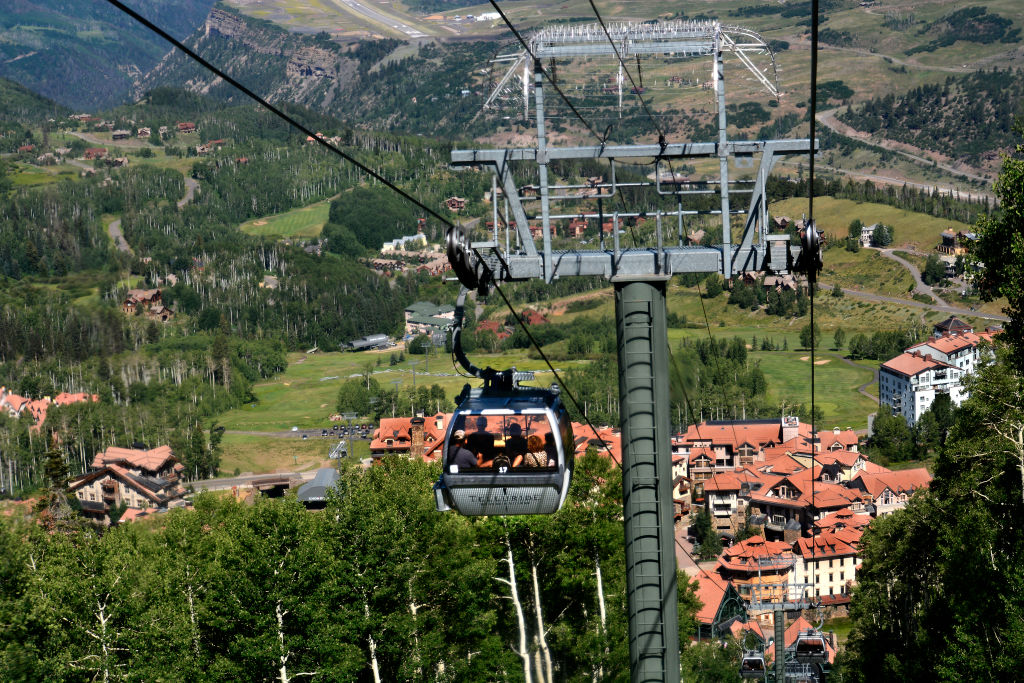
Today, nonresidents must own the property in their own names — not through LLCs or trusts — to be included on voter rolls. Supporters of the proposal have argued that it’s simply expanding that unique nonresident voting rule to LLCs, as their use in homeownership has expanded in recent years.
Local critics of the measure feel differently. At the council meeting Thursday, several Mountain Village residents expressed fears that their votes could be diluted. One resident suggested the town should instead vote on whether to allow nonresidents to keep their right to vote at all.
"Nonresident homeowners get to vote with their dollars, vote in the HOA, and occupy a highly disproportionate number of representative seats on this very council," the resident said. "They already have too much power and their claims of oppression are blatantly absurd."
Nonresident voting is allowed in two US states — Connecticut and Delaware — and in certain special district elections of 10 others.
It’s true that the use of LLCs in rental-property ownership is up. The business structure, as its name implies, limits liability for owners, protecting their personal assets from any lawsuits that arise from accidents happening on their properties.
More than 15% of all rental properties — and 40% of rental units — in the US were owned by LLCs or similar business structures in 2020. In Manhattan, more than a third of properties are owned under the companies. A study earlier this year found that 11% of single-family rental homes in metro Atlanta were owned by just three corporate landlords. Combined, the three companies have more than 190 LLCs.
Laurel Kilgour, research manager with the anti-monopoly nonprofit American Economic Liberties Project, said the ability to vote would be attractive to anyone looking to control markets, particularly local real estate.
“Having corporate influence on the votes of a community means that it would be easier to strike down things that require affordable housing or rent control,” Kilgour said.
Mountain Village isn’t the only town that’s considered handing out ballots to LLCs. In Delaware, attempts to give LLCs the right to vote have popped up several times over the past few years. Last month, public outcry in the coastal town of Dewey Beach squashed discussion of the idea. A similar proposal failed last year in Seaford, despite having been passed in the state House and supported by the mayor. Vacation hotspot Rehoboth Beach tabled an LLC voting ordinance in 2017.
Another feature of the LLC: there are no limits to how many one individual can have. In 2019, the city of Newark, Delaware, amended its rules that allowed LLC owners to vote after it was discovered one person who held 31 LLCs had cast 31 separate votes in a town referendum.
Critics of these proposals say they could leave local areas under the control of profit-motivated short-term rental owners — ostensibly granting a local magnate control over the region’s laws. For just a few hundred extra dollars per LLC filing (fees vary state to state), anyone who owns multiple properties could cast multiple votes in municipal elections, where only about a quarter of eligible voters typically vote.
According to Kilgour, the risks of allowing LLCs to vote are greater than the small towns and cities considering these proposals might realize. Local rules like restrictions on chain stores could fall quickly.
“There are more consequences to this than people have really thought through,” Kilgour said. “Sometimes they try to have these amateurish restrictions like only letting two LLCs vote per property. They’re just not really thinking about the sophistication of corporate lawyers.”
In a statement about Dewey Beach’s potential amendment, the ACLU Delaware called the proposal a “harmful change” and warned that it could lead to “mass voter dilution across the state.” At the statewide level, incorporated businesses outnumber registered voters in Delaware more than 2 to 1.
Kilgour connects the trend to an erosion of local sovereignty in the US.
“There is this story of small-town America with local stores being replaced by chain stores, private-equity roll-ups of veterinary practices, local pharmacies being killed by PBMs,” Kilgour said. “Some distant owner, probably with an LLC in New York, is making all of these decisions and profiting from all of this, and local people and local communities have less and less control over what their lived experience is.”