
Power
Platformer

OpenAI vs. the world
By Casey Newton
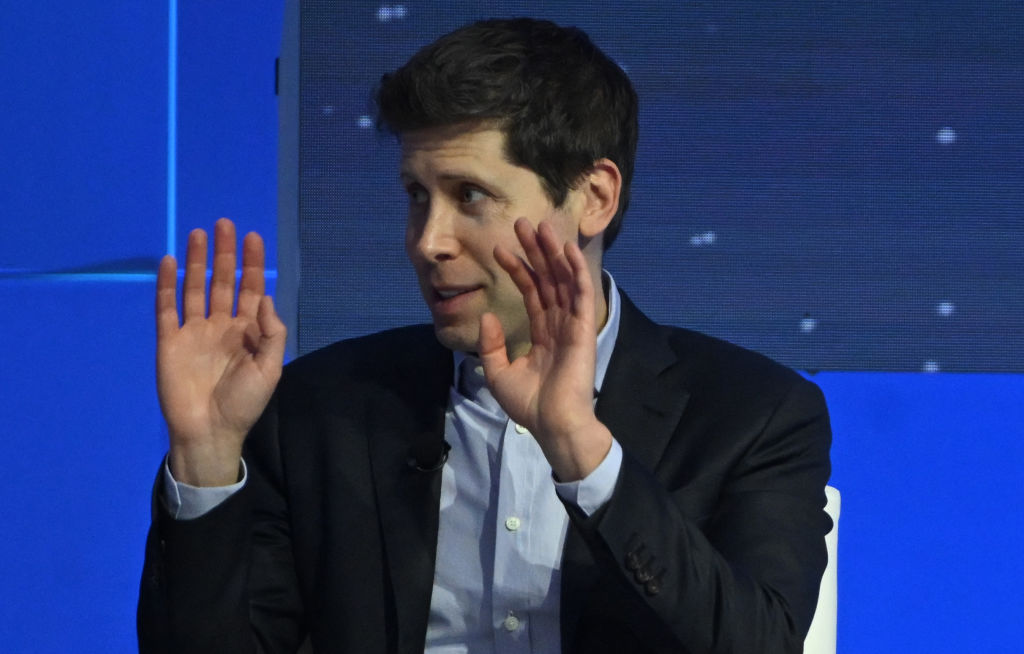
US-APEC-SUMMIT
ANDREW CABALLERO-REYNOLDS/AFP via Getty Images

How worried should we be about OpenAI’s leadership?

The company hasn’t been the same since Sam Altman’s return — and its treatment of Scarlett Johansson should concern everyone

Casey Newton

OpenAI hasn't been the same company since Sam Altman returned as its CEO.

It’s a thought that has occurred to me repeatedly over the past week as the company has found mounting reasons to stop, reverse course, and apologize over product and personnel issues. And it’s one that feels increasingly urgent in a world where the company’s technology is poised to serve as the artificial intelligence backbone on both Microsoft and Apple devices. 

On Monday, actress Scarlett Johansson revealed that the OpenAI CEO had been negotiating with her for the better part of a year to lend her voice to ChatGPT. “He told me that he felt that by my voicing the system, I could bridge the gap between tech companies and creatives and help consumers to feel comfortable with the seismic shift concerning humans and AI,” Johansson said in a statement published by NPR’s Bobby Allyn. “He said he felt that my voice would be comforting to people.”

Johansson declined to participate. But when OpenAI unveiled voices for ChatGPT in September, users were struck by the uncanny similarity between the voice it called Sky and Johansson’s. And it should not have been a surprise: Altman has said that Her, in which Johansson voices an AI assistant with whom the film’s protagonist falls in love, is his favorite movie. Last week, after OpenAI showcased an updated version of Sky that takes advantage of its latest models, Altman posted the movie’s title suggestively on X.

“When I heard the released demo, I was shocked, angered and in disbelief that Mr. Altman would pursue a voice that sounded so eerily similar to mine that my closest friends and news outlets could not tell the difference,” Johansson said.

But there is even more to the story, Johansson wrote.

“Two days before the ChatGPT 4.0 demo was released, Mr. Altman contacted my agent, asking me to reconsider,” she wrote. “Before we could connect, the system was out there.”

And so even as Altman attempted to renegotiate with Johansson behind the scenes, he intentionally drew attention to Sky’s similarity to Johansson in Her to his nearly 3 million Twitter followers — and released the product before finishing the negotiations.

In the moment, it looked like a grand success. The OpenAI team’s demonstration of a warmer, more emotional chatbot last week was one of the most impressive tech demos I’ve seen. In the end, I found its aggressive flirting unsettling, and seemingly at odds with Altman’s previous statements to me that the company would not pursue AI tools that doubled as romantic companions. But the demo unquestionably succeeded in captivating the tech world — and stealing thunder from Google on the eve of its annual developer conference.

Behind the scenes, though, Johansson was starting to ask questions. She hired attorneys, “who wrote two letters to Mr. Altman and OpenAI, setting out what they had done and asking them to detail the exact process by which they created the ‘Sky’ voice,” she wrote.

That did the trick: on Sunday night, OpenAI announced it would pull the Sky voice from ChatGPT. It also put up a blog post outlining the casting and recording process for the five voices it eventually selected for ChatGPT, Sky included.

OpenAI has taken pains to frame all of this as a big misunderstanding. CTO Mira Murati told reporters last week that Sky is not intended to sound like Johansson. And earlier on Monday, the company’s model behavior lead, Joanne Jang, told The Verge that “We’ve been in conversations with ScarJo’s team because there seems to be some confusion.”

OpenAI did not respond to my requests for comment today. But Johansson’s statement suggests that in reality, there was never any legitimate confusion about what was going on here. Altman asked to license her voice to realize the fantasy of a real-life Her; she declined; and the company proceeded anyway with a voice as similar to hers as it could get.

“I look forward to resolution in the form of transparency and the passage of appropriate legislation to help ensure that individual rights are protected,” she said.

II.

Johansson is one of the world’s most famous actresses, and she speaks for an entire class of creatives who are now wrestling with the fact that automated systems have begun to erode the value of their work. OpenAI’s decision to usurp her voice for its own purposes will now get wide and justified attention.

At the same time, it’s possible that Johansson’s experience wasn’t even the most important thing that happened at OpenAI in the past week.

Last Tuesday, after all, Ilya Sutskever announced he was leaving the company. Sutskever, a co-founder of the company who is renowned both for his technical ability and his concerns about the potential of AI to do harm, was a leader of the faction that briefly deposed Altman in November. Sutskever reversed his position once it became clear that the vast majority of OpenAi employees were prepared to quit if Altman did not return as CEO. But Sutskever hasn’t worked for the company since.

In an anodyne public statement, Sutskever said only that he now plans to work on “a project that is very personally meaningful to” him.

Why not say more about the circumstances of his departure? Vox reported over the weekend that OpenAI’s nondisclosure agreements forbid criticizing the company for the duration of the former employee’s lifetime; forbids them from acknowledging the existence of the NDA; and forces them to give up all vested equity in the company if they refuse to sign it. (After the story drew wide attention, on Saturday Altman apologized and said the company would remove the provision about clawing back equity for violating the NDA.)

As OpenAI’s chief scientist, Sutskever also led its so-called “superalignment team,” which it formed last July to research ways of ensuring that advanced AI systems act safely and in accordance with human intent. Among other things, the company promised to dedicate 20 percent of its scarce and critical computing power to the project. 

But Altman’s ouster led to wide disparagement of AI safety efforts, which were wrongly identified as the reason his co-workers wanted to fire him. (The actual-if-vague reason was that he was not “consistently candid in his communications,” according to the company’s former board, a charge that seems worth revisiting in light of Johansson’s experience with him.) 

And so it perhaps should not be surprising that, upon his return, safety efforts were deprioritized. The superalignment team has been disbanded after less than a year, with its remaining employees absorbed into other teams. Jan Leike, who led the superalignment team under Sutskever, quit on Friday, saying OpenAI’s “safety culture and processes have taken a backseat to shiny products.”

“I joined because I thought OpenAI would be the best place in the world to do this research,” Leike wrote on X. “However, I have been disagreeing with OpenAI leadership about the company’s core priorities for quite some time, until we finally reached a breaking point.”

In response, Altman and OpenAI president Greg Brockman issued a long statement that gestured toward building things responsibly without addressing Laike’s criticism.

III.

What to make of all this? 

On one hand, it’s not unusual for a fast-growing startup to go through some tumult as it scales up. On the other, OpenAI was not founded to be a typical fast-growing startup: it was founded to be a nonprofit research lab focused on the safe development of superhuman intelligence.

Since the release of ChatGPT — and much more so since Altman’s return from exile — OpenAI has looked like anything but. It has consistently pushed the boundaries of what AI can do, both from a technical standpoint and from the vantage of what it believes society can handle.

And last week, determined to show up Google on the eve of I/O, the company went through with its demo of a Johansson voice clone, against Johansson’s explicit wishes, because … Altman is a fan? 

For the moment, the only cost to OpenAI from any of this has been a torrent of aggrieved social media posts. On Monday its APIs were at the center of a range of new PCs unveiled by its largest investor, Microsoft; next month they are expected to be announced as part of a big new partnership with Apple. One analysis last week suggested that the company’s mobile app revenue grew 22 percent the day it showcased the not-Johansson voice demo.

For years now, OpenAI told everyone that these were all secondary concerns — that its deeper ambition was something nobler, and more public-spirited. But since Altman’s return, the company has been telling a different story: a story about winning at all costs. 

And why bother with superalignment, when there’s winning to do? 

Why bother getting actresses’ permission, when the right numbers are all still going up?


Casey Newton writes Platformer, a daily guide to understanding social networks and their relationships with the world. This piece was originally published on Platformer.

More Power

See all Power
power
Jake Lahut

US launches another round of strikes on Iran, the second in 24 hours

In a familiar pattern, the US has begun launching new strikes on Iran Wednesday, on top of retaliatory strikes from Tuesday after Iran struck three ships crossing through the Strait of Hormuz using missiles and drones.

“The United States is holding Iran accountable for recent unjustified aggression against commercial shipping and civilian crews freely navigating a vital international waterway," US Central Command wrote in a statement, according to the Wall Street Journal.

Explosions were heard in Bandar Abbas and Sirik, which the US targeted in the earlier strikes, according to WSJ.

This marks the second round of strikes in the last 24 hours, putting the eight-week ceasefire on life support after President Donald Trump said he sees the preliminary deal as "over."

Sen. Jeanne Shaheen (D-NH), the top Democrat on the Senate Foreign Relations Committee, said in a statement that the latest round of strikes mark a "dangerous escalation," and that "our country is stuck in limbo with the very real possibility of further conflict and the prospect of even higher energy prices and increased inflation."

In a post on Truth Social, President Trump said the strikes were "in retribution for yesterday’s bombing of ships by Iran. If it happens again, it will get much worse!"

Explosions were heard in Bandar Abbas and Sirik, which the US targeted in the earlier strikes, according to WSJ.

This marks the second round of strikes in the last 24 hours, putting the eight-week ceasefire on life support after President Donald Trump said he sees the preliminary deal as "over."

Sen. Jeanne Shaheen (D-NH), the top Democrat on the Senate Foreign Relations Committee, said in a statement that the latest round of strikes mark a "dangerous escalation," and that "our country is stuck in limbo with the very real possibility of further conflict and the prospect of even higher energy prices and increased inflation."

In a post on Truth Social, President Trump said the strikes were "in retribution for yesterday’s bombing of ships by Iran. If it happens again, it will get much worse!"

power

WSJ: DOJ approved the Paramount-Warner Bros. deal even as investigators were leaning toward suing to stop it

The Justice Department’s approval of Paramount’s $111 billion acquisition of rival Warner Bros. Discovery Friday came as a surprise to the agency’s antitrust investigators, according to Wall Street Journal reporting.

Per the WSJ, a team of lawyers who’d scrutinized the merger were leaning toward recommending a lawsuit to block the deal, but hadn’t gotten to make their final recommendation, before they were told that it had been approved on Friday.

Antitrust investigators typically make a final recommendation to the agency in the review process — and that recommendation is often followed by the agency — but that step was reportedly skipped in this instance. Last month, Semafor reported that senior DOJ antitrust officials appeared likely to approve the Paramount-WBD combo.

The deal could still face antitrust challenges from a collection of states led by California, and EU regulators.

Per the WSJ, a team of lawyers who’d scrutinized the merger were leaning toward recommending a lawsuit to block the deal, but hadn’t gotten to make their final recommendation, before they were told that it had been approved on Friday.

Antitrust investigators typically make a final recommendation to the agency in the review process — and that recommendation is often followed by the agency — but that step was reportedly skipped in this instance. Last month, Semafor reported that senior DOJ antitrust officials appeared likely to approve the Paramount-WBD combo.

The deal could still face antitrust challenges from a collection of states led by California, and EU regulators.

power
Jake Lahut

Strait of Hormuz is closed to all oil tankers and commercial ships, Iran military says

In retaliation to US strikes, the Islamic Republic of Iran announced that the Strait of Hormuz is fully closed as of early Thursday morning in Tehran. The attacks from the US were separate from a series of retaliatory drone and missile launches overnight Tuesday into Wednesday.

President Donald Trump told Fox News in a phone interview on Wednesday night that “the bombing will stop soon,” but if Iran doesn’t sign the agreement put forward by special envoys Steve Witkoff and Jared Kushner, “we’ll bomb the shit out of them tomorrow night.”

When asked whether the ceasefire still stands, Trump described it as “the most violated ceasefire in the history of the world,” per Fox News.

According to Al Jazeerah, Iran’s Mehr news agency reported that Iran’s joint military command specified that any oil tankers or other commercial vessels will be attacked if they attempt to cross the strait.

This is the second day in a row hostilities have resumed to a level not seen since the early April ceasefire was announced.

US CENTCOM announced the series of strikes beginning at 5:15 p.m. ET on Wednesday, which Secretary of Defense Pete Hegseth previewed in on-camera remarks, promising to “strike ’em hard tonight” before later saying he would not broadcast whether the military would take any action.

Shortly after the announcement on the closure of the Strait of Hormuz to all commercial vessel traffic, Iranian state media reported that two ships attempting to cross were attacked.

This story is developing.

President Donald Trump told Fox News in a phone interview on Wednesday night that “the bombing will stop soon,” but if Iran doesn’t sign the agreement put forward by special envoys Steve Witkoff and Jared Kushner, “we’ll bomb the shit out of them tomorrow night.”

When asked whether the ceasefire still stands, Trump described it as “the most violated ceasefire in the history of the world,” per Fox News.

According to Al Jazeerah, Iran’s Mehr news agency reported that Iran’s joint military command specified that any oil tankers or other commercial vessels will be attacked if they attempt to cross the strait.

This is the second day in a row hostilities have resumed to a level not seen since the early April ceasefire was announced.

US CENTCOM announced the series of strikes beginning at 5:15 p.m. ET on Wednesday, which Secretary of Defense Pete Hegseth previewed in on-camera remarks, promising to “strike ’em hard tonight” before later saying he would not broadcast whether the military would take any action.

Shortly after the announcement on the closure of the Strait of Hormuz to all commercial vessel traffic, Iranian state media reported that two ships attempting to cross were attacked.

This story is developing.

power
Jake Lahut

United States and Iran trade retaliatory strikes, escalating war and rattling ceasefire

The war in Iran is heating back up. Overnight, both sides have been trading hostilities in a series of retaliations to other retaliations.

It marks the most robust escalation in combat since the April 8 ceasefire announcement.

Oil prices were little changed, with Brent crude futures down 0.48% as of 5:30 a.m. ET. At the same time, S&P 500 futures were down nearly 0.7% and the tech-heavy Nasdaq Composite had slipped 1.18%, as the escalations compounded a broader AI sell-off.

Travel stocks, like United Airlines and Royal Caribbean, which got a boost on Tuesday as oil prices fell, lost some of those gains in premarket trading. Meanwhile, oil giants such as Chevron and Exxon ticked higher and chipmakers such as Arm Holdings and Micron continued to slip.

The escalation ladder began ratcheting back up when Iran shot down an American helicopter with a drone while it was patrolling the Strait of Hormuz, a US official told NBC News. US forces then conducted strikes in Iran’s Qeshm Island, Sirik, Jask, and Bandar Abbas, according to Al Jazeera. In response, Iran attacked a US fleet in Bahrain, Al Jazeera also reported.

“The Iranians are trying to make clear that any attack on them would be responded to, regardless of the size and the scope,” Trita Parsi of the Quincy Institute for Responsible Statecraft in the US told Al Jazeera. “Now, of course, whether they are seeking to escalate the situation or de-escalate remains to be seen, and it will be very much measured by how they calibrated their response by attacking these US bases.”

The scope of the strikes and counterstrikes broadened out as of early Wednesday morning in Iran. Kuwait activated its air defense systems to intercept strikes, its army announced.

Mohamed Vall, a reporter for Al Jazeera reporting from inside Iran, described “a lot of activity in terms of air defence by the Iranians, and they talked about the downing of a helicopter, an American MQ-9 [drone] over Bushehr. So that gives you an idea about the scope of these attacks and counterattacks, or these retaliations across the Strait of Hormuz and the Gulf region tonight.”

Iran’s IRGC also reported targeting a hangar for American F-35 jets in Jordan, Al Jazeera reported.

Oil prices were little changed, with Brent crude futures down 0.48% as of 5:30 a.m. ET. At the same time, S&P 500 futures were down nearly 0.7% and the tech-heavy Nasdaq Composite had slipped 1.18%, as the escalations compounded a broader AI sell-off.

Travel stocks, like United Airlines and Royal Caribbean, which got a boost on Tuesday as oil prices fell, lost some of those gains in premarket trading. Meanwhile, oil giants such as Chevron and Exxon ticked higher and chipmakers such as Arm Holdings and Micron continued to slip.

The escalation ladder began ratcheting back up when Iran shot down an American helicopter with a drone while it was patrolling the Strait of Hormuz, a US official told NBC News. US forces then conducted strikes in Iran’s Qeshm Island, Sirik, Jask, and Bandar Abbas, according to Al Jazeera. In response, Iran attacked a US fleet in Bahrain, Al Jazeera also reported.

“The Iranians are trying to make clear that any attack on them would be responded to, regardless of the size and the scope,” Trita Parsi of the Quincy Institute for Responsible Statecraft in the US told Al Jazeera. “Now, of course, whether they are seeking to escalate the situation or de-escalate remains to be seen, and it will be very much measured by how they calibrated their response by attacking these US bases.”

The scope of the strikes and counterstrikes broadened out as of early Wednesday morning in Iran. Kuwait activated its air defense systems to intercept strikes, its army announced.

Mohamed Vall, a reporter for Al Jazeera reporting from inside Iran, described “a lot of activity in terms of air defence by the Iranians, and they talked about the downing of a helicopter, an American MQ-9 [drone] over Bushehr. So that gives you an idea about the scope of these attacks and counterattacks, or these retaliations across the Strait of Hormuz and the Gulf region tonight.”

Iran’s IRGC also reported targeting a hangar for American F-35 jets in Jordan, Al Jazeera reported.

power

New York legislature passes 1-year data center moratorium

The New York state legislature has passed a one-year ban on large data centers in the state.

The bill now heads to Gov. Kathy Hochul’s desk, where it faces an uncertain fate. If Hochul signs the bill, it would become the first such statewide ban to succeed in becoming law.

That’s far from certain, as Hochul has opposed state-level legislation over data centers. In May, Hochul said, “This is a local decision for municipalities, its land use, which is the purview of local governments. It’s not a statewide approach necessarily, but its something Im looking at intensely.”

In April, Maine Gov. Janet Mills vetoed a similar statewide moratorium on data centers.

Opposition to data centers is growing rapidly across the US. A federal data center moratorium bill was introduced in March, and at least 14 states have proposed pauses on data center construction, according to the National Conference of State Legislatures.

That’s far from certain, as Hochul has opposed state-level legislation over data centers. In May, Hochul said, “This is a local decision for municipalities, its land use, which is the purview of local governments. It’s not a statewide approach necessarily, but its something Im looking at intensely.”

In April, Maine Gov. Janet Mills vetoed a similar statewide moratorium on data centers.

Opposition to data centers is growing rapidly across the US. A federal data center moratorium bill was introduced in March, and at least 14 states have proposed pauses on data center construction, according to the National Conference of State Legislatures.

Latest Stories

Sherwood Media, LLC and Chartr Limited produce fresh and unique perspectives on topical financial news and are fully owned subsidiaries of Robinhood Markets, Inc., and any views expressed here do not necessarily reflect the views of any other Robinhood affiliate, including Robinhood Markets, Inc., Robinhood Financial LLC, Robinhood Securities, LLC, Robinhood Crypto, LLC, Robinhood Money, LLC, Robinhood U.K. Ltd, Robinhood Derivatives, LLC, Robinhood Gold, LLC, Robinhood Asset Management, LLC, Robinhood Credit, Inc., Robinhood Ventures DE, LLC and, where applicable, its managed investment vehicles.