Power
Map of the city of Kansas, USA 1899
Truce is over

Kansas restarts the Kansas City Border War in attempt to poach the Chiefs from Missouri

Max Knoblauch

When a pro sports team packs up and moves to a new state, it can deal a crushing blow to fans. When that new state ends up being just a few minutes away in the exact same metropolitan area, that blow might reopen decades-old wounds.

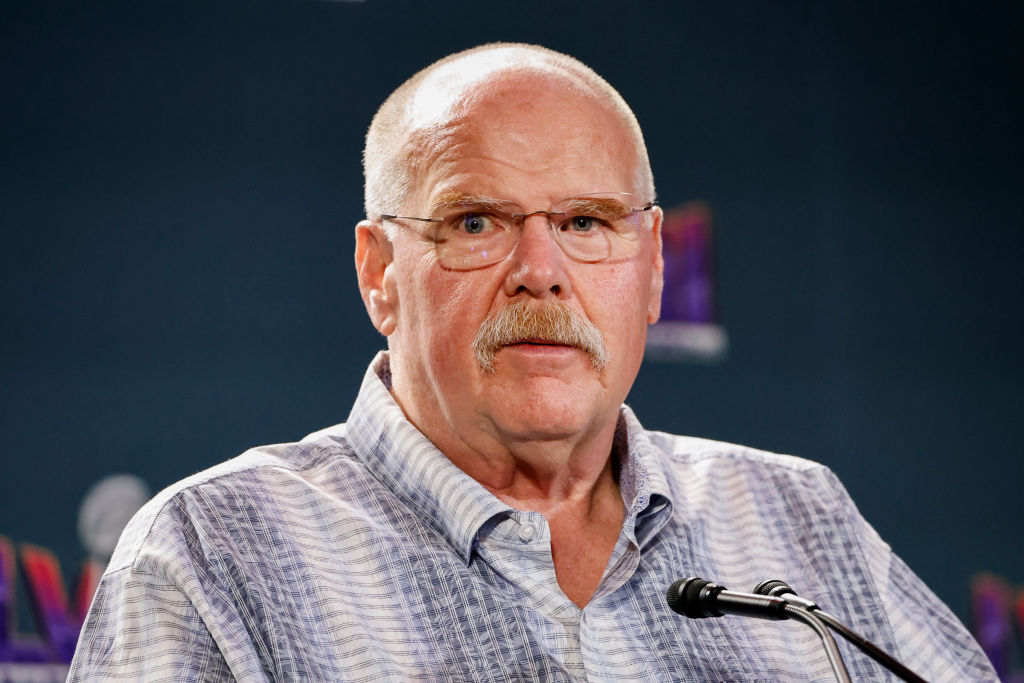
That’s what could happen with Super Bowl champion the Kansas City Chiefs, once their current lease on a sports complex shared with the MLB’s Kansas City Royals expires in 2031. In April, Missouri voters said “no thanks” to a tax measure that would’ve helped fund a new $2 billion stadium for the Royals and an $800 million overhaul of the Chiefs’ Arrowhead Stadium. Then, Kansas moved in.


$3.5B
Cost of two new stadiums
Up to 70% covered by Kansas

This week, Kansas lawmakers approved a tax-incentive bill that would allow the state to issue bonds covering up to 70% of the estimated $3.5 billion cost of two brand-new stadiums for the teams. Kansas would pay off the bonds over 30 years with money made from sports betting and the state lottery. Kansas Gov. Laura Kelly is expected to approve the proposal, which experts have called a “blank check” for the Chiefs. 

For the Chiefs and Royals, moving would mean packing up their current stadiums in Kansas City, Missouri (population 509,000), and taking a short drive across state lines to their hypothetical new stadiums in Kansas City, Kansas (population 157,000).

A brief history of the Kansas City Border War

It might seem odd for neighboring states that share a metro area (and labor market) to compete for pro sports teams, but it’s far from the first time the states have feuded over business in the area. A “border war” went on for many years, with each spending millions of dollars in taxpayer money to tempt businesses from one side to the other. Companies like AMC Theatres and Applebee’s crossed state lines to claim subsidies, sometimes multiple times, before the two states finally reached a legally binding truce five years ago.

In the decade leading up to the truce, Kansas and Missouri spent an estimated $335 million luring companies from state to state. In the end, Kansas came out slightly on top with roughly 1,200 jobs.

“It was really, truly these companies moving a couple miles down the road and literally nothing changing,” said Pat Garofalo, director of state and local policy at the American Economic Liberties Project and author of “The Billionaire Boondoggle.” “Like, people had to alter their commutes a little bit.”

The Kansas City Border War
$151M
spent by Missouri to get Kansas companies to move
$184M
spent by Kansas to get Missouri companies to move
$335M
Total amount given away by the states
1,200
Net jobs that actually moved as a result

Whether the brazen attempt by Kansas to draw one of Missouri’s primary attractions over to its side of the river will reignite the border war is yet to be seen. Some Missouri lawmakers already see the tax-incentive bill as a violation of the truce, but Gov. Kelly has said the agreement was about businesses and not teams.

The Chiefs players would probably be happy with a change: the team's facilities and ownership got abysmal ratings on the NFL Players Association player survey this year. Wherever the KC teams end up, Garofalo says it won’t be all that clear which state actually “won" (though he added that Missouri-based fans might get a W just by being off the hook for a giant subsidy package).

A hard-won truce, thrown away for little gain

“There’s really no reason to think that this will be economically beneficial,” Garofalo said.

“The job creation is almost always zero in these instances anyway, and the jobs that are created are bad, because we’re talking about seasonal, no-benefit, you know, rocking-popcorn-in-the-stands-type gigs.”

Studies have long shown that subsidies for sports stadiums don’t pay off.

The MLB’s Atlanta Braves relocated from downtown Atlanta to a suburb 10 miles north in 2017, and economist J.C. Bradbury found that the deal is costing taxpayers about $15 million/year. In New York, a near $1.7 billion new stadium for the Buffalo Bills will cost taxpayers $850 million. A preliminary economic analysis of the stadium found that the largest fiscal revenue source the state gains from the deal comes from personal income taxes paid by the team’s players. 

Garofalo notes that it’s not often economists agree on, well, anything. For stadium subsidies, though, that’s not the case.

“The evidence is just overwhelming. There’s no question anymore amongst the people who look at this on the data and academic side,” he said.

“Publicly funded sports stadiums do not provide economic benefits. Like, period, full stop, we’re done, no question about it.”

More Power

See all Power
power
Jon Keegan

Trump pulls tech execs even closer, adding Zuckerberg, Huang, Ellison, and others to tech council

President Trump has had a close relationship with America’s biggest tech leaders. They have flown across the world for investment announcements, attended intimate dinners at the White House, donned tuxedos and white ties for royal banquets, and have been known to bring golden gifts to him in the Oval Office.

Today he brings them in even closer. The White House announced that Nvidia CEO Jensen Huang, Meta CEO Mark Zuckerberg, and close pal and Oracle cofounder Larry Ellison will join a new President’s Council of Advisors on Science and Technology, along with 10 other tech leaders including Dell founder Michael Dell and Google cofounder Sergey Brin.

According to the White House, the group will “focus on topics related to the opportunities and challenges that emerging technologies present to the American workforce, and ensuring all Americans thrive in the Golden Age of Innovation.”

The full list of appointees:

Today he brings them in even closer. The White House announced that Nvidia CEO Jensen Huang, Meta CEO Mark Zuckerberg, and close pal and Oracle cofounder Larry Ellison will join a new President’s Council of Advisors on Science and Technology, along with 10 other tech leaders including Dell founder Michael Dell and Google cofounder Sergey Brin.

According to the White House, the group will “focus on topics related to the opportunities and challenges that emerging technologies present to the American workforce, and ensuring all Americans thrive in the Golden Age of Innovation.”

The full list of appointees:

power
Saleah Blancaflor

Prediction markets show a tight (and tightening) Illinois Democratic Senate primary

It’s primary election time in Illinois, and as voters in the state head to the polls on March 17, there are a few races to watch closely across both parties.

While polls show that Darren Bailey is leading in the Republican race for governor, the primary election for a rare seat in the Democratic Senate to replace Sen. Dick Durbin is proving to be a tight one.

Loading...
 

At the top of the 10-candidate race are Raja Krishnamoorthi, Lt. Gov. Juliana Stratton, and Robin Kelly. Krishnamoorthi, a lawmaker from Chicago’s 8th Congressional District, was an early front-runner, received funding and support from several Congress members for the seat. Kelly, who represented the South Side’s 2nd Congressional District, has support from the Congressional Black Caucus and South Carolina Rep. Jim Clyburn. Meanwhile, Stratton has been endorsed by Gov. JB Pritzker, whose administration she used to work for, as well as Sen. Elizabeth Warren.

While polls suggested that Krishnamoorthi was favored to win, Stratton has seen a boost and late surge, though Krishnamoorthi still remains close behind. Capitol News Illinois reports that Illinois Future PAC, funded by Pritzker, has spent more than $10 million on ads elevating Stratton. Meanwhile, two PACs affiliated with the crypto industry have attempted to attack Stratton and promote Kelly. Indian American Impact, which endorsed Krishnamoorthi, reportedly employed similar tactics against Stratton.

Political insiders tell Capitol News Illinois the race could go either way, but they still expect Krishnamoorthi to come out on top. Prediction markets currently show that Stratton narrowly leading Krishnamoorthi.

(Event contracts are offered through Robinhood Derivatives, LLC — probabilities referenced or sourced from KalshiEx LLC or ForecastEx LLC.)

Loading...
 

At the top of the 10-candidate race are Raja Krishnamoorthi, Lt. Gov. Juliana Stratton, and Robin Kelly. Krishnamoorthi, a lawmaker from Chicago’s 8th Congressional District, was an early front-runner, received funding and support from several Congress members for the seat. Kelly, who represented the South Side’s 2nd Congressional District, has support from the Congressional Black Caucus and South Carolina Rep. Jim Clyburn. Meanwhile, Stratton has been endorsed by Gov. JB Pritzker, whose administration she used to work for, as well as Sen. Elizabeth Warren.

While polls suggested that Krishnamoorthi was favored to win, Stratton has seen a boost and late surge, though Krishnamoorthi still remains close behind. Capitol News Illinois reports that Illinois Future PAC, funded by Pritzker, has spent more than $10 million on ads elevating Stratton. Meanwhile, two PACs affiliated with the crypto industry have attempted to attack Stratton and promote Kelly. Indian American Impact, which endorsed Krishnamoorthi, reportedly employed similar tactics against Stratton.

Political insiders tell Capitol News Illinois the race could go either way, but they still expect Krishnamoorthi to come out on top. Prediction markets currently show that Stratton narrowly leading Krishnamoorthi.

(Event contracts are offered through Robinhood Derivatives, LLC — probabilities referenced or sourced from KalshiEx LLC or ForecastEx LLC.)

US-POLITICS-CONGRESS-AI

Anthropic sues the US government

In response to the Pentagon’s unprecedented, punitive determination that Anthropic is a national security supply chain risk, the AI startup has sued the US government.

power

OpenAI is reportedly working with Pentagon to hash out guardrails amid Anthropic standoff over AI safety

OpenAI CEO Sam Altman said the company is working with the Pentagon to negotiate safety guardrails for AI models used in the battlefield, which comes as one of its top competitors, Anthropic, is at a standoff with the government.

According to a memo obtained by several media outlets, Altman told staff OpenAI believes “that AI should not be used for mass surveillance or autonomous lethal weapons, and that humans should remain in the loop for high-stakes automated decisions. These are our main red lines.”

Anthropic, the company behind the AI chatbot Claude, was one of several firms that received a $200 million contract from the Department of Defense for “agentic workflows.”

Since then, tensions between Anthropic and the Pentagon have reportedly risen as the startup insists on surveillance restrictions. The government’s attack on Venezuela last month that led to the capture of President Nicolás Maduro reportedly involved the use of Anthropic’s Claude AI models for planning, which caused the startup to push back on the alleged violation of its terms of use.

Anthropic has until 5:01 p.m. ET on Friday to reach a deal with the Pentagon, which has threatened consequences against the company if it doesn’t allow the government unrestricted use.

Altman’s comments come as the Financial Times reports that executives at Amazon, Google, and Microsoft are being pushed by workers to support Anthropic in its dispute with the Pentagon and adopt similar guardrails as the Claude company in any work they undertake with the US military.

According to a memo obtained by several media outlets, Altman told staff OpenAI believes “that AI should not be used for mass surveillance or autonomous lethal weapons, and that humans should remain in the loop for high-stakes automated decisions. These are our main red lines.”

Anthropic, the company behind the AI chatbot Claude, was one of several firms that received a $200 million contract from the Department of Defense for “agentic workflows.”

Since then, tensions between Anthropic and the Pentagon have reportedly risen as the startup insists on surveillance restrictions. The government’s attack on Venezuela last month that led to the capture of President Nicolás Maduro reportedly involved the use of Anthropic’s Claude AI models for planning, which caused the startup to push back on the alleged violation of its terms of use.

Anthropic has until 5:01 p.m. ET on Friday to reach a deal with the Pentagon, which has threatened consequences against the company if it doesn’t allow the government unrestricted use.

Altman’s comments come as the Financial Times reports that executives at Amazon, Google, and Microsoft are being pushed by workers to support Anthropic in its dispute with the Pentagon and adopt similar guardrails as the Claude company in any work they undertake with the US military.

Latest Stories

Sherwood Media, LLC produces fresh and unique perspectives on topical financial news and is a fully owned subsidiary of Robinhood Markets, Inc., and any views expressed here do not necessarily reflect the views of any other Robinhood affiliate, including Robinhood Markets, Inc., Robinhood Financial LLC, Robinhood Securities, LLC, Robinhood Crypto, LLC, Robinhood Derivatives, LLC, or Robinhood Money, LLC. Futures and event contracts are offered through Robinhood Derivatives, LLC.