Tech
Woman's Eye and Rainbow
(Getty Images)
Eye on AI

All eyes on Google Search revenue

It’s hard to tell what’s happening with Search.

Rani Molla

It’s tough to know what’s going on with Google Search, the cash cow that makes up about half of Alphabet’s revenue and a good chunk of its earnings. There are mixed signals on what’s happening to traffic on Google itself and what’s happening with the traffic it sends elsewhere, and AI seems to be cutting both ways.

On one hand, Google execs have repeatedly said lately that despite rolling out AI overviews that can keep people on Google, the open web is thriving and the search traffic it sends to other websites has been “relatively stable year-over-year.” At the same time, in a recent court filing regarding the company’s ad tech monopoly, Google stated that “the open web is already in rapid decline.” The government’s divestiture remedies, Google said, would make it so that its advertisers would likely “see a further decline in their return on investment from open-web display ads.”

For what it’s worth, the owners of those other websites, and the companies that measure web traffic, have seen traffic decline significantly since Google rolled out those AI tools.

As for traffic to Google itself, the company says it hasn’t been bothered by upstarts like OpenAI’s ChatGPT, saying that its customers are “happier with the experience and are searching more than ever.” The parties don’t exactly make it easy to compare. Most recently, OpenAI said ChatGPT had 800 million weekly users while Google last said its AI Overviews have 2 billion monthly users.

Traffic to Google overall, not just Overviews, is still growing but not nearly as fast as the — much smaller, much more quickly growing — traffic to ChatGPT. According to a report earlier this month from Bank of America Research, which uses Similarweb data, global daily average web visits (including desktop and mobile web, but not app traffic) to Google in September were up 1% year over year to 2.8 billion. Meanwhile, visits to ChatGPT were up up 90% to 197 million.

ChatGPT traffic is higher than traffic to Google’s Gemini, but overall traffic to Google is way higher than traffic to ChatGPT. As JPMorgan recently wrote in a note, “While Gemini’s 450M+ MAUs still trail ChatGPT’s 800M+ WAUs, Google is increasingly integrating Gemini across its product ecosystem with billions of users, including Search, Chrome, Gmail, & more, and we expect engagement to improve as Google’s accelerated pace of AI innovation continues.” Got it?

Google’s revenue from Search ads keeps going up — nearly 12% in Q2 compared with a year earlier — but perhaps the company is squeezing more blood from that stone. BofA said in another note this month that it expects “increasing data use, & ad spend to offset organic search traffic declines.”

The Street thinks Search revenue will jump another 12% to $55 billion in the third quarter, which the company reports tomorrow.

Anyway, all eyes will be on that Search number for any signs of flagging from AI competition.

More Tech

See all Tech
tech

Instagram Reels is coming to a TV near you

Move over, Netflix. Meta is bringing Instagram Reels to a TV near you. The company on Tuesday unveiled its first dedicated TV app, letting users watch its short-form, user-generated videos on bigger screens. The app will debut on Amazon’s Fire TV before expanding to other platforms.

Instagram now competes not only with social-video rivals like TikTok and YouTube, but increasingly with long-form streaming entertainment as well. Netflix, for instance, has argued that it needs to buy Warner Bros. Discovery in order to better compete with platforms like YouTube, which people spend more time watching on TV than anything else. YouTube may offer traditional streaming bundles, but much of its content still comes from user uploads — underscoring how deeply social video has encroached on the living room.

Instagram’s new TV app suggests Meta sees the same opportunity: if social video is already capturing big-screen attention, it wants a larger share of it.

Instagram now competes not only with social-video rivals like TikTok and YouTube, but increasingly with long-form streaming entertainment as well. Netflix, for instance, has argued that it needs to buy Warner Bros. Discovery in order to better compete with platforms like YouTube, which people spend more time watching on TV than anything else. YouTube may offer traditional streaming bundles, but much of its content still comes from user uploads — underscoring how deeply social video has encroached on the living room.

Instagram’s new TV app suggests Meta sees the same opportunity: if social video is already capturing big-screen attention, it wants a larger share of it.

tech

Tesla CEO Elon Musk is getting back into politics

Tesla CEO Elon Musk is cutting big checks to the GOP for the midterm elections as he dives back into politics, Axios reports.

Students of history might remember when Tesla’s stock tanked in the first half of the year thanks in part to Musk’s political machinations with DOGE. Or when Musk’s beef with the president of the United States sent the stock down sharply — twice. Or when Musk formed a competing third political party that also hurt the stock.

When Tesla’s board of directors laid out his latest humongous pay package, which has since been approved by shareholders, they said it was “critical” that it “receive assurances that Musk’s involvement with the political sphere would wind down in a timely manner.”

At the same time, they didn’t really put any guardrails in place to make sure that happened. And here we are!

When Tesla’s board of directors laid out his latest humongous pay package, which has since been approved by shareholders, they said it was “critical” that it “receive assurances that Musk’s involvement with the political sphere would wind down in a timely manner.”

At the same time, they didn’t really put any guardrails in place to make sure that happened. And here we are!

tech

Report: OpenAI and Mattel hit pause on AI toys

This summer, OpenAI and Mattel announced a deal to bring AI-powered toys and games to market. According to a new report from Axios, those plans are currently on hold.

Recently, stories have emerged of how potentially dangerous AI-powered toys can be when the proper guardrails have not been put in place.

OpenAI has faced increased scrutiny of its safety mechanisms for chatbots after several tragic failures that led to deaths. Congress is starting to examine the psychological risks of AI use by those with mental health issues, and children’s use of AI companions.

OpenAI has faced increased scrutiny of its safety mechanisms for chatbots after several tragic failures that led to deaths. Congress is starting to examine the psychological risks of AI use by those with mental health issues, and children’s use of AI companions.

tech

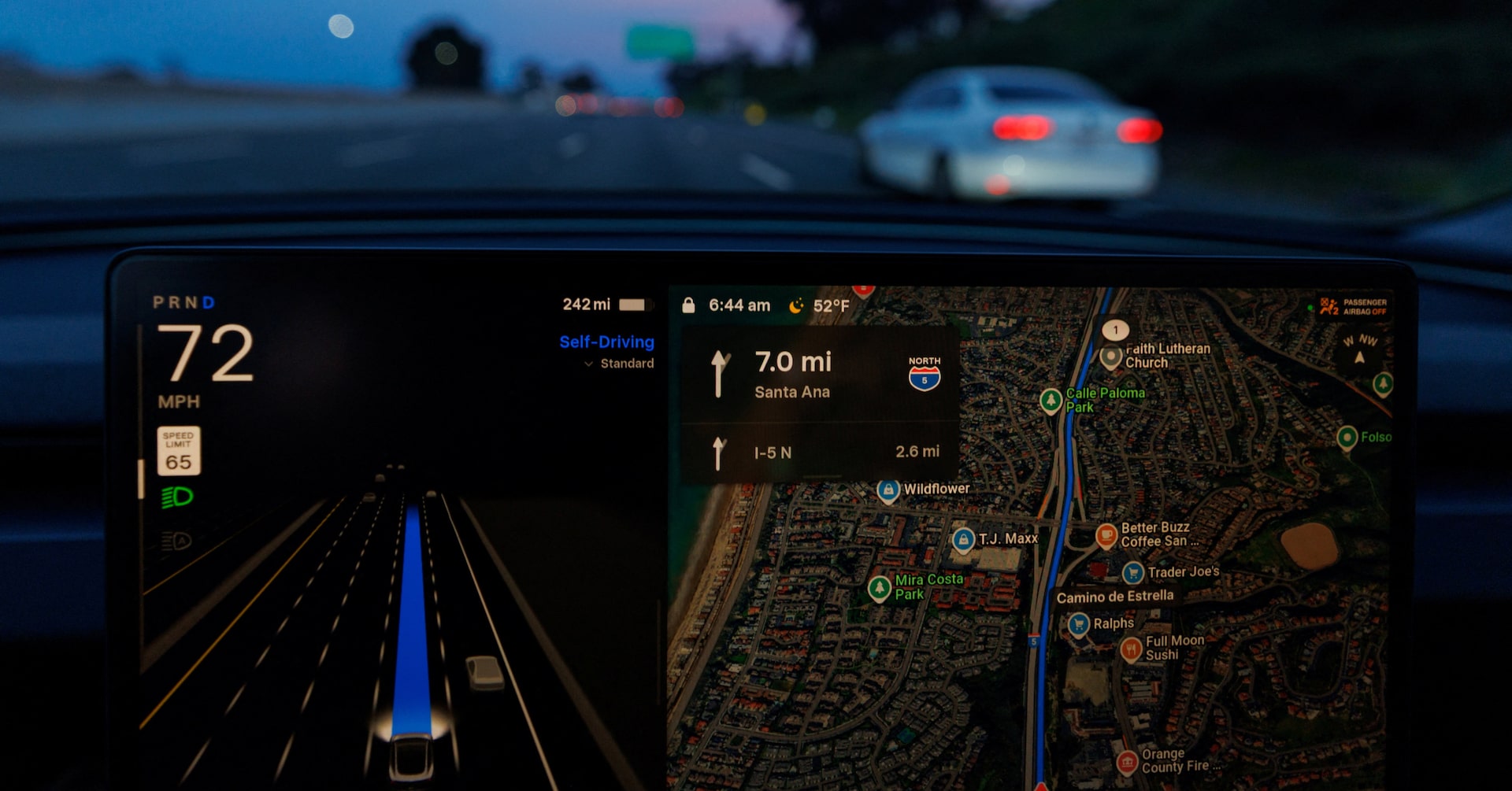
Tesla’s 29 Austin Robotaxis have crashed 8 times since June, as data suggests they perform much worse than human drivers

Tesla’s 29 Austin Robotaxis have been involved in eight crashes since they launched in June, Electrek reports, citing National Highway Traffic Safety Administration data you can download here. Those crashes for the most part involved property damage, and only in one case led to a minor injury. Notably, the crashes occurred with a safety monitor in the front seat.

As Electrek notes, that data suggests Tesla Robotaxis are crashing once every 40,000 miles, whereas the average human driver in the US crashes about once every 500,000 miles. On Tesla’s Full Self-Driving page, the company claims vehicles with the technology engaged have 7x fewer major and minor collisions — a claim that experts like Carnegie Mellon’s Phil Koopman have said doesn’t stand up to scrutiny.

Over the weekend, Tesla began testing two more Robotaxis without those safety monitors, in hopes of achieving CEO Elon Musk’s latest goal of removing them from the Austin fleet by year’s end.

As Electrek notes, that data suggests Tesla Robotaxis are crashing once every 40,000 miles, whereas the average human driver in the US crashes about once every 500,000 miles. On Tesla’s Full Self-Driving page, the company claims vehicles with the technology engaged have 7x fewer major and minor collisions — a claim that experts like Carnegie Mellon’s Phil Koopman have said doesn’t stand up to scrutiny.

Over the weekend, Tesla began testing two more Robotaxis without those safety monitors, in hopes of achieving CEO Elon Musk’s latest goal of removing them from the Austin fleet by year’s end.

Latest Stories

Sherwood Media, LLC produces fresh and unique perspectives on topical financial news and is a fully owned subsidiary of Robinhood Markets, Inc., and any views expressed here do not necessarily reflect the views of any other Robinhood affiliate, including Robinhood Markets, Inc., Robinhood Financial LLC, Robinhood Securities, LLC, Robinhood Crypto, LLC, or Robinhood Money, LLC.