Tech
Apple WWDC 2025
(Josh Edelson/Getty Images)
“Overall a Yawner”

Analysts: “We were not expecting much... but were still slightly disappointed” by Apple

It was a snoozefest for insiders, but was it enough for regular Apple users?

Rani Molla

Apple’s annual developer conference, WWDC, was no Google I/O this year.

After overpromising the capabilities of its AI software last year, Apple dialed back boasting big ideas and instead focused on more iterative design upgrades. The company made fewer mentions of Apple Intelligence and only referenced its beleaguered AI assistant, Siri, once.

The event underwhelmed investors, sending the stock down 1%. It didn’t do too much better among analysts.

Here’s a roundup of analysts and researchers that spoke with us or wrote in their notes:

David Vogt, UBS

“WWDC announcements are more evolutionary than revolutionary in our view. Apple made a number of software-related announcements at its annual developer conference, marking the second year in a row where WWDC was largely software focused and in our view unlikely to drive iPhone demand. While we believe some investors were hopeful that Apple could announce a new iPhone form factor or a ‘killer’ Apple Intelligence app, the updates were in-line with our more modest expectations.”

Nabila Popal, IDC

“The average Apple consumer doesn’t attend Google I/O. So an average Apple consumer, to them, this [AI] is still new. Yes, it’s late in terms of what’s already there in the Android world. But my point is to the Apple consumer, who focus on their Apple universe and their iOS devices, or their Apple ecosystem of devices, this is still going to be groundbreaking and it’s going to enhance their experience with their devices.”

Dan Ives, Wedbush Securities

“Slow but Steady Improvements to Strategy But Overall a Yawner... Overall, WWDC laid out the vision for developers BUT was void of any major Apple Intelligence progress as Cupertino is playing it safe and close to the vest after the missteps last year. We get the strategy but this is a big year ahead for Apple to monetize on the AI front as ultimately Cook & Co. may be forced into doing some bigger AI acquisitions to jumpstart this AI strategy. We have a high level of confidence Apple can get this right but they have a tight window to figure this out and that will be the focus of investors the next year.”

Michael Levin, CIRP

“We’ve shown before that Apple customers tend to buy new iPhones mostly when the old one stops working well or well enough, rather than to take advantage of new features. So, the software innovations that Apple announced wouldn’t make a huge different anyway. And, these innovations seem more incremental or behind-the-scenes, rather than ones that would catch users’ attention.”

Tim Long, Barclays

“We were not expecting much from the annual WWDC keynote, but were still slightly disappointed at the content and features announced today. We view changes to all device Operating Systems and Apple Intelligence as incremental, and not enough to drive any upgrade cycles... we did not see or hear anything today that would cause us to believe Apple Intelligence will be better for the iPhone 17 lineup later this year.”

Samik Chatterjee, JPMorgan

“Apple’s WWDC event did not include any major surprises that would convince investors around material changes to their outlook for either iPhones (or other devices) with the company marking out a set of incremental updates to its platform on different devices as well as opening up access to on-device Foundational AI models to developers — which can potentially be instrumental in driving interesting use cases/applications for consumers in time, but with limited immediate tailwinds.”

More Tech

See all Tech
tech

Report: Amodei told staff that Anthropic was targeted for lack of “dictator-style praise” for Trump

More details are leaking out from Anthropic about how CEO Dario Amodei explained the company’s dramatic schism with the Pentagon over its AI terms of use.

The Information shared details from a leaked 1,600-word memo to employees that Amodei reportedly sent on Friday after the Trump administration attacked the startup.

Per the report, Amodei told his staff that the reason the company was on the outs with the Trump administration was the fact that it had not given “dictator-style praise” to President Trump, “(while Sam has),” referring to OpenAI CEO Sam Altman.

Amodei also noted that OpenAI President Greg Brockman and his wife donated $25 million to the MAGA Inc super PAC, which likely put their competitor in the good graces of Trump and co.

Per the report, Amodei told his staff that the reason the company was on the outs with the Trump administration was the fact that it had not given “dictator-style praise” to President Trump, “(while Sam has),” referring to OpenAI CEO Sam Altman.

Amodei also noted that OpenAI President Greg Brockman and his wife donated $25 million to the MAGA Inc super PAC, which likely put their competitor in the good graces of Trump and co.

tech

“Fortnite” returning to the Play Store worldwide after Google lowers fees and opens Android

After years of fighting with “Fortnite” maker Epic Games, Google is hitting reset on Android — cutting Play Store fees, loosening its grip on billing, and making it easier for rival app stores to set up shop on millions of devices.

The move could also dent one of Google’s lucrative businesses: Play Store commissions.

In a blog post Tuesday, Google said it will let developers use their own billing systems alongside Google Play’s, link out to external purchase pages, and distribute apps through third-party app stores that meet Google’s safety standards. The company is also lowering Play Store fees in key markets, with billing fees around 5% for developers that use Google’s system, service fees roughly 20% on new installs, and subscription fees around 10%. The changes will roll out on a staggered schedule, beginning mid-2026.

In a corresponding post, Epic said “Fortnite” would expand worldwide on Google Play. “These changes will evolve Android into a true open platform,” the company wrote. “Fortnite” returned to the Play Store in the US in December after the two companies reached a settlement following years of antitrust battles.

In a blog post Tuesday, Google said it will let developers use their own billing systems alongside Google Play’s, link out to external purchase pages, and distribute apps through third-party app stores that meet Google’s safety standards. The company is also lowering Play Store fees in key markets, with billing fees around 5% for developers that use Google’s system, service fees roughly 20% on new installs, and subscription fees around 10%. The changes will roll out on a staggered schedule, beginning mid-2026.

In a corresponding post, Epic said “Fortnite” would expand worldwide on Google Play. “These changes will evolve Android into a true open platform,” the company wrote. “Fortnite” returned to the Play Store in the US in December after the two companies reached a settlement following years of antitrust battles.

tech

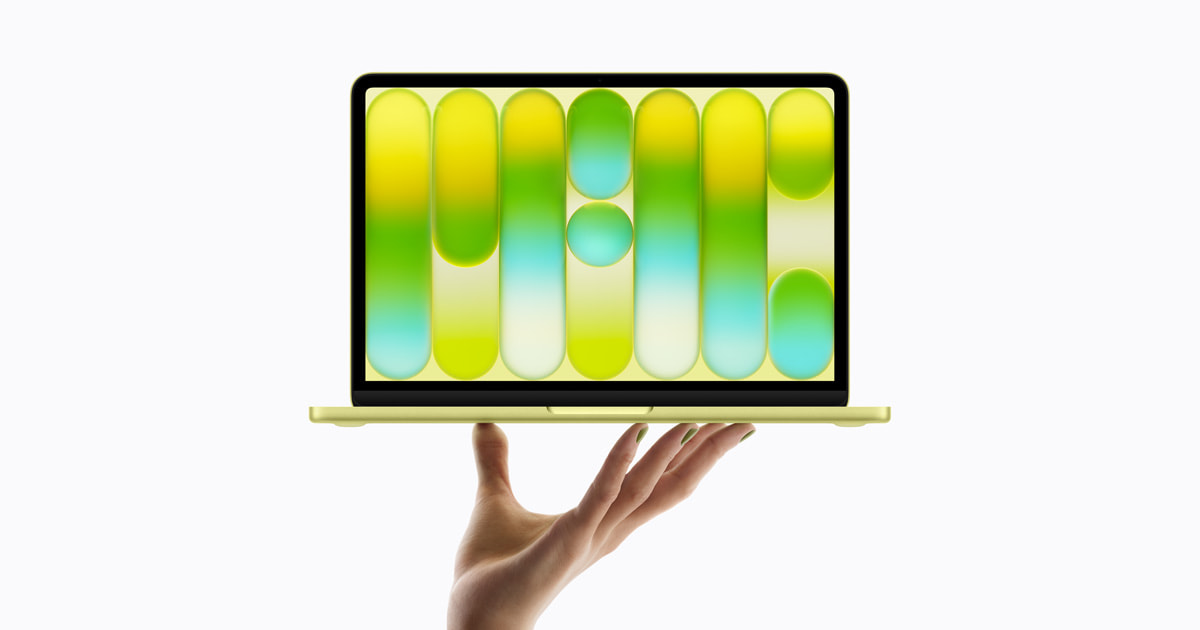
Apple debuts $599 Google Chromebook competitor

Apple’s latest product announcement this week is an opening salvo against Google’s ubiquitous Chromebook. On Wednesday, the iPhone maker unveiled the MacBook Neo, which starts at $599 — or $499 for students — the lowest price ever for a MacBook. Apple typically skews to the high end of the market.

The Neo is still more expensive than typical Chromebooks, which are hugely popular in schools, but it’s less stripped down, with a sharper display, aluminum case, and a more powerful processor than many Chromebook models.

tech

Bank of America upgrades Tesla, expecting it to “quickly become a leader in robotaxi services”

Tesla jumped in premarket trading after Bank of America reinstated coverage of the EV maker and upgraded it to “buy” from “hold,” with a price target of $460.

“We expect TSLA to quickly become a leader in robotaxi services, given its ability to scale more profitably than competitors,” analyst Alexander Perry wrote, noting that Tesla’s approach eschews more expensive (but more robust) technology like lidar.

BofA says Tesla’s Robotaxi service could amount to $844 billion in equity value and more than half Tesla’s valuation.

Currently, Robotaxi operates in two markets with heavy human oversight. In Austin, most of the rides involve a safety monitor sitting in the front seat, and in the Bay Area, all rides are driven by a human using supervised Full Self-Driving tech.

Alphabet subsidiary Waymo, meanwhile, is currently operating its driverless ride-hailing service in 10 US markets.

Currently, Robotaxi operates in two markets with heavy human oversight. In Austin, most of the rides involve a safety monitor sitting in the front seat, and in the Bay Area, all rides are driven by a human using supervised Full Self-Driving tech.

Alphabet subsidiary Waymo, meanwhile, is currently operating its driverless ride-hailing service in 10 US markets.

Latest Stories

Sherwood Media, LLC produces fresh and unique perspectives on topical financial news and is a fully owned subsidiary of Robinhood Markets, Inc., and any views expressed here do not necessarily reflect the views of any other Robinhood affiliate, including Robinhood Markets, Inc., Robinhood Financial LLC, Robinhood Securities, LLC, Robinhood Crypto, LLC, or Robinhood Money, LLC.