Tech
Fun and games: Duo's gamification and absurd TikToks are working

Fun and games: Duo's gamification and absurd TikToks are working

Word games

A huge part of Duolingo’s success is in good old-fashioned entertainment, or — as critics see it — the gamification of the language-learning process.

The company has made no secret of its use of fun to liven up its educational methods, incorporating numerous game mechanics and tactics into the app. As users learn, they are rewarded with experience (XP) points, they can win “gems”, and they need to keep hold of their “hearts” in order to keep playing… all features that could be straight out of a video game. And then of course there’s the streak — arguably Duolingo’s most effective psychological hook — which keeps people coming back to the app day after day, in order to keep their streak alive, with pushy notifications to tell you if you’ve forgotten to log in.

Those mechanics are core to what makes Duolingo so successful, but they’ve also positioned the company for criticism from those who say that they oversimplify the language-learning process, favoring lessons that optimize for in-app engagement over what might be most helpful in real world situations.

Weird is working

The company has also leaned into what has been described as “unhinged” marketing on TikTok. Unlike so many brands that post polished marketing material, Duolingo’s TikTok is meme-heavy… and often just straight up weird.

Videos have included the company's legal team trying to catch the owl mascot to stop it from posting online, obsessions with celebrities (notably Dua Lipa) and non-stop nonsensical memes. That approach has set Duolingo apart, growing to nearly 10 million followers, as people follow along to see the content that they presumably can’t quite believe is coming from an official brand channel. The company is also planning a 5-second local Super Bowl ad, which executives at the company say will be “quite stunting”.


More Tech

See all Tech
Multicolor Sticks

OpenAI is shipping everything. Anthropic is perfecting one thing.

The two AI titans are in a race to grow revenues, but they have very different strategies for releasing products. And one approach appears to be winning out.

73%

Here’s another sign Anthropic’s enterprise tools are killing it: The AI firm now captures 73% of all spending among companies buying AI tools for the first time, Axios reports, citing data from Ramp, a fintech company that provides corporate cards and expense management software. That’s up from 50% in January, when it was tied with OpenAI.

As we’ve noted, Big Tech is pivoting from experimentation to revenue — and enterprise is where that shift is playing out.

tech

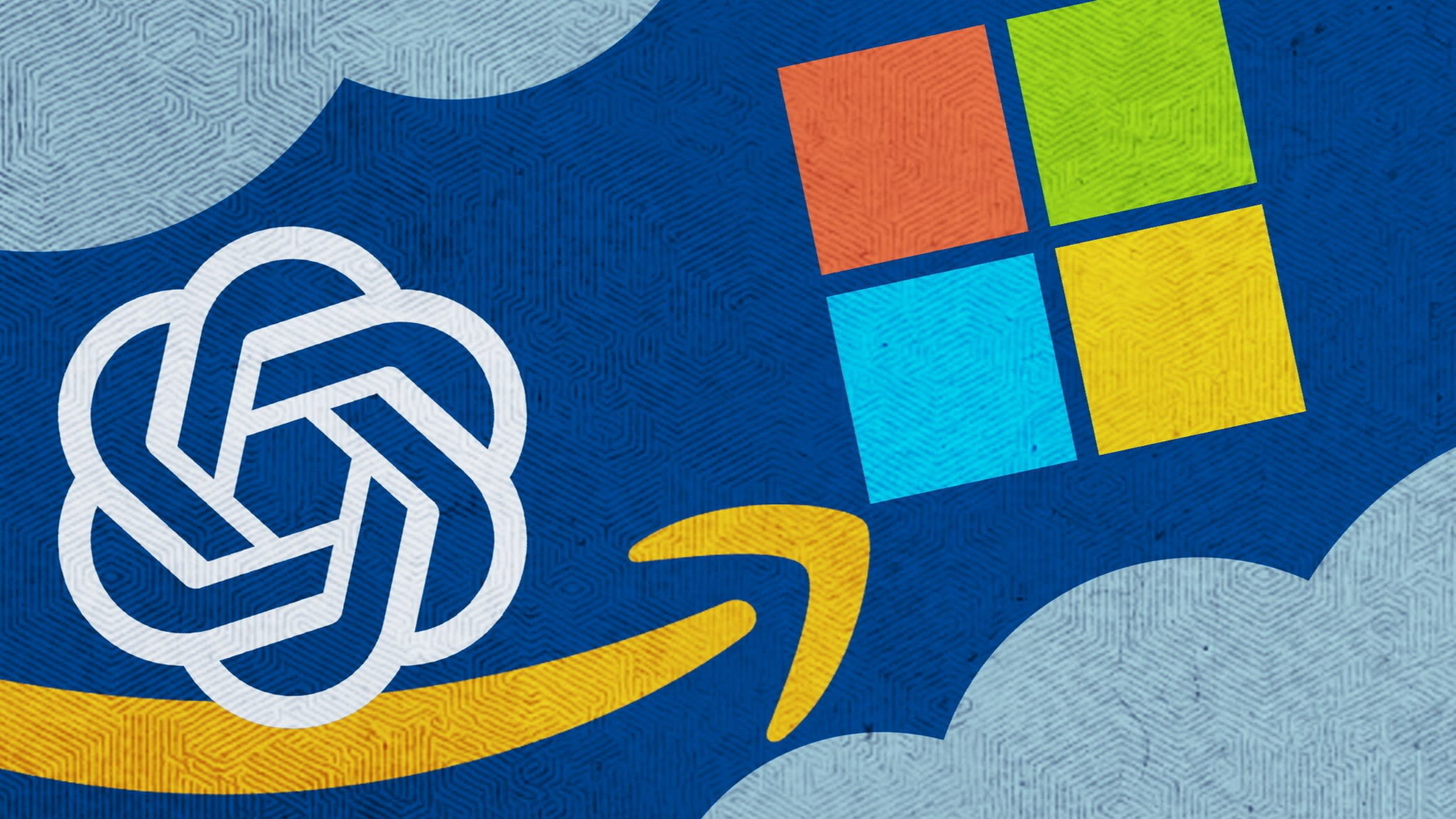
Microsoft considers suing Amazon and OpenAI over $50 billion deal

Microsoft may be about to take its biggest AI partner to court, the Financial Times reports.

Microsoft, a longtime backer of OpenAI, is weighing legal action over the latter’s $50 billion deal with Amazon tied to its new Frontier AI product, arguing it could violate a key clause in their exclusive cloud deal requiring OpenAI’s models to run through Azure. Amazon and OpenAI say they’ve found a workaround. Microsoft executives disagree.

“We know our contract,” a source told the FT. “We will sue them if they breach it. If Amazon and OpenAI want to take a bet on the creativity of their contractual lawyers, I would back us, not them.”

OpenAI, which is eyeing an IPO this year and under pressure to generate more revenue, is trying to loosen Microsoft’s grip as it scales, while Microsoft increasingly sees OpenAI as both a partner and competitor.

“We know our contract,” a source told the FT. “We will sue them if they breach it. If Amazon and OpenAI want to take a bet on the creativity of their contractual lawyers, I would back us, not them.”

OpenAI, which is eyeing an IPO this year and under pressure to generate more revenue, is trying to loosen Microsoft’s grip as it scales, while Microsoft increasingly sees OpenAI as both a partner and competitor.

tech

Morgan Stanley says robotaxis could help Tesla sell more cars

Morgan Stanley analysts think Tesla’s robotaxi push could boost more than just a new business line — it could help sell more cars and software, too.

After visiting Giga Texas, analysts said they’re more optimistic about Tesla’s progress toward an unsupervised robotaxi rollout, with improvements in tricky pickup and drop-off scenarios where Tesla doesn’t have as much data from consumer usage. For now, the vast majority of its vehicles still have human supervisors in the front seat, but the analysts say the service is helping Tesla.

“Incremental unsupervised robotaxi miles driven improve the underlying autonomy model, which accelerates the path to personal unsupervised FSD [Full Self-Driving]. This, in turn supports higher FSD attach rates, improves auto demand, and cash flow generation.”

In other words, the more robotaxis drive, the better Tesla’s self-driving gets — and that could make its Full Self-Driving software more appealing and its cars easier to sell, in addition to improving its robotaxi service. Note that Tesla’s vehicle deliveries, which accounts for the lion’s share of the company’s revenue, have dropped two years in a row.

Morgan Stanley also sees a cost advantage. It estimates Tesla’s robotaxis could cost about $0.81 per mile to run today — cheaper than traditional ride-hailing and rival autonomous services — with costs falling further as purpose-built vehicles like the Cybercab scale.

Morgan Stanley maintained its equal-weight rating and $415 price target, about 4% above where the stock is currently trading.

Latest Stories

Sherwood Media, LLC produces fresh and unique perspectives on topical financial news and is a fully owned subsidiary of Robinhood Markets, Inc., and any views expressed here do not necessarily reflect the views of any other Robinhood affiliate, including Robinhood Markets, Inc., Robinhood Financial LLC, Robinhood Securities, LLC, Robinhood Crypto, LLC, Robinhood Derivatives, LLC, or Robinhood Money, LLC. Futures and event contracts are offered through Robinhood Derivatives, LLC.