
Tech
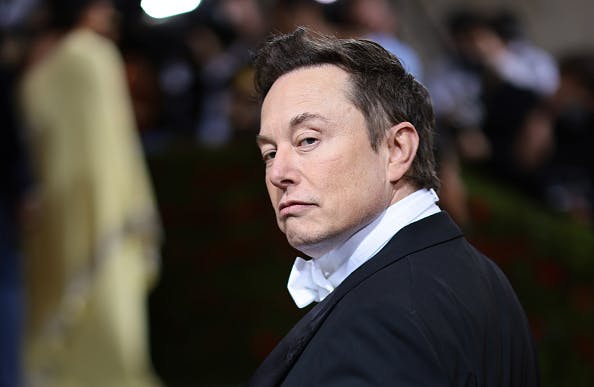
Elon Musk
Getty Images

Elon Musk’s xAI just bought X, formerly Twitter

The companies were already highly intertwined.

In a surprise move, one of Elon Musk’s private companies, xAI, just bought another of his private companies, X, in an all-stock deal.

Musk, who is also the CEO of Tesla and other private companies, announced the deal in a post on X. The transaction values xAI at $80 billion and X at $33 billion ($45 billion less $12 billion in debt), he said. In 2022, Musk paid $44 billion, including debt, for what was then Twitter.

Reporting by Bloomberg and the Financial Times earlier this month said the social media platform was valued at $32 billion and $44 billion, respectively. xAI had been valued at $50 billion late last year.

This seems like a big price tag for a rearranging of corporate structures, but when you’re the richest person on the planet with relatively infinite money, and you own two companies and want to smash them together, you can probably make it happen however you want. Remember, Musk did this with Tesla and its sister company, SolarCity, even when both were public companies, back in 2016.

“xAI and X’s futures are intertwined. Today, we officially take the step to combine the data, models, compute, distribution and talent. This combination will unlock immense potential by blending xAI’s advanced AI capability and expertise with X’s massive reach,” Musk posted on X.

The companies were already highly integrated. xAI trains its artificial intelligence models on content posted by X users. X users can use xAI’s Grok chatbot free of charge. And investors who backed Musk’s acquisition of X received a 25% stake in xAI. Musk’s six companies, including Tesla and SpaceX, as well as his extragovernmental organization, the Department of Government Efficiency, already share plenty of staff and resources, in addition to leadership.

More Tech

See all Tech
tech
Jon Keegan

WSJ: Anduril’s weapons systems have failed during several tests

Autonomous drones by sea, land, and air. Futuristic AI-powered support fighter jets, and swarms of networked drones controlled by sophisticated software. These are some of the visions for the future of warfare pitched by defense tech startup Anduril. Cofounded by Oculus founder Palmer Luckey, the Peter Thiel-backed startup has landed some major national security contracts based on this futuristic outlook for battlefield AI.

But according to a report from The Wall Street Journal, the company’s tech is failing key tests in the real world, raising concerns about the viability and safety of Anduril’s systems within the military command.

Anduril’s Altius drones proved vulnerable to Russian jamming while deployed in Ukraine and have been pulled from the battlefield, per the report.

More than a dozen sea-based drone ships powered by Anduril’s Lattice command and control software recently shut down during a Navy test, creating a hazard for other vessels in the exercise.

And this summer, during a drone intercept test, Anduril’s counter-drone system crashed and caused a 22-acre fire at a California airport, the report found.

Anduril told the WSJ that the failures are just part of its rapid iterative development process:

“We recognize that our highly iterative model of technology development — moving fast, testing constantly, failing often, refining our work, and doing it all over again — can make the job of our critics easier. That is a risk we accept. We do fail… a lot.”

But according to a report from The Wall Street Journal, the company’s tech is failing key tests in the real world, raising concerns about the viability and safety of Anduril’s systems within the military command.

Anduril’s Altius drones proved vulnerable to Russian jamming while deployed in Ukraine and have been pulled from the battlefield, per the report.

More than a dozen sea-based drone ships powered by Anduril’s Lattice command and control software recently shut down during a Navy test, creating a hazard for other vessels in the exercise.

And this summer, during a drone intercept test, Anduril’s counter-drone system crashed and caused a 22-acre fire at a California airport, the report found.

Anduril told the WSJ that the failures are just part of its rapid iterative development process:

“We recognize that our highly iterative model of technology development — moving fast, testing constantly, failing often, refining our work, and doing it all over again — can make the job of our critics easier. That is a risk we accept. We do fail… a lot.”

tech
Jon Keegan

OpenAI’s partners shouldering $100 billion of debt, taking on all the risk

OpenAI’s ambitious plans for global AI infrastructure projects — like its series of massive Stargate AI data centers — will require tens of billions of dollars funded by debt, but you won’t find much of that on OpenAI’s balance sheet.

According to a new analysis by the Financial Times, OpenAI has somehow convinced its many partners to shoulder at least $100 billion in debt on its behalf, as well as the risks that come with it.

Partners Oracle, SoftBank, CoreWeave, Crusoe, and Blue Owl Capital are all taking on debt in the form of bonds, loans, and credit deals to meet their obligations with OpenAI for infrastructure and computing resources.

Having close ties with OpenAI has been an anchor for many publicly traded companies in recent weeks. The company’s cash burn and the rise of Gemini 3 have seemingly darkened its outlook and fostered guilt by association for many of its close partners and investors. Most notably, Oracle’s aggressive capital expenditure plans to support demand from OpenAI have sparked a sell-off in its stock while widening its credit default swap spreads.

A senior OpenAI executive told the FT: “That’s been kind of the strategy. How does [OpenAI] leverage other people’s balance sheets?”

Partners Oracle, SoftBank, CoreWeave, Crusoe, and Blue Owl Capital are all taking on debt in the form of bonds, loans, and credit deals to meet their obligations with OpenAI for infrastructure and computing resources.

Having close ties with OpenAI has been an anchor for many publicly traded companies in recent weeks. The company’s cash burn and the rise of Gemini 3 have seemingly darkened its outlook and fostered guilt by association for many of its close partners and investors. Most notably, Oracle’s aggressive capital expenditure plans to support demand from OpenAI have sparked a sell-off in its stock while widening its credit default swap spreads.

A senior OpenAI executive told the FT: “That’s been kind of the strategy. How does [OpenAI] leverage other people’s balance sheets?”

tech

Chinese tech giants are training their models offshore to sidestep US curbs on Nvidia’s chips

Nvidia can’t sell its best AI chips in the world’s second-largest economy. That’s an Nvidia problem. But it’s also a China problem — and it’s one that the region’s tech giants have resorted to solving by training their AI models overseas, according to a new report from the Financial Times.

Citing two people with direct knowledge of the matter, the FT reported that “Alibaba and ByteDance are among the tech groups training their latest large language models in data centers across south-east Asia.” Clusters of data centers have particularly boomed in Singapore and Malaysia, with many of the sites kitted out with Nvidia’s latest architecture.

One exception, per the FT, is DeepSeek, which continues to be trained domestically, having reportedly built up a stockpile of Nvidia chips before the US export ban came into effect.

Last week, Nvidia spiked on the news that the Trump administration was reportedly considering letting the tech giant sell its best Hopper chips — the generation of chips that preceded Blackwell — to China.

Citing two people with direct knowledge of the matter, the FT reported that “Alibaba and ByteDance are among the tech groups training their latest large language models in data centers across south-east Asia.” Clusters of data centers have particularly boomed in Singapore and Malaysia, with many of the sites kitted out with Nvidia’s latest architecture.

One exception, per the FT, is DeepSeek, which continues to be trained domestically, having reportedly built up a stockpile of Nvidia chips before the US export ban came into effect.

Last week, Nvidia spiked on the news that the Trump administration was reportedly considering letting the tech giant sell its best Hopper chips — the generation of chips that preceded Blackwell — to China.

tech
Millie Giles

Alibaba unveils its first AI glasses, taking on Meta directly in the wearables race

Retail and tech giant Alibaba launched its first consumer-ready, AI-powered smart glasses on Thursday, marking its entrance into the growing wearables market.

Announced back in July, the Quark AI glasses just went on sale in the Chinese retailer’s home market, with two versions currently available: the S1, starting at 3,799 Chinese yuan (~$536), and the G1, at 1,899 yuan (~$268) — a considerably lower price than Meta’s $799 Ray-Ban Display glasses, released in September.

tech
Jon Keegan

Musk: Tesla’s Austin Robotaxi fleet to “roughly double” next month, but falls well short of earlier goals

Yesterday, Elon Musk jumped onto a frustrated user’s post on X, who was complaining that they were unable to book a Robotaxi ride in Austin. Musk aimed to reassure the would-be customer that the company was expanding service in the city:

“The Tesla Robotaxi fleet in Austin should roughly double next month,” Musk wrote.

While that sounds impressive, there are reports that Austin has only 29 vehicles in service.

But last month, Musk said the Robotaxi goal was to have “probably 500 or more in the greater Austin area” by the end of the year.

Meanwhile, Google’s Waymo has more than 100 autonomous taxis running in Austin, and 1,000 more in the San Francisco Bay Area.

“The Tesla Robotaxi fleet in Austin should roughly double next month,” Musk wrote.

While that sounds impressive, there are reports that Austin has only 29 vehicles in service.

But last month, Musk said the Robotaxi goal was to have “probably 500 or more in the greater Austin area” by the end of the year.

Meanwhile, Google’s Waymo has more than 100 autonomous taxis running in Austin, and 1,000 more in the San Francisco Bay Area.

Latest Stories

Sherwood Media, LLC produces fresh and unique perspectives on topical financial news and is a fully owned subsidiary of Robinhood Markets, Inc., and any views expressed here do not necessarily reflect the views of any other Robinhood affiliate, including Robinhood Markets, Inc., Robinhood Financial LLC, Robinhood Securities, LLC, Robinhood Crypto, LLC, or Robinhood Money, LLC.