

Tech
tech
Rani Molla

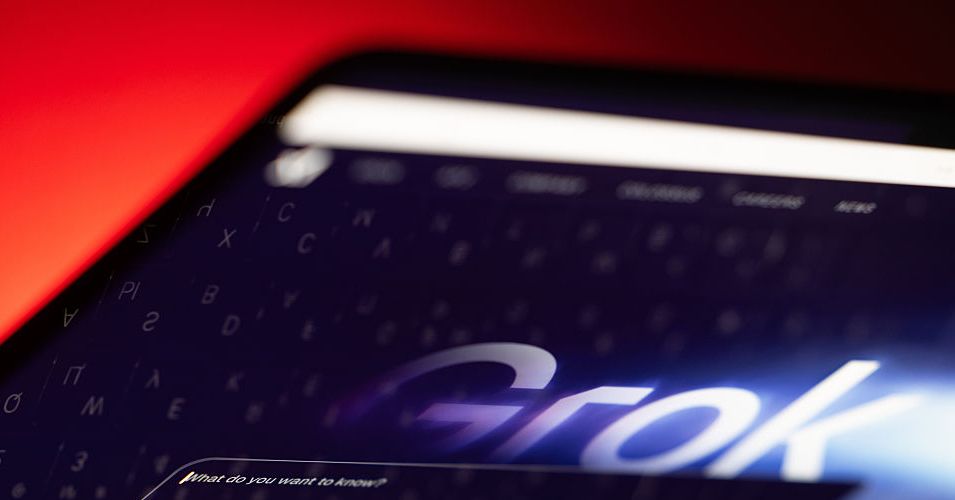
Federal workers will now get Grok’s AI chatbot, too

Earlier this month a number of AI companies, including OpenAI, Google, and Anthropic, announced partnerships with the US government wherein federal workers would get access to their respective chatbots for ludicrously small fees. Notably absent was xAI’s Grok, which missed out on the initiative after it began praising Hitler last month. That no longer seems to be a problem for the government.

Wired reports that the White House earlier this week ordered federal workers to roll out Grok “ASAP.” It’s unclear what caused the about-face. Perhaps xAI and Tesla CEO Elon Musk is back in President Trump’s good graces, after fallouts earlier this summer.

AI companies are hoping that by offering government agencies access to their services for incredibly low prices — $1 per year for ChatGPT and Claude, and $0.47 for Gemini — they’ll be able to hook workers into relying on their products and will eventually be able to eke out more lucrative contracts.

Wired reports that the White House earlier this week ordered federal workers to roll out Grok “ASAP.” It’s unclear what caused the about-face. Perhaps xAI and Tesla CEO Elon Musk is back in President Trump’s good graces, after fallouts earlier this summer.

AI companies are hoping that by offering government agencies access to their services for incredibly low prices — $1 per year for ChatGPT and Claude, and $0.47 for Gemini — they’ll be able to hook workers into relying on their products and will eventually be able to eke out more lucrative contracts.

More Tech

See all Tech
tech

Reuters report pours water on Tesla’s Texas Robotaxi expansion

Nearly a month after Tesla announced that its Robotaxis had expanded to Houston and Dallas, reporters from Reuters say the service is still in a “beta-testing phase.”

They reported long wait times — when the service was available at all — and drop-offs that were 15-minute walks from the intended destination. In one instance, a reporter waited nearly two hours for a Robotaxi to arrive to take a trip that should have been a 20-minute drive, and after that long pickup wait time, experienced a circuitous route and a drop-off distant from the intended destination.

When the service launched in Houston and Dallas, we observed it included just one driverless Robotaxi in each. (Notably, the company’s existing services in Austin and the Bay Area still have safety monitors present on most rides.) Now, data from Robotaxi Tracker still shows a single driverless vehicle available in the past week in Dallas, and three in Houston.

As we noted during Tesla’s most recent earnings report, the company has updated its language around the half dozen markets it had planned to expand to in the first half of this year to say that “preparations [are] underway.”

Robotaxis, of course, are central to Tesla’s value proposition, which has pivoted from vehicles to autonomy and AI.

When the service launched in Houston and Dallas, we observed it included just one driverless Robotaxi in each. (Notably, the company’s existing services in Austin and the Bay Area still have safety monitors present on most rides.) Now, data from Robotaxi Tracker still shows a single driverless vehicle available in the past week in Dallas, and three in Houston.

As we noted during Tesla’s most recent earnings report, the company has updated its language around the half dozen markets it had planned to expand to in the first half of this year to say that “preparations [are] underway.”

Robotaxis, of course, are central to Tesla’s value proposition, which has pivoted from vehicles to autonomy and AI.

tech

Amazon rolls out 30-minute delivery in 4 cities with plans to expand to dozens more

Amazon is officially escalating the logistics arms race with the rollout of Amazon Now, a new service promising 30-minute delivery on thousands of grocery items and household essentials — Amazon mentioned AirPods, laundry detergent, and toothpaste — across dozens of US cities. Currently live in Seattle, Atlanta, Dallas, and Philadelphia, the service leverages a network of hyperlocal micro-fulfillment centers “strategically placed close to where customers live and work” to bypass traditional shipping delays.

For orders more than $15, Prime members pay a $3.99 delivery fee per order, while non-Prime members pay $13.99. By targeting the need it right now market, Amazon is directly challenging the dominance of local convenience stores and quick-commerce rivals like Walmart and Instacart, betting that customers will pay a premium to have their impulse buys arrive before they even have time to rethink them.

This might trigger flashbacks for those who remember the dot-com bubble startups Webvan, which scheduled same-day grocery delivery in 30-minute intervals, or Kozmo.com, which offered one-hour delivery on convenient store basics and DVDs. The difference? While Webvan and Kozmo.com built their delivery networks from scratch before there was demand, Amazon is simply layering speed onto its already massive logistics engine and customer base.

For orders more than $15, Prime members pay a $3.99 delivery fee per order, while non-Prime members pay $13.99. By targeting the need it right now market, Amazon is directly challenging the dominance of local convenience stores and quick-commerce rivals like Walmart and Instacart, betting that customers will pay a premium to have their impulse buys arrive before they even have time to rethink them.

This might trigger flashbacks for those who remember the dot-com bubble startups Webvan, which scheduled same-day grocery delivery in 30-minute intervals, or Kozmo.com, which offered one-hour delivery on convenient store basics and DVDs. The difference? While Webvan and Kozmo.com built their delivery networks from scratch before there was demand, Amazon is simply layering speed onto its already massive logistics engine and customer base.

tech
Jon Keegan

OpenAI employees are cashing out their shares, dozens making $30 million each

OpenAI’s planned IPO later this year is expected to be one of the largest of all time. Employees who got equity early on are sure to reap a windfall when the company shares hit the public markets.

Often these pre-IPO shares can’t be cashed in until the company goes public, and many startups have longer lockup periods before employees can sell their shares.

But The Wall Street Journal reports that OpenAI has a relatively short two-year vesting period, and the company allowed employees to sell shares before the IPO via a tender offer, as long as they’ve reached the two-year mark.

According to the report, in October, more than 600 current and former OpenAI employees sold shares through this process, minting a cluster of new multimillionaires. The Journal said about 75 of those walked away with $30 million (the maximum sale amount for this offer).

But The Wall Street Journal reports that OpenAI has a relatively short two-year vesting period, and the company allowed employees to sell shares before the IPO via a tender offer, as long as they’ve reached the two-year mark.

According to the report, in October, more than 600 current and former OpenAI employees sold shares through this process, minting a cluster of new multimillionaires. The Journal said about 75 of those walked away with $30 million (the maximum sale amount for this offer).

Latest Stories

Sherwood Media, LLC produces fresh and unique perspectives on topical financial news and is a fully owned subsidiary of Robinhood Markets, Inc., and any views expressed here do not necessarily reflect the views of any other Robinhood affiliate, including Robinhood Markets, Inc., Robinhood Financial LLC, Robinhood Securities, LLC, Robinhood Crypto, LLC, Robinhood Derivatives, LLC, or Robinhood Money, LLC. Futures and event contracts are offered through Robinhood Derivatives, LLC.
