

Tech
tech

Google launches Googlebook, an AI-first, Android-ready successor to the Chromebook

At its Android event today, Google teased a new AI-first, Android compatible laptop called Googlebook. The company is marketing the device, coming out this fall, as a premium successor to its budget-friendly Chromebook, though it has yet to release a price. It does, however, mention the word “premium” four times in the blog post. Much like the original Chromebook placed cloud tech and ChromeOS at its center, this new model highlights the company’s latest tech — namely AI — through Gemini.

In a feature called “Magic Pointer,” users can wiggle their cursor to pull up contextual information about anything on the screen. “Point at a date in an email to set up a meeting, or select two images — like your living room and a new couch — to instantly visualize them together,” the company said as an example. In a long-anticipated move, the device also deepens ecosystem ties, allowing users to run Android phone apps natively on the desktop.

The announcement comes just two months after Apple announced the MacBook Neo, a rare foray by the iPhone maker into the lower-cost laptop market dominated by the Chromebook.

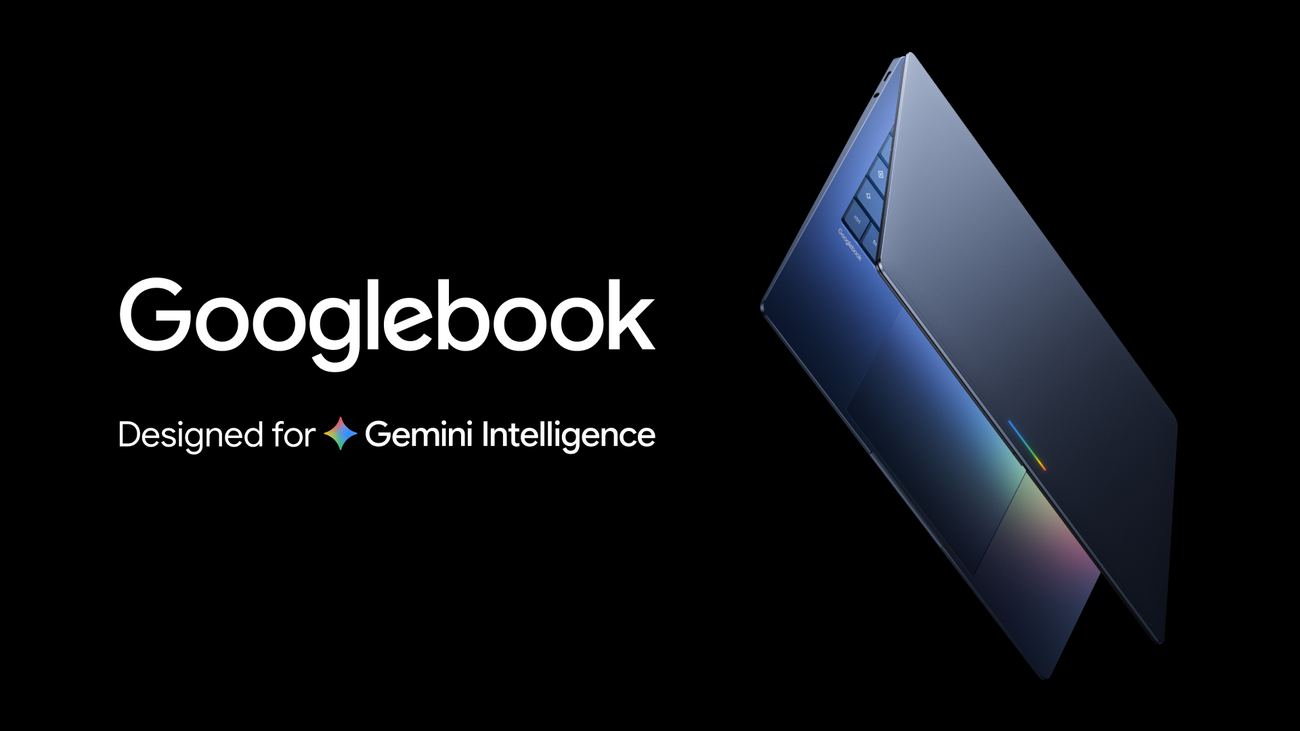
In a feature called “Magic Pointer,” users can wiggle their cursor to pull up contextual information about anything on the screen. “Point at a date in an email to set up a meeting, or select two images — like your living room and a new couch — to instantly visualize them together,” the company said as an example. In a long-anticipated move, the device also deepens ecosystem ties, allowing users to run Android phone apps natively on the desktop.

The announcement comes just two months after Apple announced the MacBook Neo, a rare foray by the iPhone maker into the lower-cost laptop market dominated by the Chromebook.

More Tech

See all Tech
tech

Nintendo brings back the $500 Switch 2 bundle before the console’s September price hike

The Switch 2 bundle has returned, about five months after it reportedly ended production.

Nintendo on Tuesday announced a “Choose Your Game Bundle,” launching at select retailers beginning next month and continuing “while supplies last.”

The bundle method has proven lucrative for Nintendo thus far. The company’s $500 “Mario Kart World” bundle was available at launch but ended production amid tariffs and memory prices last year. Nintendo is now effectively bringing it back, allowing customers to bundle a new Switch 2 with either Mario Kart, “Pokémon Pokopia,” or “Donkey Kong Bananza” for $500.

Last week, Nintendo announced it would hike the price of the Switch 2 by $50 to $499.99 beginning in September, joining console rivals Sony and Microsoft.

The bundle method has proven lucrative for Nintendo thus far. The company’s $500 “Mario Kart World” bundle was available at launch but ended production amid tariffs and memory prices last year. Nintendo is now effectively bringing it back, allowing customers to bundle a new Switch 2 with either Mario Kart, “Pokémon Pokopia,” or “Donkey Kong Bananza” for $500.

Last week, Nintendo announced it would hike the price of the Switch 2 by $50 to $499.99 beginning in September, joining console rivals Sony and Microsoft.

tech

Report: China seeking access to Anthropic’s Mythos model

Anthropic’s unreleased AI model Mythos has sent shock waves through companies and governments around the world, fearful of what the model will mean for cybersecurity. Even the US Treasury department scrambled to secure access to harden its defenses ahead of a wide release.

Anthropic is currently only sharing access to Mythos to a short list of companies and government agencies.

The New York Times is reporting that China is seeking access to Mythos as well, setting off alarms in the White House. At a Singapore conference last month, an employee from a Chinese think tank reportedly approached representatives from Anthropic, seeking access to Mythos — a move that was interpreted in Washington as a potential effort to secure access for the Chinese government. According to the report, Anthropic declined that request.

As AI models rapidly gain powerful new capabilities, the US government is wrestling over what kinds of controls (if any) it should apply to prevent American technology from being used by our rivals.

The Washington Post is reporting that an executive order from the Trump administration may be imminent that would allow US intelligence agencies to evaluate new AI models before release.

The New York Times is reporting that China is seeking access to Mythos as well, setting off alarms in the White House. At a Singapore conference last month, an employee from a Chinese think tank reportedly approached representatives from Anthropic, seeking access to Mythos — a move that was interpreted in Washington as a potential effort to secure access for the Chinese government. According to the report, Anthropic declined that request.

As AI models rapidly gain powerful new capabilities, the US government is wrestling over what kinds of controls (if any) it should apply to prevent American technology from being used by our rivals.

The Washington Post is reporting that an executive order from the Trump administration may be imminent that would allow US intelligence agencies to evaluate new AI models before release.

tech

Reuters report pours water on Tesla’s Texas Robotaxi expansion

Nearly a month after Tesla announced that its Robotaxis had expanded to Houston and Dallas, reporters from Reuters say the service is still in a “beta-testing phase.”

They reported long wait times — when the service was available at all — and drop-offs that were 15-minute walks from the intended destination. In one instance, a reporter waited nearly two hours for a Robotaxi to arrive to take a trip that should have been a 20-minute drive, and after that long pickup wait time, experienced a circuitous route and a drop-off distant from the intended destination.

When the service launched in Houston and Dallas, we observed it included just one driverless Robotaxi in each. (Notably, the company’s existing services in Austin and the Bay Area still have safety monitors present on most rides.) Now, data from Robotaxi Tracker still shows a single driverless vehicle available in the past week in Dallas, and three in Houston.

As we noted during Tesla’s most recent earnings report, the company has updated its language around the half dozen markets it had planned to expand to in the first half of this year to say that “preparations [are] underway.”

Robotaxis, of course, are central to Tesla’s value proposition, which has pivoted from vehicles to autonomy and AI.

When the service launched in Houston and Dallas, we observed it included just one driverless Robotaxi in each. (Notably, the company’s existing services in Austin and the Bay Area still have safety monitors present on most rides.) Now, data from Robotaxi Tracker still shows a single driverless vehicle available in the past week in Dallas, and three in Houston.

As we noted during Tesla’s most recent earnings report, the company has updated its language around the half dozen markets it had planned to expand to in the first half of this year to say that “preparations [are] underway.”

Robotaxis, of course, are central to Tesla’s value proposition, which has pivoted from vehicles to autonomy and AI.

tech

Amazon rolls out 30-minute delivery in 4 cities with plans to expand to dozens more

Amazon is officially escalating the logistics arms race with the rollout of Amazon Now, a new service promising 30-minute delivery on thousands of grocery items and household essentials — Amazon mentioned AirPods, laundry detergent, and toothpaste — across dozens of US cities. Currently live in Seattle, Atlanta, Dallas, and Philadelphia, the service leverages a network of hyperlocal micro-fulfillment centers “strategically placed close to where customers live and work” to bypass traditional shipping delays.

For orders more than $15, Prime members pay a $3.99 delivery fee per order, while non-Prime members pay $13.99. By targeting the need it right now market, Amazon is directly challenging the dominance of local convenience stores and quick-commerce rivals like Walmart and Instacart, betting that customers will pay a premium to have their impulse buys arrive before they even have time to rethink them.

This might trigger flashbacks for those who remember the dot-com bubble startups Webvan, which scheduled same-day grocery delivery in 30-minute intervals, or Kozmo.com, which offered one-hour delivery on convenient store basics and DVDs. The difference? While Webvan and Kozmo.com built their delivery networks from scratch before there was demand, Amazon is simply layering speed onto its already massive logistics engine and customer base.

For orders more than $15, Prime members pay a $3.99 delivery fee per order, while non-Prime members pay $13.99. By targeting the need it right now market, Amazon is directly challenging the dominance of local convenience stores and quick-commerce rivals like Walmart and Instacart, betting that customers will pay a premium to have their impulse buys arrive before they even have time to rethink them.

This might trigger flashbacks for those who remember the dot-com bubble startups Webvan, which scheduled same-day grocery delivery in 30-minute intervals, or Kozmo.com, which offered one-hour delivery on convenient store basics and DVDs. The difference? While Webvan and Kozmo.com built their delivery networks from scratch before there was demand, Amazon is simply layering speed onto its already massive logistics engine and customer base.

Latest Stories

Sherwood Media, LLC and Chartr Limited produce fresh and unique perspectives on topical financial news and are fully owned subsidiaries of Robinhood Markets, Inc., and any views expressed here do not necessarily reflect the views of any other Robinhood affiliate, including Robinhood Markets, Inc., Robinhood Financial LLC, Robinhood Securities, LLC, Robinhood Crypto, LLC, Robinhood Money, LLC, Robinhood U.K. Ltd, Robinhood Derivatives, LLC, Robinhood Gold, LLC, Robinhood Asset Management, LLC, Robinhood Credit, Inc., Robinhood Ventures DE, LLC and, where applicable, its managed investment vehicles.
