Tech
San AntonioTexas suburban housing development neighborhood - aerial view
(dszc/Getty Images)
GIGA-WHAT?!?

Here’s how much power and water ChatGPT might be using per month

OpenAI CEO Sam Altman revealed the amount of power and water that the average ChatGPT query uses. Let’s do some math.

Jon Keegan

OpenAI CEO Sam Altman just published a new blog post titled “The Gentle Singularity,” which follows the established format of the positive AI manifesto that we have read before.

“We are past the event horizon; the takeoff has started.”

Altman’s post is full of the usual accelerationist predictions for the 2030s: colonizing space, brain-computer interfaces, and abundant energy.

It also includes some of the fruits that he thinks superintelligent AI will bring us: robots building robots, data centers building data centers, and “fake jobs” that humans will have in the future that feel “incredibly important and satisfying.”

But one of the most noteworthy things in the post is a pair of numbers subject to much external speculation — the amount of energy and water that a typical ChatGPT query uses.

Now we have some hard numbers, right from the CEO’s blog, which we can examine. Altman wrote:

“As datacenter production gets automated, the cost of intelligence should eventually converge to near the cost of electricity. (People are often curious about how much energy a ChatGPT query uses; the average query uses about 0.34 watt-hours, about what an oven would use in a little over one second, or a high-efficiency lightbulb would use in a couple of minutes. It also uses about 0.000085 gallons of water; roughly one fifteenth of a teaspoon.)”

That doesn’t sound like much! But let’s add some context to these figures.

The Information recently reported that OpenAI is serving 500 million active users per week. We’re going to engage in some extrapolation here, but let’s assume each user submits 10 queries each per week.

So based on these (admittedly rough) numbers, one month’s worth of ChatGPT queries might use:

  • 🏠 Enough electricity to power about 8,200 average American homes (~7.4 gigawatt hours)

  • 💧Enough water to fill about 90 residential swimming pools (~1.8 million gallons)

Of course, these estimates could be different than ChatGPT’s actual usage — feel free to extrapolate your own guess at the number of queries done in a given time frame — but hey, at least we now have hard numbers on how much power and water are consumed for the average query.

Things are indeed moving fast, and who knows how many of Altman’s predictions might come true. But he’s aware how crazy some of his ideas sound:

“Intelligence too cheap to meter is well within grasp. This may sound crazy to say, but if we told you back in 2020 we were going to be where we are today, it probably sounded more crazy than our current predictions about 2030.”

More Tech

See all Tech
tech

Jensen Huang: We have achieved AGI now... sort of

Lots of AI leaders are thinking about a big moment looming over the current AI boom: when will we have achieved artificial general intelligence?

There’s no shortage of predictions, but we haven’t yet seen a full-throated declaration that this slippery milestone has been achieved.

Until now. On Lex Friedman’s podcast Monday, Nvidia CEO Jensen Huang was asked what he thought the timeline looked like for “an AI system that’s able to essentially do your job. So, run — no, start, grow, and run a successful technology company.”

Huang confidently answered: “I think it’s now. I think we’ve achieved AGI.”

Huang then hedged, noting that Friedman was talking about running a $1 billion dollar company, but he didn’t specify for how long. Huang elaborated, “It is not out of the question that a Claude was able to create a web service, some interesting little app that all of a sudden, you know, a few billion people used for $0.50, and then it went out of business again shortly after.”

So maybe it will be a while before Jensen Huang can get help running Nvidia by eating his own dog food.

Huang confidently answered: “I think it’s now. I think we’ve achieved AGI.”

Huang then hedged, noting that Friedman was talking about running a $1 billion dollar company, but he didn’t specify for how long. Huang elaborated, “It is not out of the question that a Claude was able to create a web service, some interesting little app that all of a sudden, you know, a few billion people used for $0.50, and then it went out of business again shortly after.”

So maybe it will be a while before Jensen Huang can get help running Nvidia by eating his own dog food.

17.5%

OpenAI is trying to woo private equity investors with a sweet offer: a guaranteed minimum return of 17.5% on their investments, which is “significantly higher than typical preferred instruments, as well as early access to new models, according to a report from Reuters.

The deal aims to build joint ventures to raise capital amid OpenAI’s intense competition for a bigger slice of the enterprise AI market. The minimum return offer is something that its competitor Anthropic is not currently offering, per Reuters.

Dog Eating Dog Food

Big Tech’s strategy for selling AI: Dogfooding

I’m not only the AI CEO, but I’m also a client.

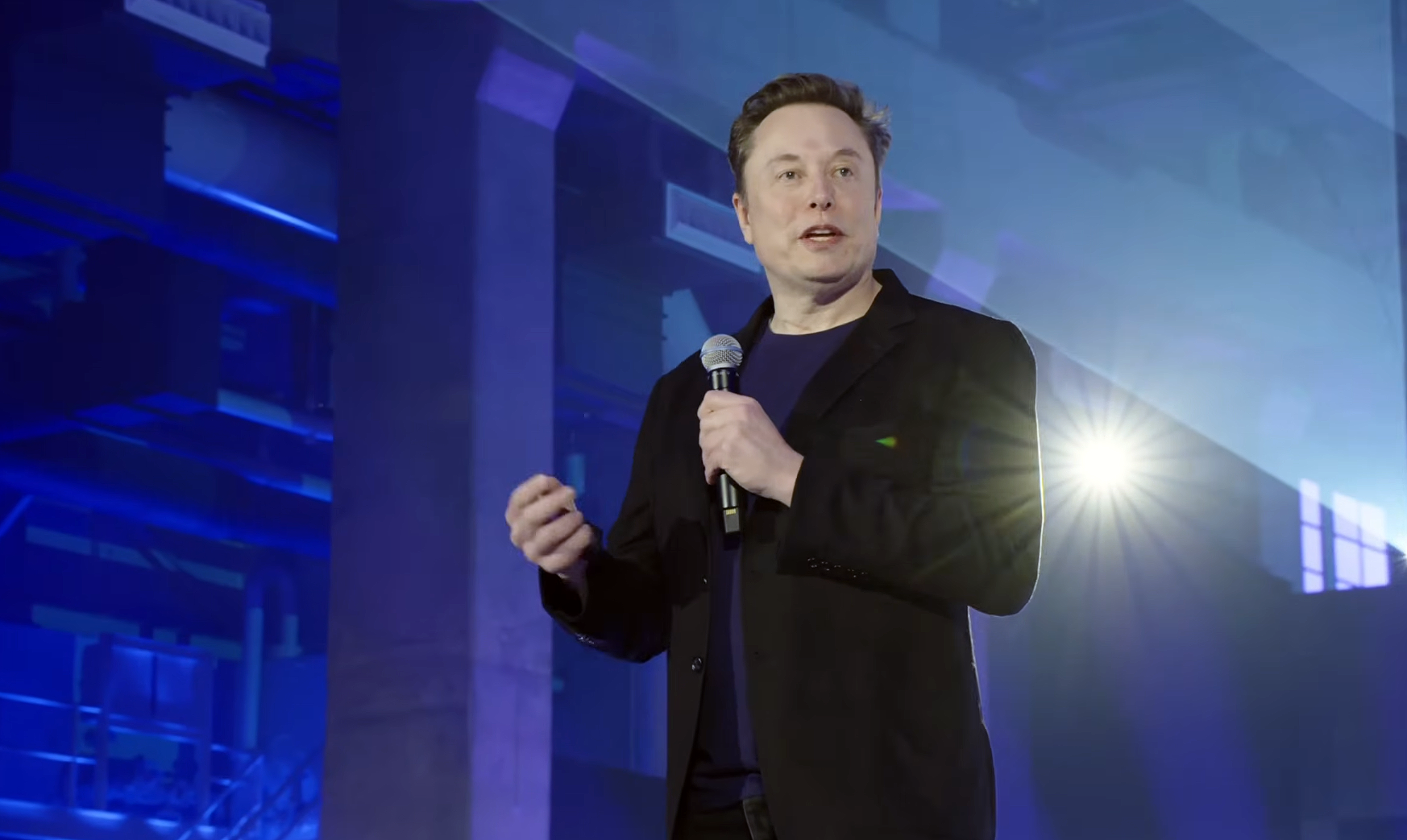
Elon Musk at Terafab keynote

Musk’s Terafab might be his most technically difficult challenge yet

One does not simply start fabricating semiconductors.

tech

Alphabet’s drone delivery startup, Wing, expands service to the Bay Area

Move over Waymo — another one of Alphabet’s “Other Bets” is expanding. Drone delivery company Wing said Monday it’s bringing its “ultra-fast residential drone delivery service” to the Bay Area, where autonomous ride-hailing service Waymo also has a sizable presence.

Latest Stories

Sherwood Media, LLC produces fresh and unique perspectives on topical financial news and is a fully owned subsidiary of Robinhood Markets, Inc., and any views expressed here do not necessarily reflect the views of any other Robinhood affiliate, including Robinhood Markets, Inc., Robinhood Financial LLC, Robinhood Securities, LLC, Robinhood Crypto, LLC, Robinhood Derivatives, LLC, or Robinhood Money, LLC. Futures and event contracts are offered through Robinhood Derivatives, LLC.