
Tech
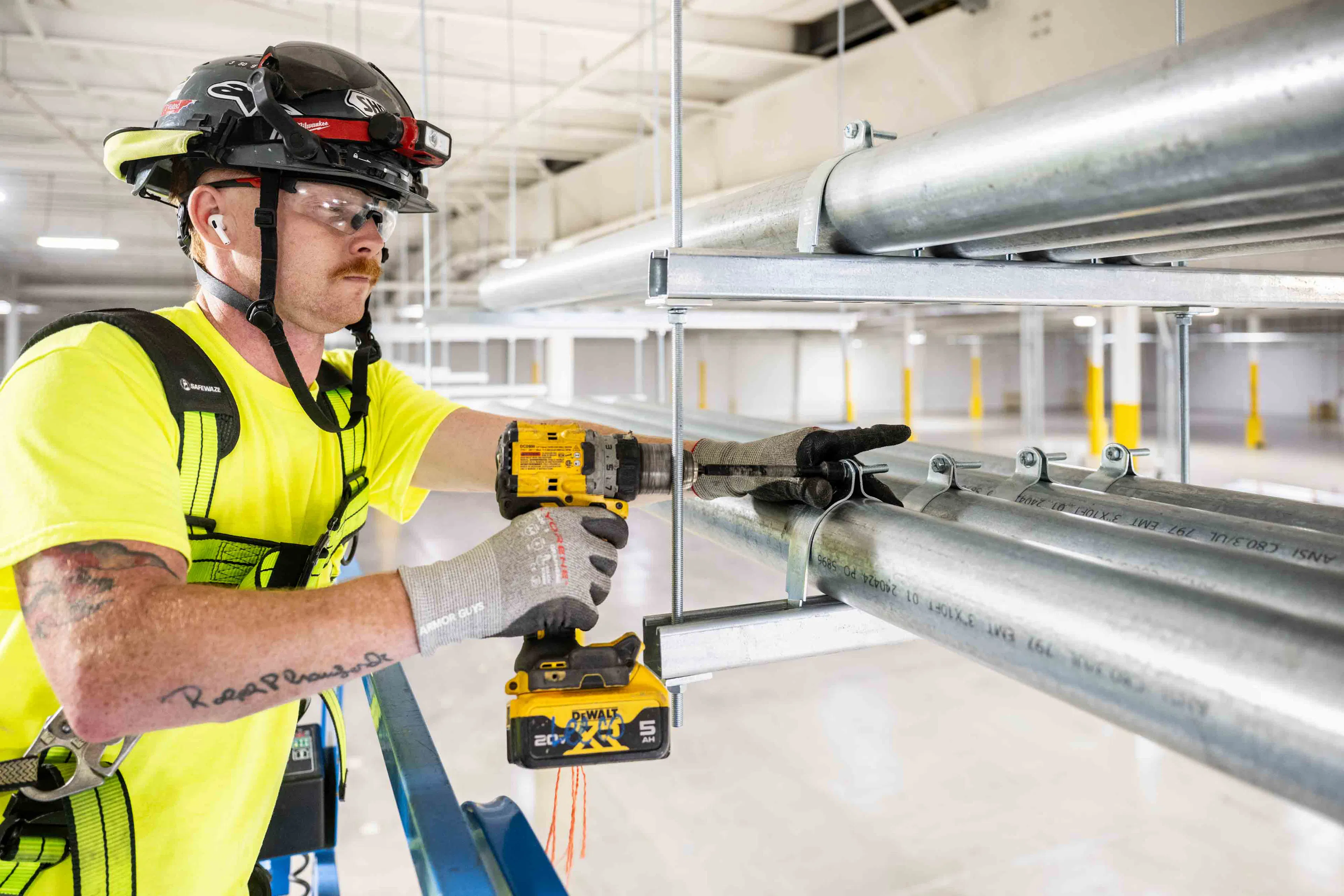
Person working at Lyft Nashville warehouse
Lyft

Lyft is building the infrastructure robotaxis can’t avoid

The ride-hailing company is building an 80,000-square-foot Nashville warehouse where humans will help robotaxis with everything but driving.

Lyft is leaning into a less flashy but increasingly essential part of the robotaxi race: everything that happens off the road.

Today Lyft gave new details about how exactly it plans to manage Google’s Waymo fleet for their partnership in Nashville.

Lyft’s Flexdrive unit is constructing an 80,000-square-foot facility — roughly the size of 1.5 football fields — slated to open this fall that will service, charge, and maintain Waymo’s autonomous vehicles. The depot, purpose-built for AVs, is designed to keep hundreds of cars on the road as much as possible, handling the unglamorous but critical work of cleaning, charging, storage, and repairs. As the fleet scales, Lyft will add satellite charging and cleaning sites around the city to help speed up turnaround times and keep wait times low.

The facility also highlights how important a human workforce remains to these self-driving cars. Lyft is hiring more than 70 workers in Nashville this year, including technicians, operations managers, and fleet coordinators. It is specifically drawing from its existing driver pool: its first hire, Jonathan, has driven for Lyft for over 10 years. Nationally, more than a third of Flexdrive’s workforce are former ride-share drivers. Similarly, some of Tesla’s Robotaxi safety monitors previously worked in the company’s factories.

Lyft’s warehouse news also outlines a broader shift in the economics of ride-hailing in the age of self-driving cars. Even without drivers, robotaxis come with significant logistical and capital demands for companies, compared with traditional gig platforms, which relied on workers to drive, service, and fuel their own vehicles. Autonomous fleets need to be charged, cleaned, repaired, and repositioned constantly to maximize utilization.

That dynamic is driving a strategic split among the biggest players. The Financial Times today estimated that Uber has committed more than $10 billion to robotaxis, including buying vehicles and investing in manufacturers — marking a massive move away from its asset-light roots.

Lyft, by contrast, is focusing less on owning the cars and more on operating the systems around them, positioning itself as the essential back-end partner to companies like Waymo.


More Tech

See all Tech
$1

Barclays says autonomous couriers — think sidewalk robots and drones — could push delivery costs down to as little as $1 per order, from between $5 and $7 today and closer to $9 for traditional deliveries in high-labor-cost markets. If robots save $4 on every delivery, and enough companies start using them, the food delivery industry, including companies like DoorDash and Uber, could end up with $16 billion in extra profit every year, according to Barclays.

The catch: we’re nowhere near that world yet. Robots and drones handle less than 1% of deliveries today. Even by 2035, Barclays only sees penetration hitting around 10%.

Google’s Wing and Amazon have also been trying to crack last-mile product delivery — a reminder that this is part of a broader race to automate the most expensive leg of e-commerce.

$10B

Uber has long had an asset-light business model: it provided the ride-hailing platform, and its contract workers brought their own vehicles. That’s changing as Uber positions itself at the center of the robotaxi era.

The Financial Times estimates that Uber has committed more than $10 billion to buying robotaxi fleets ($7.5 billion) and investing in the companies that make them ($2.5 billion). That includes yesterday’s announcement that its expanding its investment in Lucid, a deal worth about $2 billion, with plans to buy 35,000 vehicles.

This shift pits Uber against industry leaders like Google’s Waymo and Tesla, whose models involve company-owned vehicles running on proprietary platforms. While these autonomous fleets eliminate the need for drivers, they introduce new capital-intensive requirements for charging, cleaning, storage, and repair.

tech

Report: US Treasury wants to get a look at Anthropic’s Mythos model

Anthropic’s relationship with the US government is complicated — and the Treasury Department is reportedly looking to make it even more so.

The Pentagon has officially deemed the startup a national security supply chain risk after it refused to allow its Claude AI to be used for any and all national security applications, including domestic surveillance and autonomous killing.

But since Anthropic’s unusual announcement of its next model, Mythos, other parts of the US government want to get their hands on it.

Bloomberg reports that the US Treasury is interested in getting access to Mythos for its own security testing. Last week, Treasury Secretary Scott Bessent summoned top Wall Street CEOs to Washington to discuss the cybersecurity implications of the new model.

Mythos has not yet been released to the public, as Anthropic has deemed its potential offensive cybersecurity capabilities to be too dangerous for wide release, and has opted to share the powerful new model only with a group of leading tech companies.

Anthropic wants these early access partners to test out the model, hoping to secure any major vulnerabilities before a public release. OpenAI also shared a forthcoming AI-powered cybersecurity tool with a select group of partners to shore up defenses in light of advances in detecting vulnerabilities.

European regulators were apparently left out of the loop from the Mythos announcement, and are also eager to test the new model.

But since Anthropic’s unusual announcement of its next model, Mythos, other parts of the US government want to get their hands on it.

Bloomberg reports that the US Treasury is interested in getting access to Mythos for its own security testing. Last week, Treasury Secretary Scott Bessent summoned top Wall Street CEOs to Washington to discuss the cybersecurity implications of the new model.

Mythos has not yet been released to the public, as Anthropic has deemed its potential offensive cybersecurity capabilities to be too dangerous for wide release, and has opted to share the powerful new model only with a group of leading tech companies.

Anthropic wants these early access partners to test out the model, hoping to secure any major vulnerabilities before a public release. OpenAI also shared a forthcoming AI-powered cybersecurity tool with a select group of partners to shore up defenses in light of advances in detecting vulnerabilities.

European regulators were apparently left out of the loop from the Mythos announcement, and are also eager to test the new model.

Latest Stories

Sherwood Media, LLC produces fresh and unique perspectives on topical financial news and is a fully owned subsidiary of Robinhood Markets, Inc., and any views expressed here do not necessarily reflect the views of any other Robinhood affiliate, including Robinhood Markets, Inc., Robinhood Financial LLC, Robinhood Securities, LLC, Robinhood Crypto, LLC, Robinhood Derivatives, LLC, or Robinhood Money, LLC. Futures and event contracts are offered through Robinhood Derivatives, LLC.
