Tech
Meta layoffs
Sherwood News

Meta is cutting 5% of its workforce, extending its AI-driven efficiency era

Two weeks ago, Mark Zuckerberg told employees to “buckle up” for an “intense” year. It’s starting with more job cuts.

Less than two weeks after reporting that the company had grown its headcount in 2024, Meta is doubling down once again on its efficiency-first ways. As of Monday morning, the Facebook parent company began its latest round of company-wide layoffs, with plans to trim 5% of its workforce in total — the equivalent of ~3,700 employees.

While its full-year report outlined a 10% increase in headcount from the year prior, totaling 74,067 workers, Meta has been explicit in its intentions to keep focusing on streamlining its business following its “year of efficiency” in 2023, which saw 19,000 jobs cut after a post-Covid hiring boom. Now, with plans to continue to make headway on “AI, glasses, and the future of social media,” an array of positions are at risk of becoming obsolete amidst the push.

Though these cuts were focused on “low-performers,” Business Insider is reporting that some employees who said they had “received positive performance ratings in their midyear reviews” were also let go.

Meta’s expansion last year was largely driven by its strategy shift toward generative AI, as Big Tech companies gear up to gain ground in the space in 2025. On the earnings call, CEO Mark Zuckerberg said that “a lot” of new headcount growth is going toward “investing aggressively” in AI initiatives, with nearly 90% of year-over-year headcount growth in Q4 being in the R&D space, adding, “How well we execute on this will also determine our financial trajectory over the next few years.”

More Tech

See all Tech
tech

Tesla’s 45 Austin Robotaxis now have 14 crashes on the books since launching in June

Since launching in June 2025, Tesla’s 45 Austin Robotaxis have been involved in 14 crashes, per Electrek reporting citing National Highway Traffic Safety Administration data.

Electrek analysis found that the vehicles have traveled roughly 800,000 paid miles in that time period, amounting to a crash every 57,000 miles. According to the NHTSA, US drivers crash once every 500,000 miles on average.

The article says Tesla submitted five new crash reports in January of this year that happened in December and January. Electrek wrote:

“The new crashes include a collision with a fixed object at 17 mph while the vehicle was driving straight, a crash with a bus while the Tesla was stationary, a collision with a heavy truck at 4 mph, and two separate incidents where the Tesla backed into objects, one into a pole or tree at 1 mph and another into a fixed object at 2 mph.”

Tesla updated a previously reported crash that was originally filed as only having damaged property to include a passenger’s hospitalization.

Last month, Tesla shares climbed after CEO Elon Musk said in a post on X that the company’s Austin Robotaxis had begun operating without a safety monitor.

The article says Tesla submitted five new crash reports in January of this year that happened in December and January. Electrek wrote:

“The new crashes include a collision with a fixed object at 17 mph while the vehicle was driving straight, a crash with a bus while the Tesla was stationary, a collision with a heavy truck at 4 mph, and two separate incidents where the Tesla backed into objects, one into a pole or tree at 1 mph and another into a fixed object at 2 mph.”

Tesla updated a previously reported crash that was originally filed as only having damaged property to include a passenger’s hospitalization.

Last month, Tesla shares climbed after CEO Elon Musk said in a post on X that the company’s Austin Robotaxis had begun operating without a safety monitor.

tech
Jon Keegan

Ahead of IPO, Anthropic adds veteran executive and former Trump administration official to board

Anthropic is moving to put the pieces in place for a successful IPO this year.

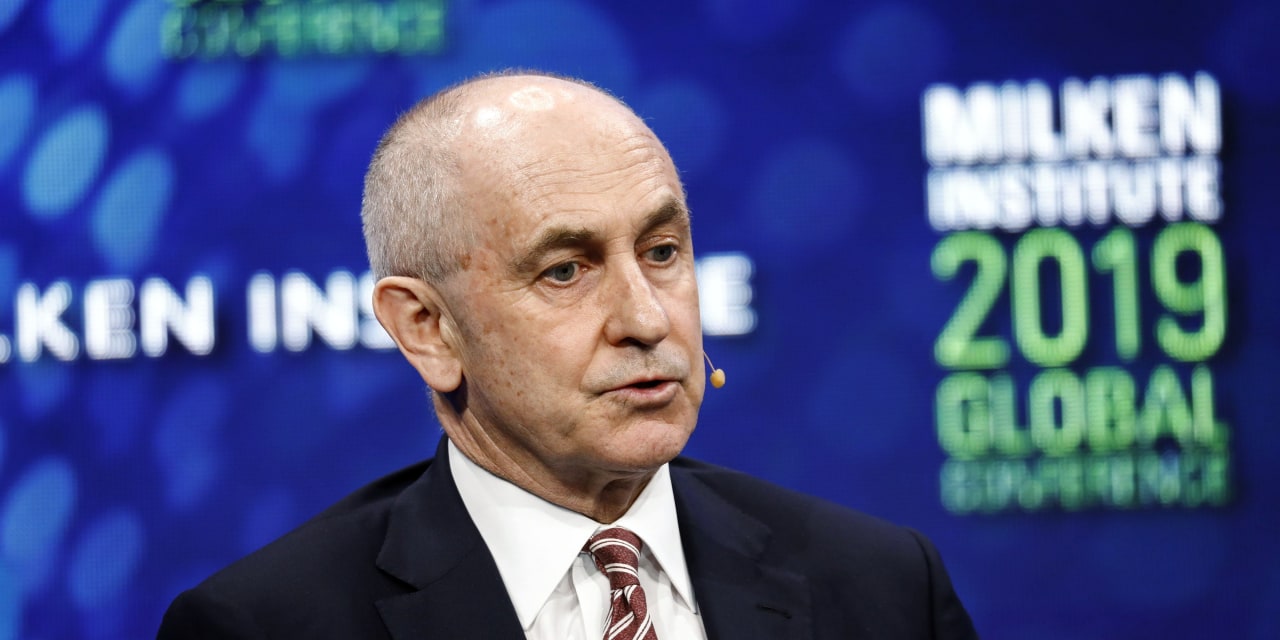
Today, the company announced that Chris Liddel would join its board of directors.

Liddel is an seasoned executive who previously served as CFO for Microsoft, GM, and International Paper.

Liddel also comes with experience in government, having served as the deputy White House chief of staff during the first Trump administration.

Ties to the Trump world could be helpful for Anthropic as it pushes to enter the public market. Its reportedly not on the greatest terms with the current administration, as the startup has pushed back on using its Claude AI for surveillance applications.

Liddel is an seasoned executive who previously served as CFO for Microsoft, GM, and International Paper.

Liddel also comes with experience in government, having served as the deputy White House chief of staff during the first Trump administration.

Ties to the Trump world could be helpful for Anthropic as it pushes to enter the public market. Its reportedly not on the greatest terms with the current administration, as the startup has pushed back on using its Claude AI for surveillance applications.

tech
Rani Molla

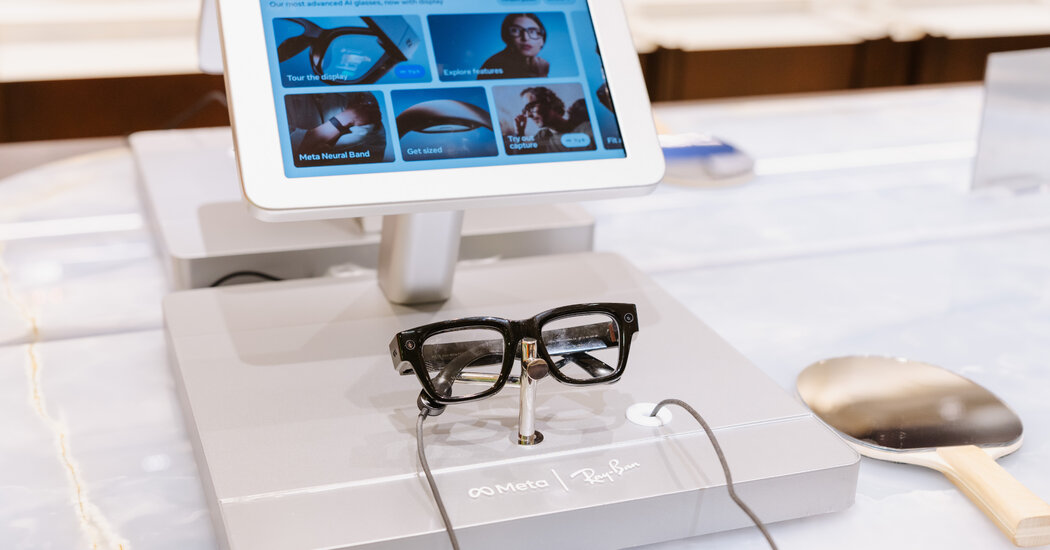
Meta is bringing back facial recognition for its smart glasses

Meta is reviving its highly controversial facial recognition efforts, with plans to incorporate the tech into its smart glasses as soon as this year, The New York Times reports.

In 2021, around the time Facebook rebranded as Meta, the company shut down the facial recognition software it had used to tag people in photos, saying it needed to “find the right balance.”

Now, according to an internal memo reviewed by the Times, Meta seems to feel that it’s at least found the right moment, noting that the fraught and crowded political climate could allow the feature to attract less scrutiny.

“We will launch during a dynamic political environment where many civil society groups that we would expect to attack us would have their resources focused on other concerns,” the document reads.

The tech, called “Name Tag” internally, would let smart glass wearers identify and surface information about people they see with the glasses by using Meta’s artificial intelligence assistant.

Now, according to an internal memo reviewed by the Times, Meta seems to feel that it’s at least found the right moment, noting that the fraught and crowded political climate could allow the feature to attract less scrutiny.

“We will launch during a dynamic political environment where many civil society groups that we would expect to attack us would have their resources focused on other concerns,” the document reads.

The tech, called “Name Tag” internally, would let smart glass wearers identify and surface information about people they see with the glasses by using Meta’s artificial intelligence assistant.

Latest Stories

Sherwood Media, LLC produces fresh and unique perspectives on topical financial news and is a fully owned subsidiary of Robinhood Markets, Inc., and any views expressed here do not necessarily reflect the views of any other Robinhood affiliate, including Robinhood Markets, Inc., Robinhood Financial LLC, Robinhood Securities, LLC, Robinhood Crypto, LLC, or Robinhood Money, LLC.