

Tech
tech

Morgan Stanley says robotaxis could help Tesla sell more cars

Morgan Stanley analysts think Tesla’s robotaxi push could boost more than just a new business line — it could help sell more cars and software, too.

After visiting Giga Texas, analysts said they’re more optimistic about Tesla’s progress toward an unsupervised robotaxi rollout, with improvements in tricky pickup and drop-off scenarios where Tesla doesn’t have as much data from consumer usage. For now, the vast majority of its vehicles still have human supervisors in the front seat, but the analysts say the service is helping Tesla.

“Incremental unsupervised robotaxi miles driven improve the underlying autonomy model, which accelerates the path to personal unsupervised FSD [Full Self-Driving]. This, in turn supports higher FSD attach rates, improves auto demand, and cash flow generation.”

In other words, the more robotaxis drive, the better Tesla’s self-driving gets — and that could make its Full Self-Driving software more appealing and its cars easier to sell, in addition to improving its robotaxi service. Note that Tesla’s vehicle deliveries, which accounts for the lion’s share of the company’s revenue, have dropped two years in a row.

Morgan Stanley also sees a cost advantage. It estimates Tesla’s robotaxis could cost about $0.81 per mile to run today — cheaper than traditional ride-hailing and rival autonomous services — with costs falling further as purpose-built vehicles like the Cybercab scale.

Morgan Stanley maintained its equal-weight rating and $415 price target, about 4% above where the stock is currently trading.
More Tech

See all Tech
tech

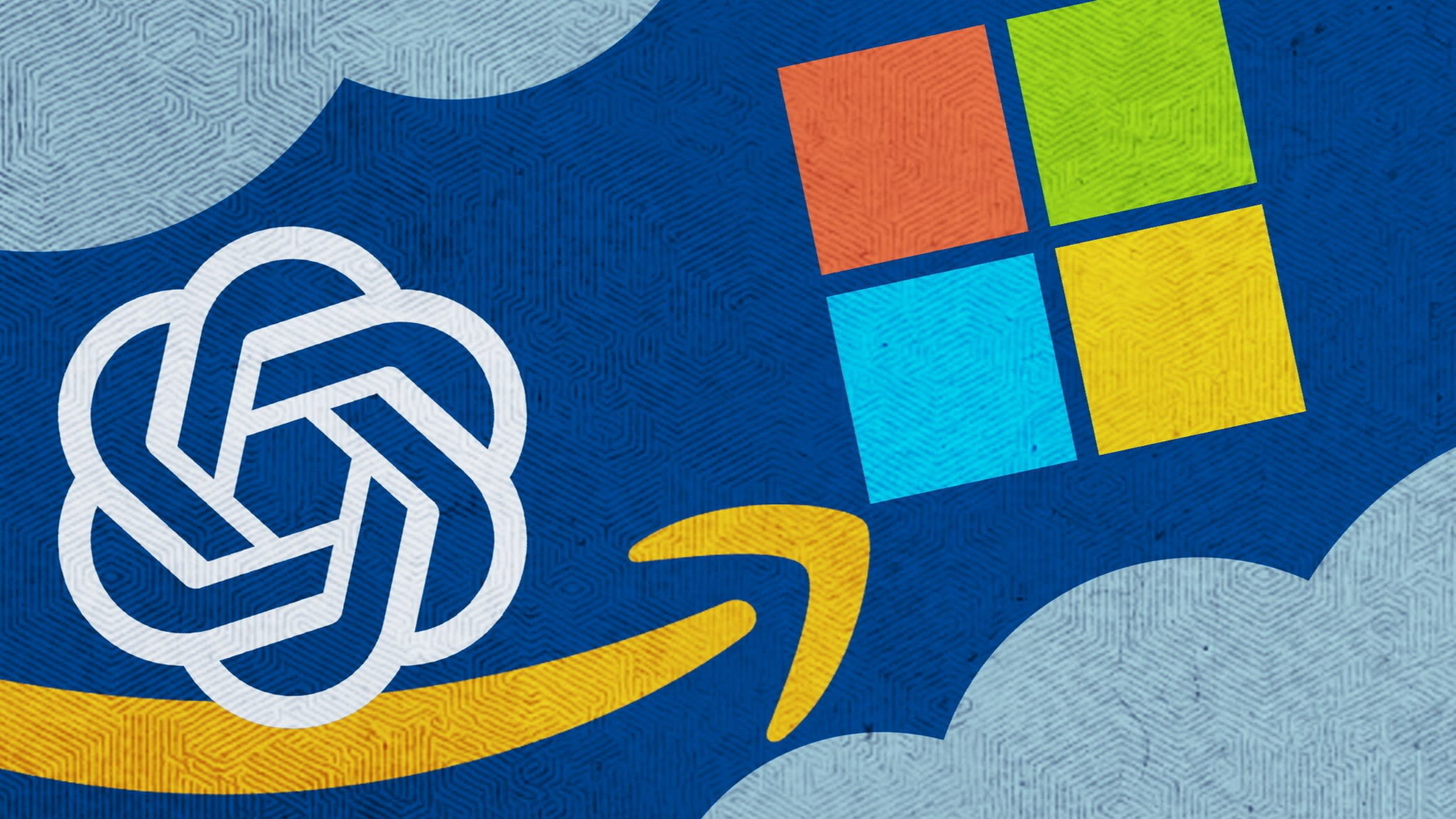
Microsoft considers suing Amazon and OpenAI over $50 billion deal

Microsoft may be about to take its biggest AI partner to court, the Financial Times reports.

Microsoft, a longtime backer of OpenAI, is weighing legal action over the latter’s $50 billion deal with Amazon tied to its new Frontier AI product, arguing it could violate a key clause in their exclusive cloud deal requiring OpenAI’s models to run through Azure. Amazon and OpenAI say they’ve found a workaround. Microsoft executives disagree.

“We know our contract,” a source told the FT. “We will sue them if they breach it. If Amazon and OpenAI want to take a bet on the creativity of their contractual lawyers, I would back us, not them.”

OpenAI, which is eyeing an IPO this year and under pressure to generate more revenue, is trying to loosen Microsoft’s grip as it scales, while Microsoft increasingly sees OpenAI as both a partner and competitor.

“We know our contract,” a source told the FT. “We will sue them if they breach it. If Amazon and OpenAI want to take a bet on the creativity of their contractual lawyers, I would back us, not them.”

OpenAI, which is eyeing an IPO this year and under pressure to generate more revenue, is trying to loosen Microsoft’s grip as it scales, while Microsoft increasingly sees OpenAI as both a partner and competitor.

$600B

Amazon CEO Andy Jassy told employees at an all-hands meeting on Tuesday that he sees AI growing AWS sales to $600 billion a year by 2036, Reuters reports — double his prior estimate and more than 4x last year’s revenue.

Shares of Amazon, which were already up for the day, moved modestly higher on the heels of the report.

tech
Jon Keegan

OpenAI snags Amazon AWS deal for classified government work with Anthropic pushed aside

Following Anthropic being deemed a “supply chain risk” to national security, the field is clear for OpenAI. The Information is reporting that OpenAI just landed a deal with Amazon AWS to sell its AI services to government employees for both classified and unclassified work.

Previously, OpenAI was contractually obliged to use Microsoft Azure cloud hosting for the government contracts it handled as part of its $13 billion deal with the software giant, but since it restructured as a for-profit public benefit corporation and renegotiated the terms of the deal, OpenAI is free to use AWS, which is more commonly used in government work.

According to the report, contracts that sell AI services through another company like Amazon can be much larger then direct contracts with the government, which is crucial for OpenAI as it chases the success that Anthropic has had with enterprise customers.

Previously, OpenAI was contractually obliged to use Microsoft Azure cloud hosting for the government contracts it handled as part of its $13 billion deal with the software giant, but since it restructured as a for-profit public benefit corporation and renegotiated the terms of the deal, OpenAI is free to use AWS, which is more commonly used in government work.

According to the report, contracts that sell AI services through another company like Amazon can be much larger then direct contracts with the government, which is crucial for OpenAI as it chases the success that Anthropic has had with enterprise customers.

tech
Rani Molla

Morgan Stanley thinks Tesla’s Terafab could cost an additional $35 billion to $45 billion in capex

Tesla’s Terafab project, which CEO Elon Musk said could launch this week, is poised to be one of the company’s most expensive bets yet. The facility is intended to manufacture the chips needed for Tesla’s autonomous vehicles and humanoid robots, and to avoid supply bottlenecks.

If the company reaches its long-term goal of producing 100 million humanoid robots annually, it could require more than 200 million chips a year — over 50x its current demand, Morgan Stanley said.

The firm estimates total capital expenditure for the facility could reach $35 billion to $45 billion, including construction costs and roughly $20 billion to $25 billion for wafer fabrication equipment alone. That spending is not included in Tesla’s already sizable $20 billion capex budget for this year. Morgan Stanley’s semiconductor analysts described the effort as a “Herculean task,” noting the difficulty of building leading-edge chip capabilities from scratch.

While Tesla would likely spread the investment out over several years — even on an aggressive timeline, initial output would likely not arrive until the latter part of the decade — the effort would still weigh heavily on free cash flow and mark a shift toward a more capital-intensive business model.

Tesla’s most expensive factory to date, its Nevada battery plant that it began building in 2014, is estimated to have cost about $10 billion over time — a fraction of the expected Terafab cost.

Latest Stories

Sherwood Media, LLC produces fresh and unique perspectives on topical financial news and is a fully owned subsidiary of Robinhood Markets, Inc., and any views expressed here do not necessarily reflect the views of any other Robinhood affiliate, including Robinhood Markets, Inc., Robinhood Financial LLC, Robinhood Securities, LLC, Robinhood Crypto, LLC, Robinhood Derivatives, LLC, or Robinhood Money, LLC. Futures and event contracts are offered through Robinhood Derivatives, LLC.