

Tech
tech
Rani Molla

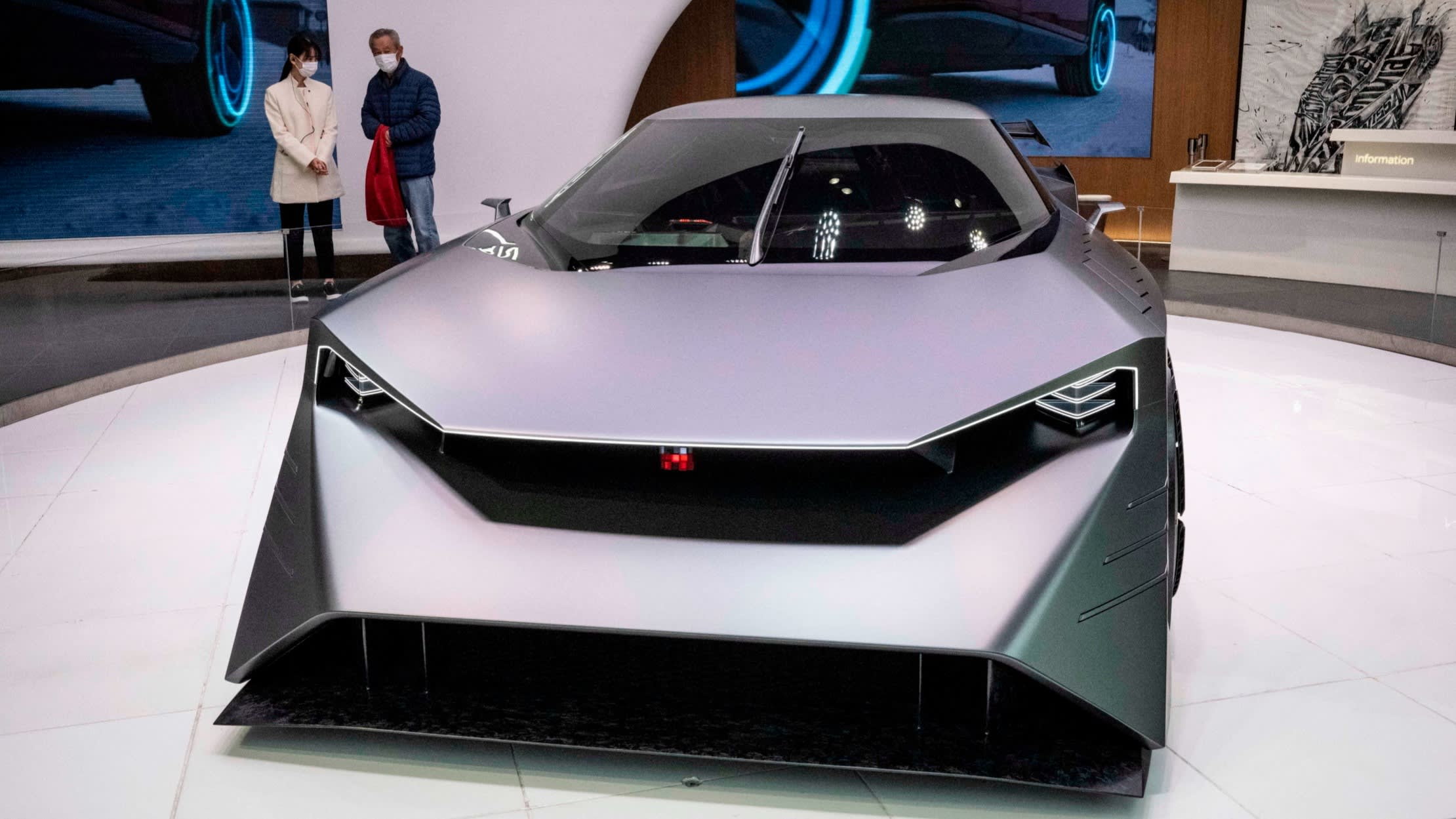
Nissan is interested in selling Tesla its factories. Tesla probably isn’t.

A Japanese group plans on approaching Tesla about investing in Nissan, the Financial Times reports, in hopes the American electric vehicle maker will want to get its hands on more American factories.

“The group is hopeful Tesla will become a strategic investor since they believe the world’s largest pure electric-vehicle maker is keen to acquire Nissan’s plants in the US, according to the people. The factories would help it boost domestic manufacturing in response to Donald Trump’s tariff threats.”

Tesla’s stock is down more than 3% today, while Nissan’s is up nearly 6%.

The problem with the proposal is that Tesla makes a big deal about how special its factories are. Indeed, it’s one of the many reasons besides its cars that Tesla gives for the company’s insane valuation.

As CEO Elon Musk said in response to the report today, “The Tesla factory IS the product.”

Musk has promised to outfit his car factories with thousands of its humanoid Optimus robots this year, to do everything from transporting metal to welding.

Last year, after Tesla unveiled the Cybercab, Musk noted on an earnings call:

“With respect to the Cybercab: it’s not just a revolutionary vehicle design, but a revolution in vehicle manufacturing that is also coming with the Cybercab. The cycle time, like the units per hour of the Cybercab line, it is just really something special. I mean, this is going to be half an order of magnitude better than other car manufacturing lines not — like not even the same league... I said several years ago, maybe the hardest Tesla product to copy will be the factory.”

While Nissan’s US factories could certainly help Tesla with tariff trouble, buying into ordinary car factories would hurt Tesla’s narrative that its factories are one of a kind.

“The group is hopeful Tesla will become a strategic investor since they believe the world’s largest pure electric-vehicle maker is keen to acquire Nissan’s plants in the US, according to the people. The factories would help it boost domestic manufacturing in response to Donald Trump’s tariff threats.”

Tesla’s stock is down more than 3% today, while Nissan’s is up nearly 6%.

The problem with the proposal is that Tesla makes a big deal about how special its factories are. Indeed, it’s one of the many reasons besides its cars that Tesla gives for the company’s insane valuation.

As CEO Elon Musk said in response to the report today, “The Tesla factory IS the product.”

Musk has promised to outfit his car factories with thousands of its humanoid Optimus robots this year, to do everything from transporting metal to welding.

Last year, after Tesla unveiled the Cybercab, Musk noted on an earnings call:

“With respect to the Cybercab: it’s not just a revolutionary vehicle design, but a revolution in vehicle manufacturing that is also coming with the Cybercab. The cycle time, like the units per hour of the Cybercab line, it is just really something special. I mean, this is going to be half an order of magnitude better than other car manufacturing lines not — like not even the same league... I said several years ago, maybe the hardest Tesla product to copy will be the factory.”

While Nissan’s US factories could certainly help Tesla with tariff trouble, buying into ordinary car factories would hurt Tesla’s narrative that its factories are one of a kind.

More Tech

See all Tech
tech

Palo Alto Networks surges after it beats revenue and earnings estimates

Cybersecurity firm Palo Alto Networks jumped more than 10% in postmarket trading after reporting fiscal third-quarter results that beat analyst revenue and earnings expectations.

The company posted adjusted earnings per share of $0.85, versus the FactSet analyst consensus estimate of $0.79 on $3 billion in revenue. (Wall Street had expected $2.94 billion.)

The company also boosted its guidance for the full fiscal year. The company now expects non-GAAP EPS in the range of $3.77 to $3.79, compared to its previous projection of $3.65 to $3.70 (and analysts’ expectations of $3.68). It also forecast revenue of $11.415 billion to $11.425 billion, representing year-over-year growth of 24%, compared to previous growth expectations of 22% to 23%.

Through Tuesday’s close, the stock had risen more than 60% in the past month.

tech

Microsoft releases 7 new models, next-gen quantum chip at Build conference

Microsoft is making it clear it can stand on its own as a competitor in the AI arena.

Today at its annual Microsoft Build developer conference, the company made a flurry of announcements that move it further away from the shadow of its complicated relationship with partner OpenAI.

Among the products announced:

  • New Nvidia-powered Windows PCs: the Surface Laptop Ultra and Surface RTX Spark Dev Box.

  • Seven new homegrown AI models: MAI Image-2.5, MAI Image-2.5-Flash, MAIN Transcribe-1.5, MAI Thinking-1, MAI Voice-2, MAIN Voice-2-Flash, and MAI Code-1-Flash.

  • Majorana 2, the company’s next-gen quantum chip.

  • Microsoft Scout, an integrated always-on agent built on OpenClaw.

  • Project Solara, an AI gadget operating system.

Investors were unimpressed, however, as shares were down over 4% after the announcements.

  • New Nvidia-powered Windows PCs: the Surface Laptop Ultra and Surface RTX Spark Dev Box.

  • Seven new homegrown AI models: MAI Image-2.5, MAI Image-2.5-Flash, MAIN Transcribe-1.5, MAI Thinking-1, MAI Voice-2, MAIN Voice-2-Flash, and MAI Code-1-Flash.

  • Majorana 2, the company’s next-gen quantum chip.

  • Microsoft Scout, an integrated always-on agent built on OpenClaw.

  • Project Solara, an AI gadget operating system.

Investors were unimpressed, however, as shares were down over 4% after the announcements.

tech

Amazon’s Prime Day is coming early this year

Amazon is moving its four-day Prime Day event up from July, where it’s been for the last five years, to June 23 through 26.

The retail giant cites scheduling clashes with the FIFA World Cup and the 250th anniversary of the signing of the Declaration of Independence as reasons for the move. Prime Day is one of Amazon’s biggest sales events of the year, helping drive $24.1 billion in US online spending last year, according to Adobe Analytics.

More concretely, the move means Amazon will pull a massive chunk of sales from one of its biggest events into Q2, which ends June 30, rather than Q3.

Beyond the top-line revenue shift, Amazon is also using the event to flex its newer strategic muscles, aggressively cross-promoting its same-day grocery delivery networks and its Amazon Haul discount storefront.

tech

Tesla’s China-made EV sales grew 39% in May, marking 7 straight months of growth

Sales of Tesla vehicles made at its Shanghai plant — produced for China, Europe, and other international markets — grew 39% in May to 85,982 vehicles, a record for the year.

The data marks the company’s seventh straight month of year-over-year wholesale growth for made-in-China vehicles and the company’s continued stabilization overseas. Across the entire Chinese auto industry, overall wholesale volume of so-called new energy vehicles — EVs and hybrids — produced domestically grew 12% from May 2025.

The China Passenger Car Association will report China-only sales later this month, offering a clearer picture of performance in Tesla’s second-largest market. On Monday, several European markets posted year-over-year sales growth for Tesla.

The China Passenger Car Association will report China-only sales later this month, offering a clearer picture of performance in Tesla’s second-largest market. On Monday, several European markets posted year-over-year sales growth for Tesla.

tech

Alphabet announces $80 billion equity raise to fund AI infrastructure, including a $10 billion bet from Berkshire Hathaway

To fund its rapidly expanding AI infrastructure push, Alphabet just announced a whopping $80 billion equity capital raise.

While concerns over share dilution sent the stock down slightly after-hours, the deal secured a major anchor partner: Berkshire Hathaway, which is backing the offering with a $10 billion investment. (Berkshire was run by Warren Buffett until he stepped down as CEO at the beginning of this year, handing the reins to Greg Abel.)

Alphabet plans to spend up to $190 billion on capex this year.

Latest Stories

Sherwood Media, LLC and Chartr Limited produce fresh and unique perspectives on topical financial news and are fully owned subsidiaries of Robinhood Markets, Inc., and any views expressed here do not necessarily reflect the views of any other Robinhood affiliate, including Robinhood Markets, Inc., Robinhood Financial LLC, Robinhood Securities, LLC, Robinhood Crypto, LLC, Robinhood Money, LLC, Robinhood U.K. Ltd, Robinhood Derivatives, LLC, Robinhood Gold, LLC, Robinhood Asset Management, LLC, Robinhood Credit, Inc., Robinhood Ventures DE, LLC and, where applicable, its managed investment vehicles.
