Tech
Nobel efforts: Sequencing human genomes is getting cheaper

Nobel efforts: Sequencing human genomes is getting cheaper

Nobel efforts

Svante Pääbo, a Swedish scientist, has won the Nobel Prize for his reconstruction of a full genome for Neanderthals and other extinct hominins. Pääbo's prize, officially the Nobel Prize in Physiology or Medicine, carried a 10m Swedish Kronor prize (~$920k USD) and was the first of six awards that are being announced this week. The impressive work, which saw Pääbo pioneer methods to extract and analyze DNA from Neanderthal bones, is experimentation that will hopefully get easier over time, as the cost of genome sequencing continues to fall.

Indeed, Illumina — a company which has some 80% share of the global gene sequencing market — unveiled two new sequencing instruments this week. The company claims these tools will bring the cost of sequencing a full genome to less than $240 and give the company capacity to sequence ~20,000 genomes a year, up from 7,500. Tell those numbers to a scientist from the year 2000, when one human genome sequence would cost close to $100m, and they'd likely laugh you out of the lab.

The whole gene

What about that at-home DNA test kit you bought online? That only takes a snippet, usually around 0.02% of your DNA, using clues to predict your disease risks and ancestry.

Whole-genome sequencing, on the other hand, provides 4,000 times more data on your DNA than at-home tests, and is likely to lend a hand in major medical breakthroughs. The process helped the speedy creation of vaccines for Covid-19, can help the early detection of disease outbreaks, identify inherited disorders and even characterize genetic cell mutations in cancer patients.

More Tech

See all Tech
tech

Report: Some of Meta’s new AI models will eventually be open-source

Axios reports that Meta is close to releasing its first new AI models after setting up its “superintelligence” team led by former Scale.AI CEO Alexandr Wang, and some of the models will eventually be released with an open-source license.

Per the report, Meta sees an opportunity to focus on consumers, rather than the lucrative enterprise market that both OpenAI and Anthropic have been focusing on.

Meta had previously embraced open-source AI with its Llama models, with CEO Mark Zuckerberg writing a manifesto declaring open-source AI as “the path forward.” Axios says that Meta will be pursuing more of a hybrid strategy of proprietary and open-source models going forward.

The New York Times previously reported that Meta was delaying the launch of its new AI model because of performance issues.

Meta had previously embraced open-source AI with its Llama models, with CEO Mark Zuckerberg writing a manifesto declaring open-source AI as “the path forward.” Axios says that Meta will be pursuing more of a hybrid strategy of proprietary and open-source models going forward.

The New York Times previously reported that Meta was delaying the launch of its new AI model because of performance issues.

1328213286	CSA-Printstock

OpenAI’s plan for an AGI world: AI for all and a 4-day workweek

The company’s policy paper calls for a new social contract that includes AI at the center of everything, which could lower costs and create cures for diseases, but also warned it may upend the public safety net.

🏠 $2.15M

The median price for a house in San Francisco is now $2.15 million, jumping 18% from last year. The AI startup boom is pushing what was already one of the most expensive housing markets to dizzying new heights. The median price for condos in the city jumped 27% to reach $1.36 million, according to data from Compass, reported by Bloomberg.

tech

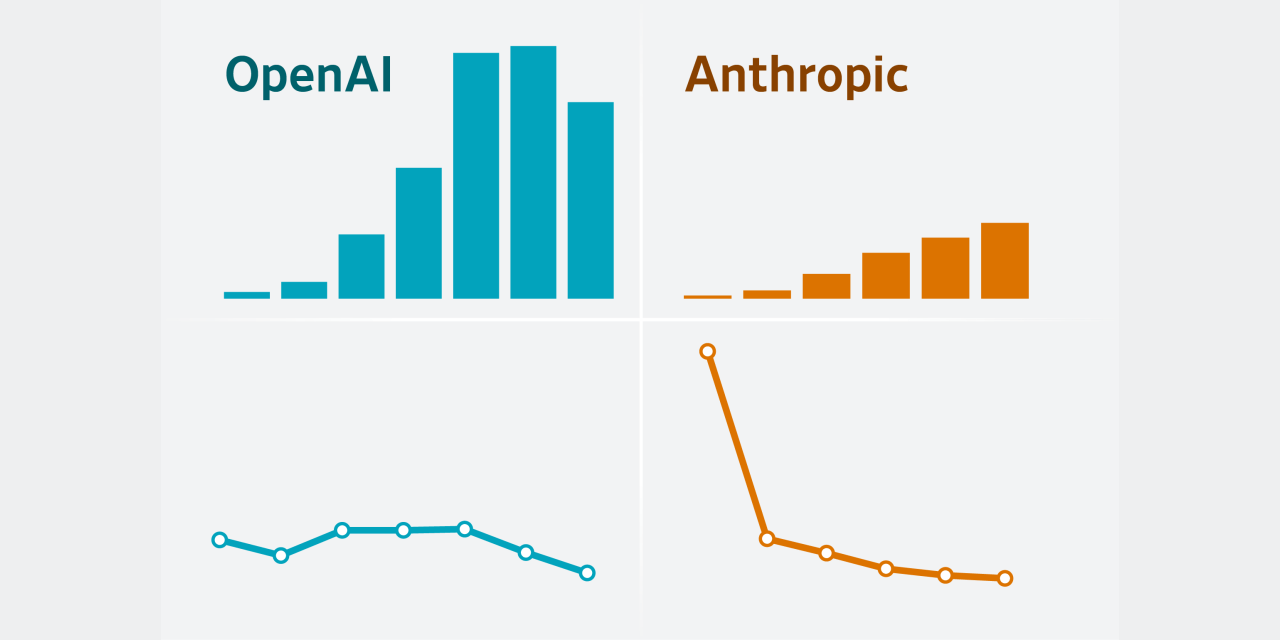
Report: OpenAI on track to burn $85 billion in 2028, expects profitability by 2030

Anthropic and OpenAI are racing to go public this year, and all eyes are on how long they can sustain burning billions in cash before they achieve something that looks like a viable business.

Investors have seen both companies’ projections, and there’s no sign of slowing down, according to a report from The Wall Street Journal.

OpenAI expects to burn tens of billions per year for the rest of the decade, peaking at $85 billion in 2028, before achieving profitability in 2030, per the report.

Anthropic will also continue to burn cash for years — far less than OpenAI — but it projects that 2026 will be its biggest year of losses. It targets 2029 for profitability, fueled by exploding enterprise revenue.

OpenAI expects to burn tens of billions per year for the rest of the decade, peaking at $85 billion in 2028, before achieving profitability in 2030, per the report.

Anthropic will also continue to burn cash for years — far less than OpenAI — but it projects that 2026 will be its biggest year of losses. It targets 2029 for profitability, fueled by exploding enterprise revenue.

Form Energy iron-air battery system leaving Form Factory 1

Big batteries are the newest answer to Big Tech’s big energy needs

America’s booming energy demand is creating a powerful case for large-scale energy storage.

Patrick Sisson4/2/26

Latest Stories

Sherwood Media, LLC produces fresh and unique perspectives on topical financial news and is a fully owned subsidiary of Robinhood Markets, Inc., and any views expressed here do not necessarily reflect the views of any other Robinhood affiliate, including Robinhood Markets, Inc., Robinhood Financial LLC, Robinhood Securities, LLC, Robinhood Crypto, LLC, Robinhood Derivatives, LLC, or Robinhood Money, LLC. Futures and event contracts are offered through Robinhood Derivatives, LLC.