

Tech
tech
Jon Keegan

Report: Huawei was slated to deliver the “full Chinese stack” for Malaysia’s sovereign AI

In the global race for AI, your “tech stack” really matters.

The “stack” refers to the different layers of technology that make up modern AI infrastructure.

To build your stack, you need to carefully choose each layer:

  • The data center (and its location);

  • The servers in the data centers;

  • The chips in the servers;

  • And the AI model and software tying it all together.

If you are a country seeking to build your own “sovereign AI” to reduce your dependence on other countries, you might want to source each layer of your AI stack domestically, or close to home.

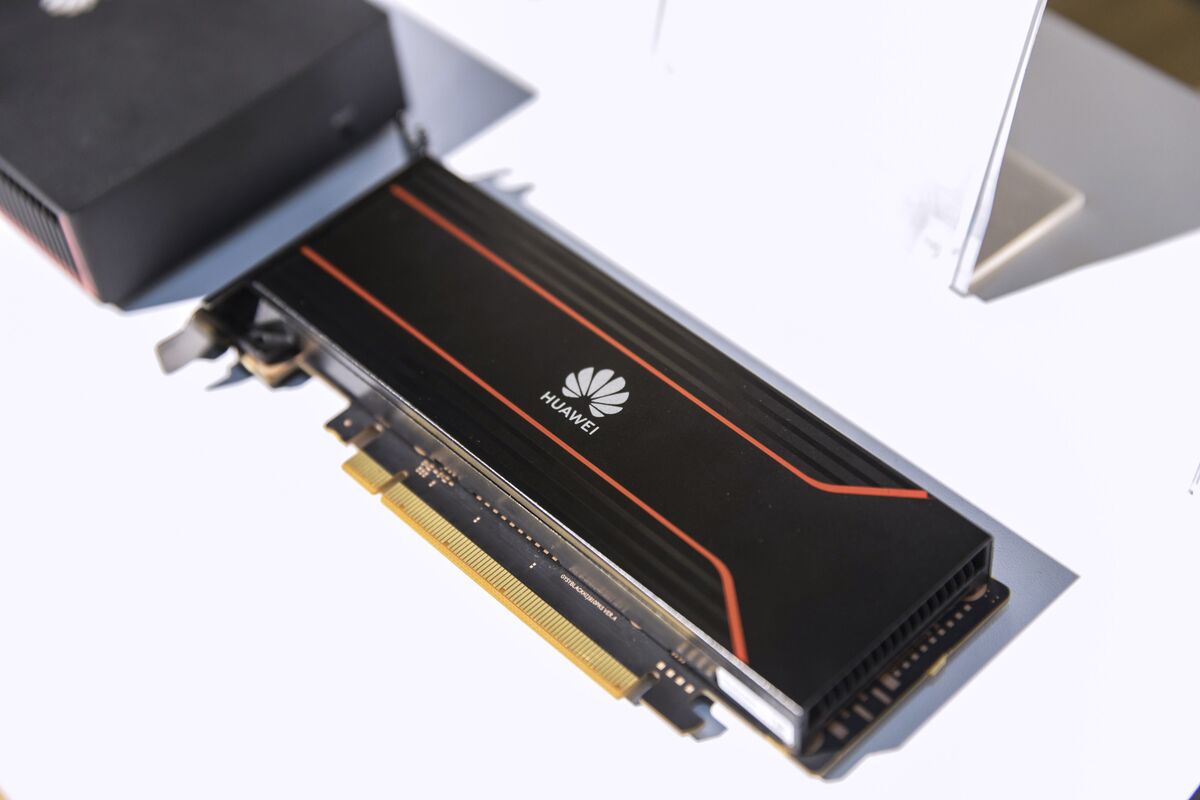
Bloomberg is reporting that Malaysia chose not to use the industry favorite Nvidia GPUs, but rather announced that it had selected China’s Huawei’s Ascend GPU-powered servers for the country’s Strategic Artificial Intelligence system, along with a version of the Chinese DeepSeek LLM.

This so-called “full Chinese stack” is something that the Trump administration and some tech leaders calling for the removal of US AI chip export controls have long feared.

David Sacks, the venture capitalist turned AI adviser to the Trump administration, tweeted:

“As I’ve been warning, the full Chinese stack is here. We rescinded the Biden Diffusion Rule just in time. The American AI stack needs to be unleashed to compete.”

After the White House got wind of the announcement, Bloomberg reports that Malaysia retracted the announcement, and Huawei denied any chip sales to Malaysia.
  • The data center (and its location);

  • The servers in the data centers;

  • The chips in the servers;

  • And the AI model and software tying it all together.

If you are a country seeking to build your own “sovereign AI” to reduce your dependence on other countries, you might want to source each layer of your AI stack domestically, or close to home.

Bloomberg is reporting that Malaysia chose not to use the industry favorite Nvidia GPUs, but rather announced that it had selected China’s Huawei’s Ascend GPU-powered servers for the country’s Strategic Artificial Intelligence system, along with a version of the Chinese DeepSeek LLM.

This so-called “full Chinese stack” is something that the Trump administration and some tech leaders calling for the removal of US AI chip export controls have long feared.

David Sacks, the venture capitalist turned AI adviser to the Trump administration, tweeted:

“As I’ve been warning, the full Chinese stack is here. We rescinded the Biden Diffusion Rule just in time. The American AI stack needs to be unleashed to compete.”

After the White House got wind of the announcement, Bloomberg reports that Malaysia retracted the announcement, and Huawei denied any chip sales to Malaysia.

More Tech

See all Tech
$290K

Tesla has been quoting the price of its long-awaited long-range Semi truck at $290,000, Electrek reports. The $290,000 price point represents a significant increase from the original $180,000, roughly 60% higher. However, it’s still well below the industry average for Class 8 electric semi trucks. California Air Resources Board data shows that the average cost of a zero-emission Class 8 truck was $435,000 in 2024, meaning Tesla is undercutting competitors by about $145,000.

On its last earnings call, Tesla said it would start production on the “designed for autonomy” electric commercial truck this year.

tech

Report: OpenAI shuttering 4o model due to sycophancy that was hard to control

This week, OpenAI plans to permanently remove its 4o model from ChatGPT.

The model has developed an unusually devoted group of users. But it also has been criticized for being overly sycophantic and allegedly may have led to a series of dangerous outcomes for its users, including suicide, murder, and mental health crises.

The Wall Street Journal reports that OpenAI’s decision to shutter 4o stems from the fact that the company was not able to successfully mitigate these potentially dangerous outcomes, and wanted to move users to safer models. Thirteen lawsuits against OpenAI alleging harm from the use of ChatGPT have been consolidated into one case by a California judge, according to the report. At least some of them are tied to users of the 4o model.

The company says only 0.1% of ChatGPT users still choose to use the model, but with 800 million weekly users, that’s still a lot of people.

Fans of the 4o model are decrying the deprecation of the model, citing its unique ability to offer affirmation and support.

The decision to get rid of 4o illustrates the strange new world of moderation that AI companies must now figure out.

The Wall Street Journal reports that OpenAI’s decision to shutter 4o stems from the fact that the company was not able to successfully mitigate these potentially dangerous outcomes, and wanted to move users to safer models. Thirteen lawsuits against OpenAI alleging harm from the use of ChatGPT have been consolidated into one case by a California judge, according to the report. At least some of them are tied to users of the 4o model.

The company says only 0.1% of ChatGPT users still choose to use the model, but with 800 million weekly users, that’s still a lot of people.

Fans of the 4o model are decrying the deprecation of the model, citing its unique ability to offer affirmation and support.

The decision to get rid of 4o illustrates the strange new world of moderation that AI companies must now figure out.

tech

Morgan Stanley says solar manufacturing could add as much as $50 billion in value to Tesla

Tesla’s recently reported move into solar manufacturing could add $25 billion to $50 billion in value to the company’s energy business, Morgan Stanley writes.

The bank currently values the energy business at $140 billion, so an increase of as much as $50 billion isn’t anything to sneeze at, though it’s also a drop in the bucket of Tesla’s gargantuan $1.3 trillion market cap, or the $1 trillion opportunity Wedbush Securities analyst Dan Ives thinks is packed into Tesla’s AI and autonomy efforts.

Reporting on Tesla’s solar ambitions knocked First Solar shares lower last week. But Morgan Stanley writes that Tesla is unlikely to compete directly with the country’s leading photovoltaic panel maker, instead pairing it with its fast-growing energy business and using much of that production internally. Rather than adding solar panels to an already glutted global market, Tesla could use them internally to avoid supply chain bottlenecks and meet its own growing power demands.

The bank expects Tesla to vertically integrate its solar capacity to meet data center demand, including for data centers in space. (As we’ve noted, the mission of Elon Musk’s SpaceX has been seeming very similar to Tesla’s these days.)

“We believe the decision to allocate capital to adding solar capacity may be  justified by the value creation and growth opportunities that having a vertically  integrated solar + energy storage business can yield,” the Morgan Stanley note reads.

Notably, Morgan Stanley estimates the solar panel endeavor will cost Tesla $30 billion to $70 billion — a sum that Tesla didn’t include as part of its doubled $20 billion-plus capex plan this year.

tech

OpenAI is now officially showing ads

Just a day after Anthropic’s Super Bowl ad aired, making fun of the concept of ad-backed AI chatbots, OpenAI began testing ads in ChatGPT for its free and Go subscription tiers.

In a blog post, OpenAI reiterated that ads wouldn’t affect ChatGPT’s responses and would be “clearly labeled as sponsored and visually separated from the organic answer.”

“Our goal is for ads to support broader access to more powerful ChatGPT features while maintaining the trust people place in ChatGPT for important and personal tasks,” the company wrote. “We’re starting with a test to learn, listen, and make sure we get the experience right.”

Advertising is one way the company, which is expected to go public late this year, could offset the massive cost of running its service.

The Information previously reported that OpenAI aiming for ad spending commitments of less than $1 million per advertiser during the testing phase — far cheaper than a Super Bowl prime-time spot like Anthropic’s.

“Our goal is for ads to support broader access to more powerful ChatGPT features while maintaining the trust people place in ChatGPT for important and personal tasks,” the company wrote. “We’re starting with a test to learn, listen, and make sure we get the experience right.”

Advertising is one way the company, which is expected to go public late this year, could offset the massive cost of running its service.

The Information previously reported that OpenAI aiming for ad spending commitments of less than $1 million per advertiser during the testing phase — far cheaper than a Super Bowl prime-time spot like Anthropic’s.

Latest Stories

Sherwood Media, LLC produces fresh and unique perspectives on topical financial news and is a fully owned subsidiary of Robinhood Markets, Inc., and any views expressed here do not necessarily reflect the views of any other Robinhood affiliate, including Robinhood Markets, Inc., Robinhood Financial LLC, Robinhood Securities, LLC, Robinhood Crypto, LLC, or Robinhood Money, LLC.