Tech
tech
Rani Molla

Tesla is supposed to offer driverless robotaxis next month. As of last month, it reportedly hasn’t tested a single driverless ride.

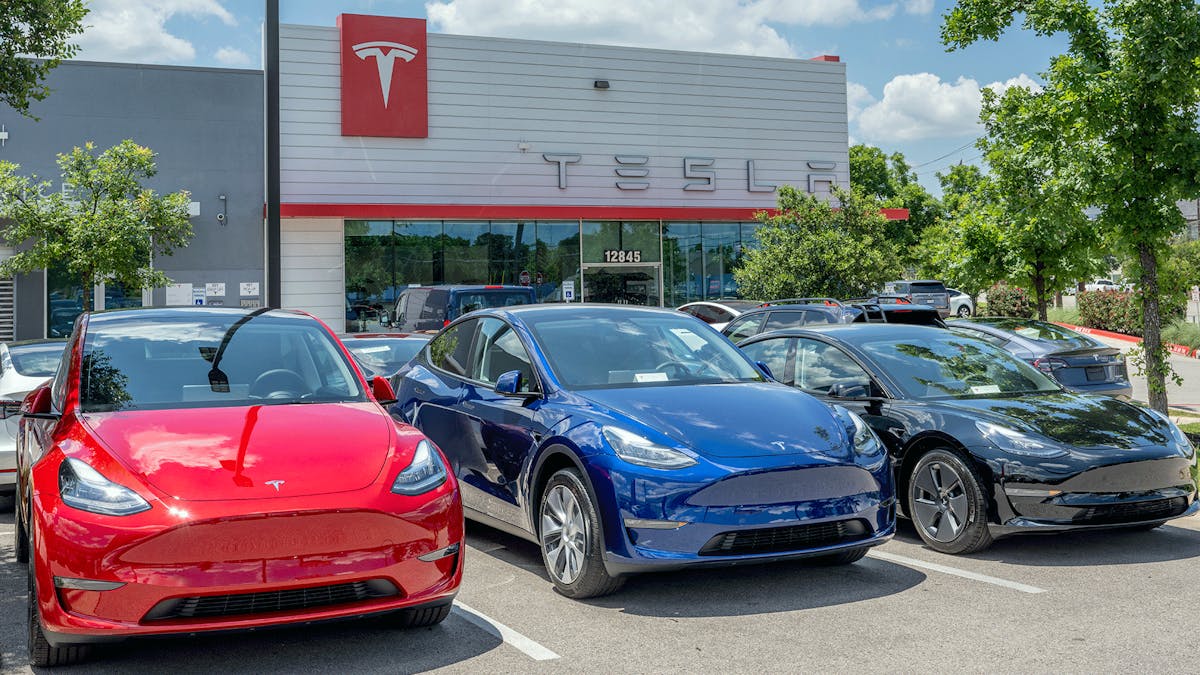
Tesla says it’s still on track to launch its driverless robotaxis in Austin next month (or maybe July) but, as of last month, the electric vehicle company had yet to actually test a driverless ride, The Information reports, citing an “engineer close to the testing and a former employee.”

In April, Tesla announced that a very limited set of people — Tesla employees in the Bay Area and Austin — could get a ride in the company’s robotaxis... with a person sitting in the passenger seat. But with its launch just weeks away, there’s no evidence that the company has conducted any “unsupervised, no one in the car” rides yet.

Meanwhile, Google’s Waymo, which launched in Austin earlier this year, tested driverless rides for six months before opening them to the public. Now it’s doing more than a quarter million paid driverless rides per week.

Federal safety investigators would also like to know “how Tesla plans to evaluate its vehicles and driving automation technologies for use on public roads,” including which software the company is planning to deploy and which vehicles will be included in its robotaxi effort.

The robotaxi effort is high stakes for Tesla. CEO Elon Musk said last month, “The future of the company is fundamentally based on large-scale autonomous cars and large scale and large volume, vast numbers of autonomous humanoid robots.”
In April, Tesla announced that a very limited set of people — Tesla employees in the Bay Area and Austin — could get a ride in the company’s robotaxis... with a person sitting in the passenger seat. But with its launch just weeks away, there’s no evidence that the company has conducted any “unsupervised, no one in the car” rides yet.

Meanwhile, Google’s Waymo, which launched in Austin earlier this year, tested driverless rides for six months before opening them to the public. Now it’s doing more than a quarter million paid driverless rides per week.

Federal safety investigators would also like to know “how Tesla plans to evaluate its vehicles and driving automation technologies for use on public roads,” including which software the company is planning to deploy and which vehicles will be included in its robotaxi effort.

The robotaxi effort is high stakes for Tesla. CEO Elon Musk said last month, “The future of the company is fundamentally based on large-scale autonomous cars and large scale and large volume, vast numbers of autonomous humanoid robots.”

More Tech

See all Tech
tech

OpenAI shares how it will charge for ChatGPT ads

Last week, OpenAI announced that ads were going to be rolling out in ChatGPT in the coming weeks.

Now we have more details about what OpenAI is telling advertisers. According to a report from The Information, the company has reached out to “dozens” of advertisers, and will charge based on ad views.

Advertisers are still waiting for further details, but OpenAI is asking for less than $1 million each in ad spending while it tests out the new system, per the report.

Ads are supposed to begin in February, and will only appear for free ChatGPT and ChatGPT Go users.

Advertisers are still waiting for further details, but OpenAI is asking for less than $1 million each in ad spending while it tests out the new system, per the report.

Ads are supposed to begin in February, and will only appear for free ChatGPT and ChatGPT Go users.

tech

Apple is reportedly working on a wearable AI pin

Move over OpenAI, Apple is reportedly also developing a mysterious AI-powered wearable device: a pin that looks like a thin, flat, circular disc with an aluminum-and-glass shell.”

The Information reports that the device is the size of an Apple AirTag and has two cameras, a speaker, three microphones, and wireless charging. It could be available by early 2027.

Apple, which has lagged its peers in AI and recently teamed up with Google to support its upcoming Siri revamp, is hoping to keep up with ChatGPT and Google, which, like Apple, has an AI smartphone. Meta and Google are both also pushing into smart AI glasses.

It’s not to be mistaken with OpenAI’s secretive wearable AI device, which is being made in conjunction with former Apple designer Jony Ive and expected to debut in late 2026. The latest rumors suggest the unnamed device, meant to eventually compete with smartphones, might be earbuds.

Apple, which has lagged its peers in AI and recently teamed up with Google to support its upcoming Siri revamp, is hoping to keep up with ChatGPT and Google, which, like Apple, has an AI smartphone. Meta and Google are both also pushing into smart AI glasses.

It’s not to be mistaken with OpenAI’s secretive wearable AI device, which is being made in conjunction with former Apple designer Jony Ive and expected to debut in late 2026. The latest rumors suggest the unnamed device, meant to eventually compete with smartphones, might be earbuds.

tech

Morgan Stanley expects Tesla to have 1,000 Robotaxis by the end of 2026. Musk had predicted 1,500 by the end of 2025

Ahead of Tesla’s earnings report next week, Morgan Stanley has released a note estimating that the company will scale its Robotaxi fleet much more slowly than CEO Elon Musk has said. The firm thinks the automaker will have 1,000 vehicles in its Robotaxi service by the end of 2026 — 500 fewer than Musk estimated a few months ago Tesla would have by the end of 2025.

More key to Tesla’s success, however, will be removing the safety monitors from those rides, which Morgan Stanley says will be a “precursor to personal unsupervised FSD [Full Self-Driving] rollout.” Musk, of course, had also promised to remove safety drivers in Austin by the end of 2025, but driverless rides are still in the testing stage.

tech

Meta says it’s delivered new AI models internally this month and they’re “very good”

Meta’s last AI model release, Llama 4, was marred by delays and accusations of rigged benchmarks, but the company says the latest models built by its Superintelligence Labs team look promising. CTO Andrew Bosworth told reporters at the World Economic Forum that the team delivered new models internally in January and they’re “very good.”

Bosworth didn’t specify what the models are, though The Wall Street Journal has reported that Meta is working on a large language model and an AI image and video model code-named Avocado and Mango, respectively.

Latest Stories

Sherwood Media, LLC produces fresh and unique perspectives on topical financial news and is a fully owned subsidiary of Robinhood Markets, Inc., and any views expressed here do not necessarily reflect the views of any other Robinhood affiliate, including Robinhood Markets, Inc., Robinhood Financial LLC, Robinhood Securities, LLC, Robinhood Crypto, LLC, or Robinhood Money, LLC.