
Tech
Waymo Self Driving Car
A Waymo self-driving car in San Francisco, California (Getty Images)
WE, ROBOT 🤖

Tesla’s robotaxi event is finally here — will it be a watershed moment for autonomous vehicles?

Tesla’s self-driving rival Waymo is already doing 100,000+ paid trips per week

For a decade, Elon Musk has crafted a narrative about the potential of robotaxis — a self-driving, self-funding Optimus Taxius that could transform the economics of Tesla. Now, a grand reveal is finally upon us at the company’s “We, Robot” event, which starts at 7 p.m. ET tomorrow.

Will Musk deliver? For Tesla and its shareholders, the stakes are high. As competition in electric vehicles has intensified, squeezing the company’s margins, and Tesla’s rapid sales growth has slowed, Tesla’s stock has come under pressure. At its peak in November 2021, Tesla was worth more than $1.2 trillion; today it’s closer to $770 billion (though that’s still more than 3x what its next most valuable competitor, Toyota, is worth). Some financial analysts bill robotaxis as the company’s future.

Let’s talk reality

The truth is, robotaxis are already here. In June, Google-backed Waymo opened up its services to the public, and it now counts ~700 vehicles in several cities, which are completing more than 100,000 self-driving rides a week. That progress is off the back of years of testing — Waymo autonomous vehicles racked up ~4.9 million miles in 2023, according to the California DMV, more than any other company that filed reports (Tesla does not report data).
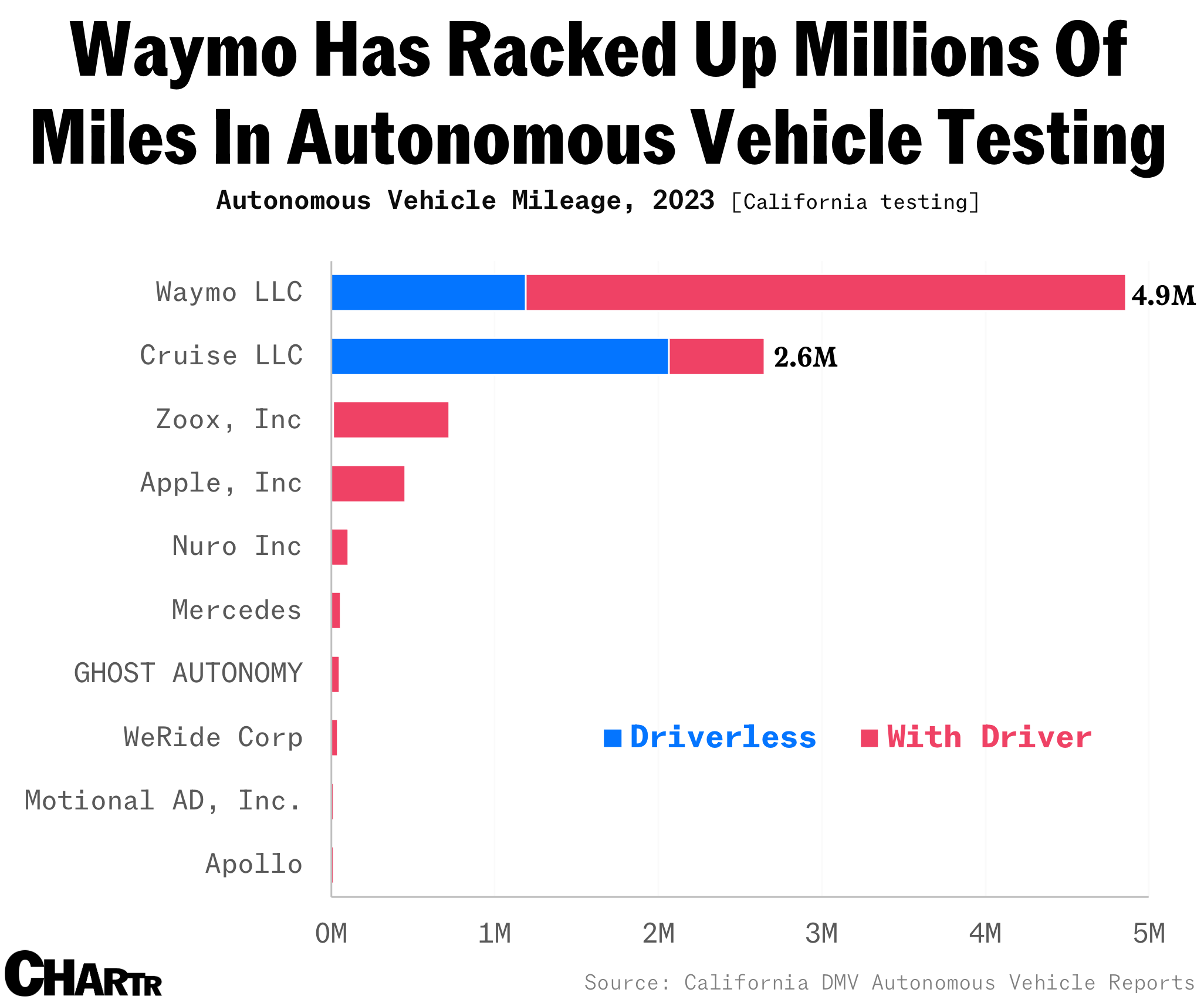
Self-driving mileage
Sherwood News

Waymo has plans to expand slowly, with a small number of robotaxis in geofenced environments. Elon Musk described Waymo’s technology as “quite fragile” and not able to scale because it is a “very localized solution.” Amazon’s Zoox has also released plans to launch services in Las Vegas from next year, whilst GM-owned Cruise recently resumed its operations after an accident in 2023.

If Tesla does deliver its iPhone moment, revealing some amazing prototype that could bring robotaxis to the masses, the question will pivot once again to: how do you convince people they are safe? A Forbes legal survey from July revealed that 93% of people have at least some concerns about self-driving cars.


More Tech

See all Tech
🚀 $100B

Alphabet’s 2015 investment in SpaceX is about to pay off handsomely with the company’s hotly anticipated IPO later this year, which is expected to be the largest in history.

Bloomberg reports that according to new financial filings, Alphabet’s investment could be worth up to $100 billion.

Google invested in SpaceX in 2015 when it, along with Fidelity, invested $1 billion in a round that valued SpaceX at $10 billion. At the end of 2025, Google owned just over 6% of SpaceX, per Bloomberg’s reporting on the more recent filings. That stake has likely been diluted due to SpaceX’s merger with xAI.

$1

Barclays says autonomous couriers — think sidewalk robots and drones — could push delivery costs down to as little as $1 per order, from between $5 and $7 today and closer to $9 for traditional deliveries in high-labor-cost markets. If robots save $4 on every delivery, and enough companies start using them, the food delivery industry, including companies like DoorDash and Uber, could end up with $16 billion in extra profit every year, according to Barclays.

The catch: we’re nowhere near that world yet. Robots and drones handle less than 1% of deliveries today. Even by 2035, Barclays only sees penetration hitting around 10%.

Google’s Wing and Amazon have also been trying to crack last-mile product delivery — a reminder that this is part of a broader race to automate the most expensive leg of e-commerce.

$10B

Uber has long had an asset-light business model: it provided the ride-hailing platform, and its contract workers brought their own vehicles. That’s changing as Uber positions itself at the center of the robotaxi era.

The Financial Times estimates that Uber has committed more than $10 billion to buying robotaxi fleets ($7.5 billion) and investing in the companies that make them ($2.5 billion). That includes yesterday’s announcement that its expanding its investment in Lucid, a deal worth about $2 billion, with plans to buy 35,000 vehicles.

This shift pits Uber against industry leaders like Google’s Waymo and Tesla, whose models involve company-owned vehicles running on proprietary platforms. While these autonomous fleets eliminate the need for drivers, they introduce new capital-intensive requirements for charging, cleaning, storage, and repair.

Latest Stories

Sherwood Media, LLC produces fresh and unique perspectives on topical financial news and is a fully owned subsidiary of Robinhood Markets, Inc., and any views expressed here do not necessarily reflect the views of any other Robinhood affiliate, including Robinhood Markets, Inc., Robinhood Financial LLC, Robinhood Securities, LLC, Robinhood Crypto, LLC, Robinhood Derivatives, LLC, or Robinhood Money, LLC. Futures and event contracts are offered through Robinhood Derivatives, LLC.
