
Tech
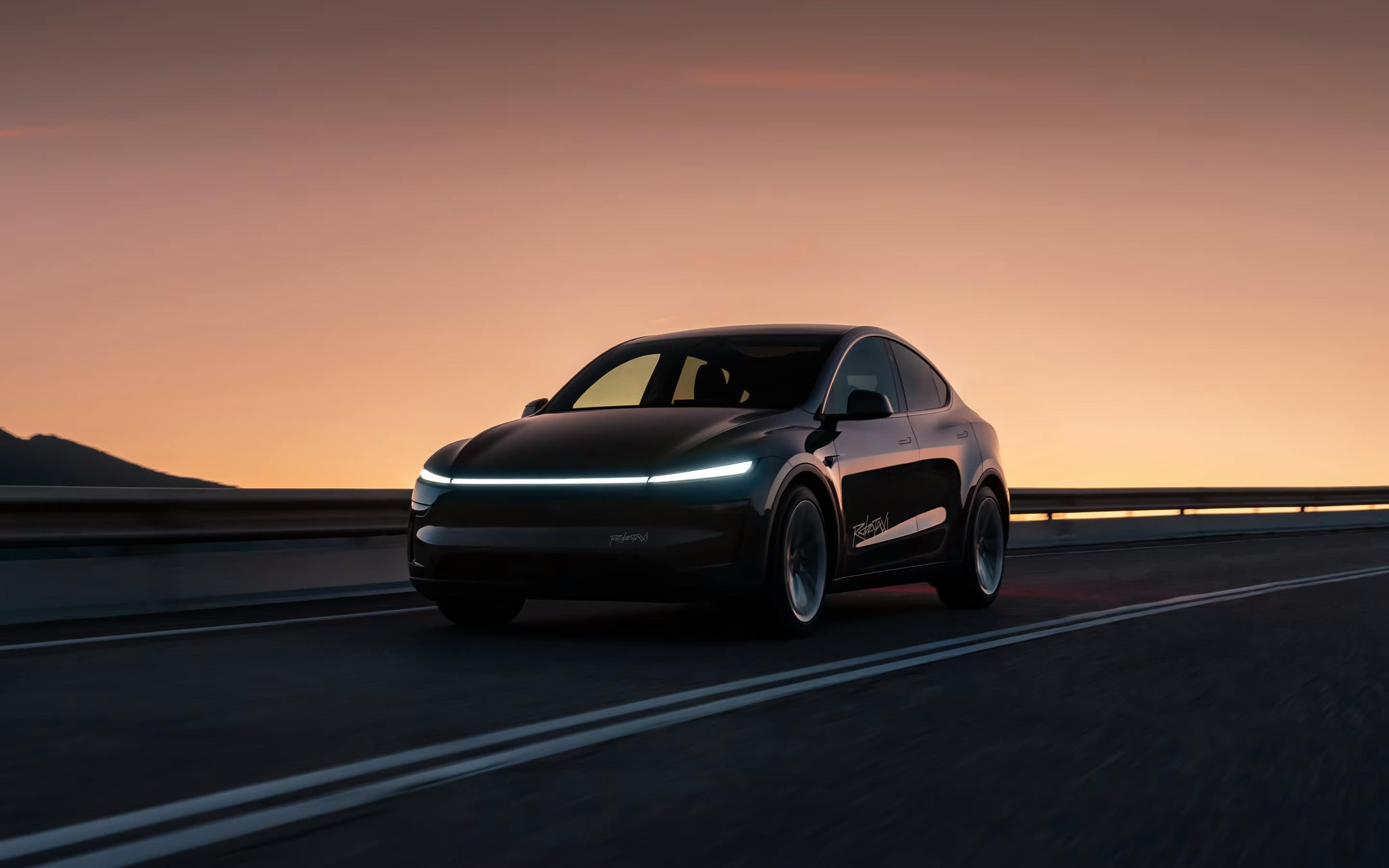
Tesla robotaxi website image
(Tesla)
Taxi Confidential

Tesla’s robotaxi launch, by the numbers

It was very small but not bad! Tesla bull Dan Ives loved it.

Rani Molla

After years of delays, Tesla’s long-awaited robotaxi finally launched yesterday in Austin. And by many accounts it was successful, with its stock surging more than 8% this morning.

The service was much less exciting than what normal people might consider a true autonomous ride service, since...

  • it was within a well-mapped subsection of the city,

  • there was a safety monitor in the front passenger seat,

  • it had remote operators ready to potentially step in as well as chase cars, in some instances following behind,

  • it only operates from 6 a.m. to midnight in good weather,

  • and only a chosen few pro-Tesla influencers were invited.

The circumscribed launch still got off the ground without a major hitch.

Here’s what we know about the launch from watching numerous livestreams from those lucky enough to get a backseat to the launch.

Invitees: 20+

Based on this X list by Australian tech writer Jason Cartwright, plus a couple we noticed not on the list, there were about 20 people who received invites to use the robotaxi at launch. The invites pretty much all went to pro-Tesla influencers, who livestreamed and posted about their experiences for their audiences.

Vehicles: >10

While a number of reports said there were 10 to 20 robotaxis available, it looks like as many as 35 Model Ys were on the road. Google’s Waymo, of course, is operating more than 100 driverless vehicles in Austin.

Cost: $4.20

The initial Tesla robotaxi riders were charged a flat fee of $4.20 per ride because CEO Elon Musk is gonna Musk. It didn’t allow tips. We don’t know what it will ultimately cost when the service is opened up to the public.

Coverage square milage: N/A

While we don’t know the exact square milage of the Tesla geofence, public screenshots show the geofenced area to be located south of the Colorado river in areas including South Congress and South Lamar — very popular tourist areas. Google’s Waymo, for comparison, covers 37 miles in Austin, including areas north of the Colorado River, where downtown Austin is located.

Other people in the car: 1

Tesla is obviously pushing the limits of what autonomous driving means, considering each robotaxi ride yesterday had a “Tesla Safety Monitor” sitting in the front passenger seat. While some of the riders tried to interact with the monitors to ask them questions about the service, they were mostly mum. A number of people pointed out that the safety monitors had their hands glued to the door button, presumably programmed to stop the car in case of an incident.

Software: not FSD (Supervised) 13.2.9

Musk has said the vehicles are unmodified, new Model Ys that are running a newer, “unsupervised” version of FSD (Supervised) 13.2.9 that owners of newer Teslas have. Musk says this robotaxi version will merge with the other branch “soon.”

A number of the robotaxi riders we watched said the software and ride felt very similar to what they’ve experienced in their own Teslas with the supervised software.

Major incidents: 0

While there were a number of small incidents, including this one (embedded below) where the robotaxi mistakenly got in the turning lane when it was supposed to go straight and then repeatedly veered left and straight in an intersection, overall it seemed like the first day of the robotaxi launch went off without any major hitches.

Tesla bull and Wedbush Securities analyst Dan Ives, who expects autonomous to add $1 trillion to Tesla’s market cap, had a great experience. “We took two approximately 15 minute rides around Austin and the key takeaways are that it was a comfortable, safe, and personalized experience,” he wrote yesterday. “To really put it into perspective, there was a moment where we drove up a narrow road going up a hill with cars parked on both sides with oncoming traffic and people opening their car doors into the road and the Robotaxi masterfully maneuvered with patience and safety among this chaos.”

Of course, if Tesla expands any of its parameters — number of vehicles, who can ride, coverage area — the results may vary.

Stock price: +8%

As of 10:25 a.m. ET, Tesla’s stock was trading up more than 8% on the successful launch of the service, which Musk has said is integral to the future of the company.


More Tech

See all Tech
tech

Alphabet sold $3.6 billion in Japanese yen bonds — a record for a foreign company — likely to help its AI capex binge

We now have the value for Alphabet’s Japanese yen bond raise — 576.5 billion yen, or $3.6 billion — and it’s a record for a foreign issuer in Japan. The deal was spread across seven tranches with maturities ranging from 3 to 40 years, allowing the company to lock in rates as low as 1.965%.

The latest deal comes on the heels of Alphabet’s massive US and European bond deals, where the company has tapped global markets for nearly $60 billion in fresh capital over the last few months. In a filing earlier this week, the search giant said it would use the proceeds for “general corporate purposes.” That likely means fueling its AI infrastructure build-out, which has pushed its projected 2026 capex bill to a staggering $190 billion.

tech

Bloomberg: Relationship between OpenAI and Apple has deteriorated and legal action may be imminent

The two-year-old alliance between Apple and OpenAI has deteriorated, Bloomberg reports, with the AI giant now consulting legal counsel about issuing a potential breach of contract notice.

OpenAI executives allege that Apple failed to adequately integrate and promote ChatGPT on the iPhone, causing the AI firm to lose out on billions a year in subscriptions and hurt its brand, according to the report.

Meanwhile, Apple has expressed concerns over OpenAI’s privacy protection, and has been miffed that OpenAI has been working on its own hardware with former Apple design lead Jony Ive.

More recently, Apple, which has trailed its peers in developing AI, has decided to offer users their choice of AI models, rather than aligning exclusively with OpenAI’s.

Meanwhile, Apple has expressed concerns over OpenAI’s privacy protection, and has been miffed that OpenAI has been working on its own hardware with former Apple design lead Jony Ive.

More recently, Apple, which has trailed its peers in developing AI, has decided to offer users their choice of AI models, rather than aligning exclusively with OpenAI’s.

tech

Report: Mythos is used to crack MacOS

Apple’s MacOS has long been considered to have some of the strongest cybersecurity protections in the industry.

But researchers using a preview release of Anthropic’s Mythos AI model were able to take control of a Mac, in a significant example of the unreleased AI model’s cyber capabilities, according to a report from The Wall Street Journal.

It took two security researchers five days to pull off the feat, which chained together bugs to corrupt the Mac’s memory, per the report. The researchers told the Journal that human expertise was required to use Mythos, and it would not be able to execute the attack on its own. The researchers reportedly said some of the Mythos hype was “overblown.”

Apple said it was taking the bug report “very seriously” and has not yet issued a fix.

It took two security researchers five days to pull off the feat, which chained together bugs to corrupt the Mac’s memory, per the report. The researchers told the Journal that human expertise was required to use Mythos, and it would not be able to execute the attack on its own. The researchers reportedly said some of the Mythos hype was “overblown.”

Apple said it was taking the bug report “very seriously” and has not yet issued a fix.

tech
Jon Keegan

Survey: 70% of Americans don’t want data centers in their community

America loves a good boogeyman, and data centers have become one.

It was once easy for the hyperscalers to sidle up to state legislators, utility executives, and local officials with the promise of jobs and the high-tech glow of AI for their economically challenged areas without much local opposition.

But now the script has been flipped, and public opposition to data centers is starting to solidify. A new Gallup survey asked 1,000 Americans for their thoughts on data centers, the first such survey for the polling company. Among the findings:

  • 70% of survey respondents opposed local construction of AI data centers.

  • Opposition to local data centers was much stronger than opposition to local nuclear power plants.

  • Dislike for data centers is bipartisan — majorities of both Democrats and Republicans were opposed to data centers, but more so for Democrats.

  • Among those opposed to data centers, the impact on the environment and energy usage were top concerns.

Local communities and state governments around the US have introduced bans or moratoriums on data center construction. Senators have also introduced similar legislation in Congress.

Last month, Maine Governor Janet Mills vetoed legislation that would have enacted the first statewide bill to pause data center construction.

But now the script has been flipped, and public opposition to data centers is starting to solidify. A new Gallup survey asked 1,000 Americans for their thoughts on data centers, the first such survey for the polling company. Among the findings:

  • 70% of survey respondents opposed local construction of AI data centers.

  • Opposition to local data centers was much stronger than opposition to local nuclear power plants.

  • Dislike for data centers is bipartisan — majorities of both Democrats and Republicans were opposed to data centers, but more so for Democrats.

  • Among those opposed to data centers, the impact on the environment and energy usage were top concerns.

Local communities and state governments around the US have introduced bans or moratoriums on data center construction. Senators have also introduced similar legislation in Congress.

Last month, Maine Governor Janet Mills vetoed legislation that would have enacted the first statewide bill to pause data center construction.

Latest Stories

Sherwood Media, LLC and Chartr Limited produce fresh and unique perspectives on topical financial news and are fully owned subsidiaries of Robinhood Markets, Inc., and any views expressed here do not necessarily reflect the views of any other Robinhood affiliate, including Robinhood Markets, Inc., Robinhood Financial LLC, Robinhood Securities, LLC, Robinhood Crypto, LLC, Robinhood Money, LLC, Robinhood U.K. Ltd, Robinhood Derivatives, LLC, Robinhood Gold, LLC, Robinhood Asset Management, LLC, Robinhood Credit, Inc., Robinhood Ventures DE, LLC and, where applicable, its managed investment vehicles.
